Gauge is the only decision that changes your hands
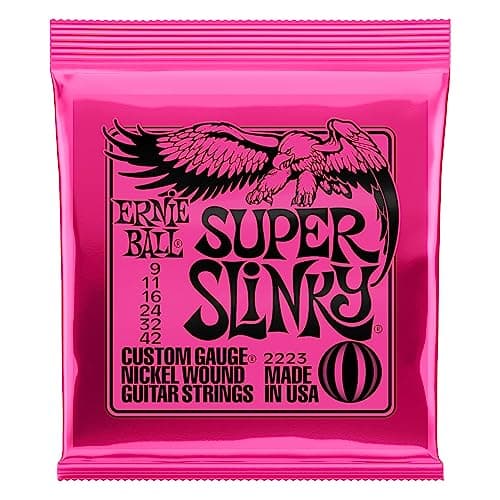
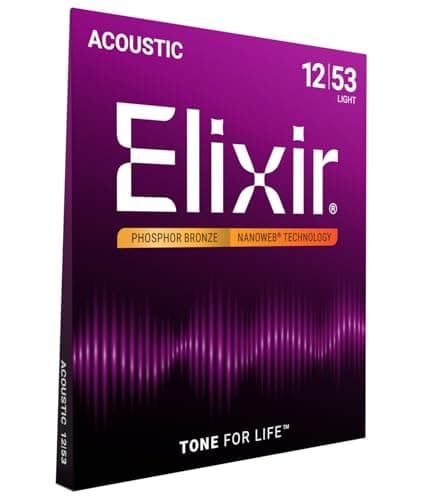
String gauge is quoted as the thickness of the thinnest string in thousandths of an inch. A "light" acoustic set is usually .012 to .053; an "extra light" is .010 to .047. Thicker strings need more tension to reach the same pitch, and that tension is what your fingertips are pushing against on every single note.
D'Addario publishes the tension of each string in pounds. Their light EJ16 set totals 160.5 lb across six strings. That figure is not impressive on its own — its value is that it is comparable, and almost no other brand gives you anything to compare with. Elixir, Ernie Ball and Savarez all publish gauges and no tension. The gauge guide lays the numbers out in a table.
The second acoustic decision is the wrap alloy — phosphor bronze or 80/20 — and it is smaller than the marketing suggests and mostly about how fast a set dulls rather than how it sounds new. Phosphor bronze vs 80/20 settles it in one table.
If the complaint is that the guitar is simply hard to press down, the easiest strings to play ranks the sets that genuinely take less force — and puts the free setup check ahead of any of them. If the complaint is skin rather than force, sore fingertips works through it in order, starting with the parts that cost nothing. Whether a premium coated set earns its price is worked out as arithmetic in are Elixir strings worth it.
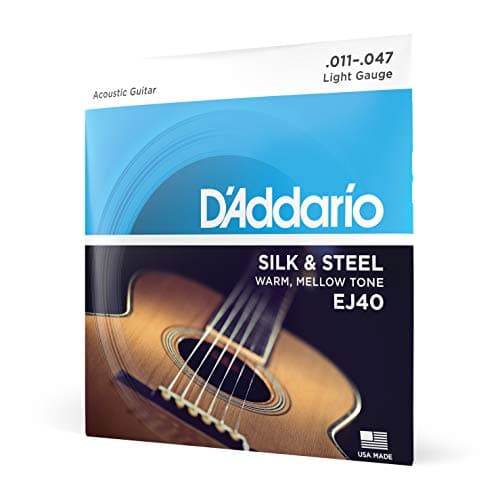
There is a third construction sold specifically to beginners whose fingertips hurt: silk and steel, which wraps a silk layer under the winding to lower tension at a given gauge. It works, and not one maker we checked publishes the tension figure the whole category is sold on — silk and steel strings has the gauges side by side, including the set that turns out to be heavier than a standard light one.
For a first acoustic, light (12s) is the default and extra-light (10s) is the answer if your fingertips are still raw after a week. For a first electric, 9s are kinder than 10s and you will bend notes months earlier because of it. Neither choice is permanent; a set of strings is a reversible decision.
Coating is a lifespan decision, not a tone decision
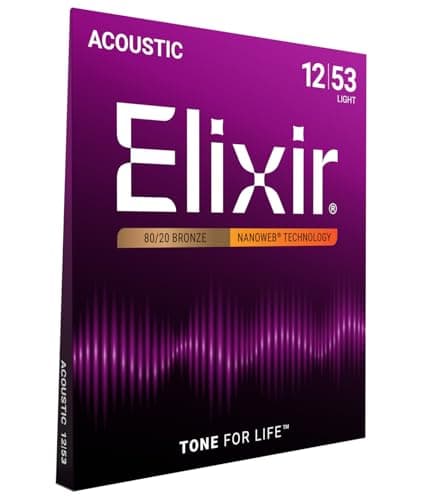
Uncoated strings die from two things: the oil and salt off your hands, and the gunk that packs into the gaps between the windings. A coating — Elixir's NANOWEB, D'Addario's XT — seals the string so both take longer to happen.
The trade is real in both directions. Coated sets stay bright for weeks rather than days and squeak less under a sliding hand. They also cost several times as much, and they never have the raw zing of an uncoated string on day one. If your hands sweat, or the guitar sits out for weeks between sessions, coated sets pay for themselves. If you play daily and change strings monthly anyway, they do not. That argument in full: coated vs uncoated.
If you have already decided on Elixir, there is a second decision waiting: the same strings come in two different coatings, and only one pair of sets differs in the coating alone. NANOWEB vs POLYWEB compares them on Elixir's own published wording, including the one coating Elixir names for beginners.
Acoustic, electric and nylon are not interchangeable
Acoustic strings are bronze or phosphor bronze over a steel core; the bronze is what a wooden top responds to. Electric strings are nickel or nickel-plated steel, because a magnetic pickup can only hear a magnetic string — bronze strings on an electric produce almost no output. Both halves of that swap are worked through, with the published tension and alloy figures, in electric strings on an acoustic.
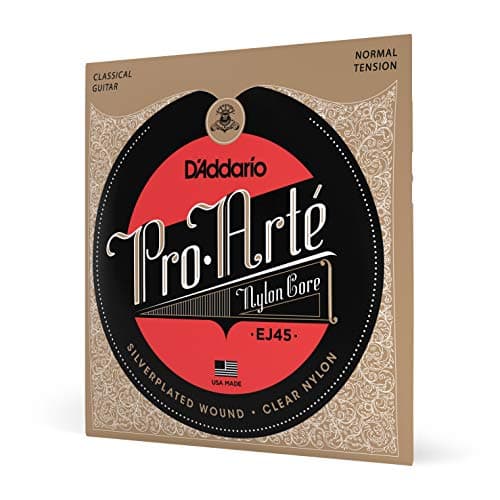
Nylon strings belong on classical guitars built for them. Putting steel strings on a classical guitar can pull the bridge off, because the neck and top were never built for that tension. Putting nylon on a steel-string acoustic needs a ball-end set and a nut that will take it — nylon strings on a steel-string guitar has the tension arithmetic and the one maker warning that matters. Check what your guitar was designed for before buying anything.
When to change them
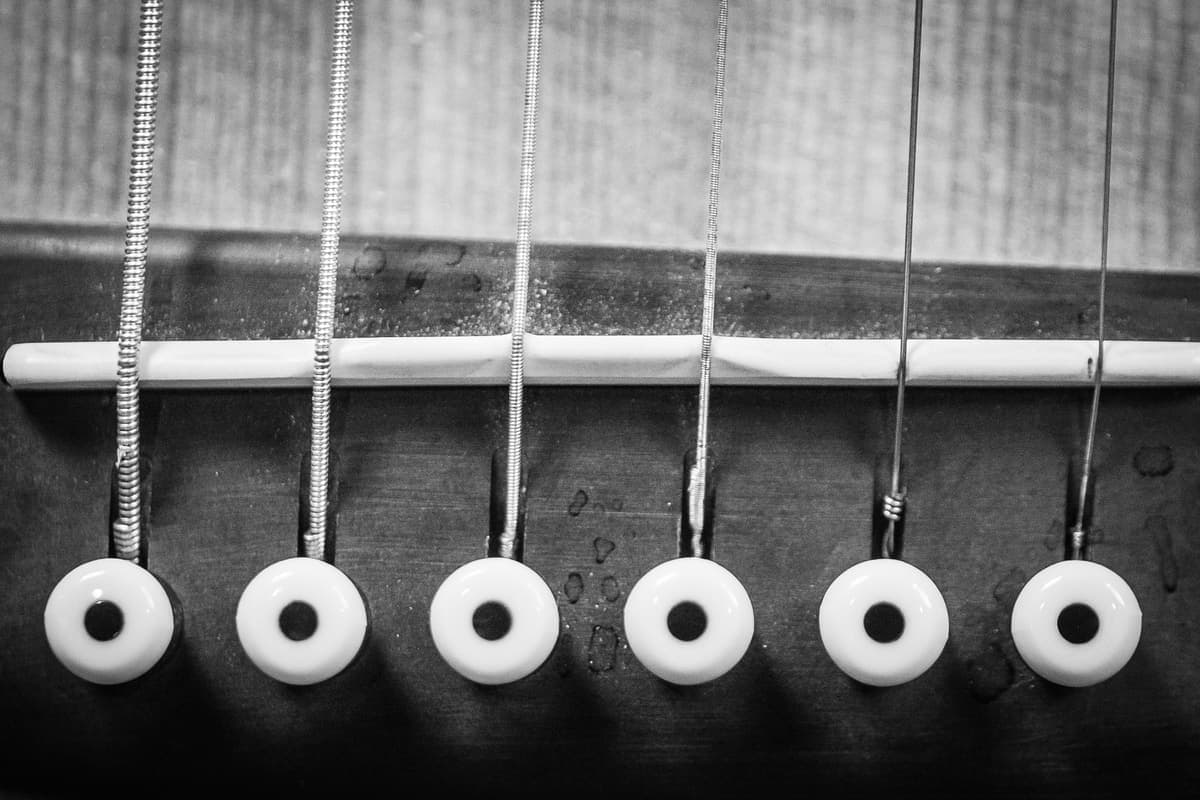
The honest answer is: when they stop sounding right or start feeling wrong under your fingers, whichever comes first. Dull tone, dark discoloration on the windings, a rough gritty feel under a sliding finger, or one string that will not hold its tuning — any of those is the signal. How often to change strings works through the actual variables, and how to change guitar strings is the step-by-step for doing it the first time without dropping a bridge pin inside the guitar. A nylon-string guitar is a different job again — no bridge pins, a knot at each end — how to restring a classical guitar covers it from published maker guidance. A twelve-string is that job twice over and at roughly twice the tension, which is why 12-string string sets are chosen on published tension before anything else.
A string that snaps rather than slowly dying is a different matter, and it usually means the guitar rather than the string. Fender publishes a diagnosis by break location and D'Addario publishes that instrument burrs are the likelier cause — why strings keep breaking works through both.