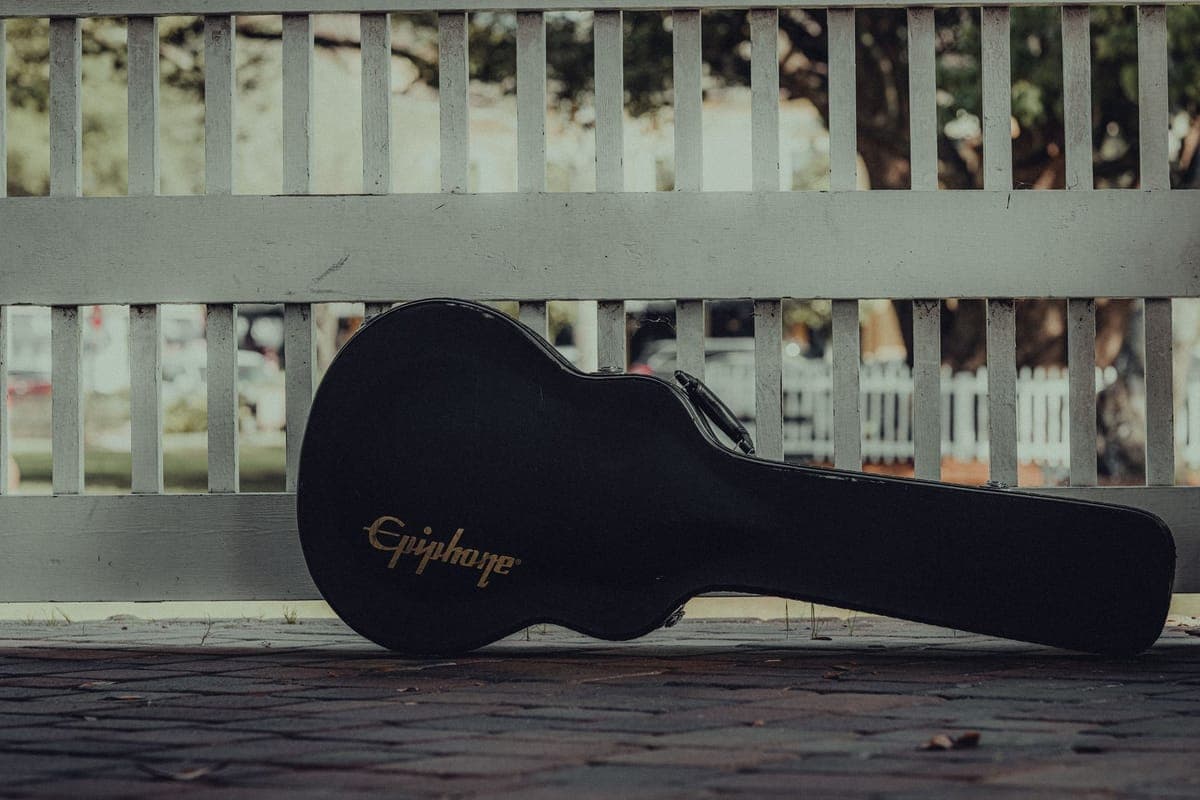
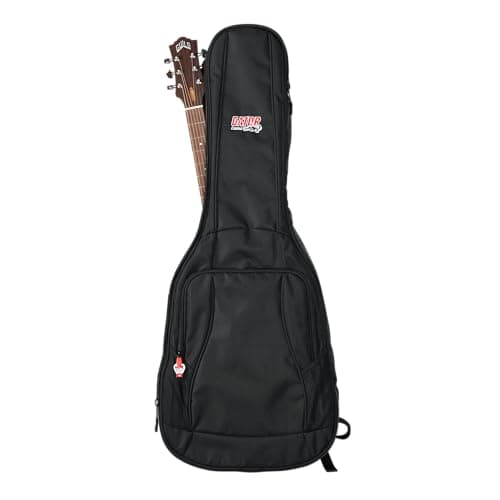
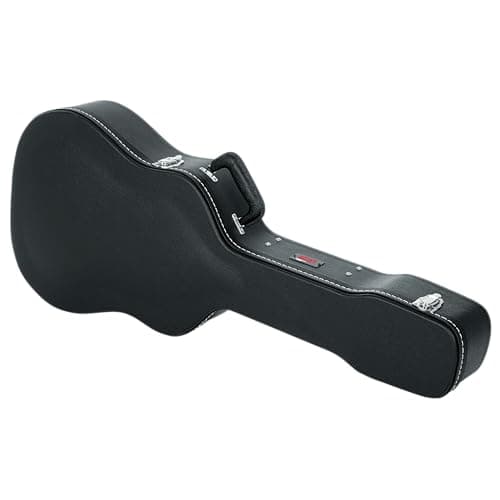
The question is: does the guitar leave your control?
If it goes from a bedroom to a lesson two streets away and back, in your hands the whole time, a padded bag is genuinely enough. If it goes in a car boot, on a bus, in someone else's van, or into an aircraft hold, it needs a shell around it.
Everything else in this comparison follows from that.
What each one actually protects against
Failure modes, and which type covers them| Hazard | Gig bag | Hard case |
|---|
| Scuffs and scratches in transit | Yes | Yes |
| Rain and weather | Mostly — check the outer material | Yes |
| Being leaned on | Partly | Yes |
| Being dropped | No | Usually |
| Something heavy stacked on it | No | Yes |
| Being sat on | No | Yes |
| Airline handling | No | Sometimes — and no case is a guarantee |
| Humidity control (with a pack) | No — it does not seal | Yes, if the fit is good |
The thing this category will not tell you
Not one maker in this roundup publishes a padding thickness in millimeters, an impact rating, or a drop-test result. Gator states "thick interior padding on all sides" with "extra support to protect the bottom of your guitar" on its 4G bags, and that is the level of specificity available.
So a numbers-based comparison is not possible here and we are not going to fabricate one. What can be compared is construction: shell material, whether the base is reinforced, how you carry it, and whether the fit is close enough to matter.
0
Makers in this roundup who publish a padding thickness
The vocabulary is 'thick', 'heavy duty' and 'reinforced'. Where a figure would help and does not exist, we say so instead of inventing one.
Where a gig bag wins
Carrying. Backpack straps put the weight on your back and leave both hands free. A hard case has one handle, and carrying a dreadnought case any distance is genuinely tiring.
Weight. A hard case can weigh as much as the guitar.
Storage. A gig bag hangs on a hook. A hard case takes up floor space permanently.
Pockets. Gig bag pockets swallow a tuner, capo, spare strings, winder and cable. Hard case compartments are small.
Where a hard case wins
Impact. The whole point. A shell distributes a knock over its structure instead of transmitting it to the instrument.
Crush resistance. Things get stacked on cases in car boots. A gig bag offers nothing here.
Humidity. A two-way humidity pack requires a sealed case — D'Addario says so plainly. If you own a solid-wood acoustic and live somewhere with a dry winter, this alone may decide it. See do I need a humidifier.
Long-term storage. A guitar stored for months is safer in a case, and safer still in a case with humidity control.
The fit problem, which catches people out
A hard case that is too big is worse than no case for impacts, because the guitar moves inside it and arrives at the shell with momentum.
Acoustic body shapes are not interchangeable: a dreadnought case does not fit a concert, an OM or a parlor. Electric shapes vary less but offsets and V-shapes need their own cases. Check the body shape before the price.
It gets worse below full size, where a label fraction replaces a measurement entirely. Gig bags for 3/4 and 1/2 size guitars lists the four numbers to take off the guitar first.
The middle option
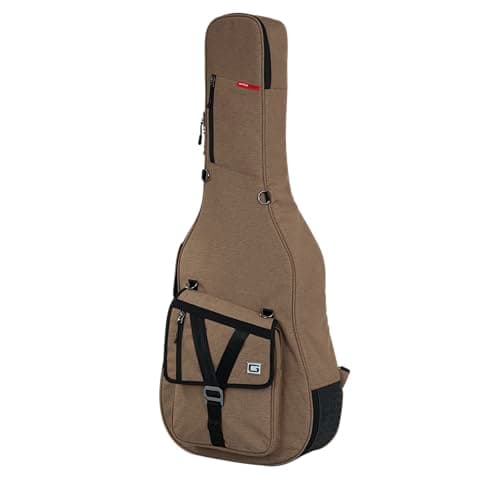
Structured gig bags — Gator's Transit series is the example here — sit between the two: more internal structure and better hardware than a basic bag, still worn as a backpack, still not a shell.
It is a genuine answer for a guitar that commutes regularly on public transport, where you want more than a bag and cannot carry a case by one handle for half an hour.
If you have landed on a shell, the next question is fit, and it is a harder one on an electric than an acoustic because electric cases are cut for specific body outlines. The electric hard case roundup compares three of them on what each maker publishes about the inside.
What we did not doWe have not played any of this gear. Every guide in this category says it tested twenty tuners; we would rather say plainly that we tested none. What we did instead is on this page in full: published specifications with their sources, the makers' own manuals read rather than paraphrased, and a note wherever a company publishes nothing at all.
The recommendation
Buy a gig bag first. Most beginner guitars go to a lesson and come back, and a good bag with a reinforced base and backpack straps covers that entirely.
Add a hard case when the guitar travels properly — a car boot, a train, a flight — or when it needs humidity control, or when it becomes valuable enough that the case costs less than the risk.
Specific picks are in acoustic cases and electric gig bags.