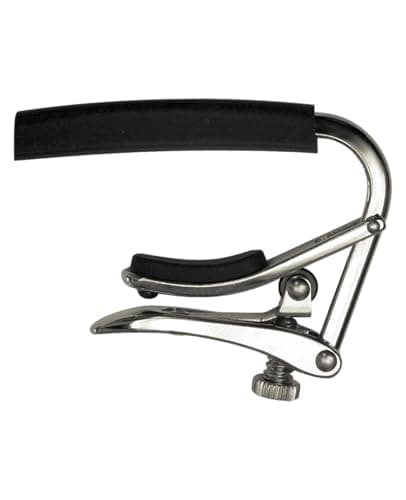
Three mechanisms, three trade-offs
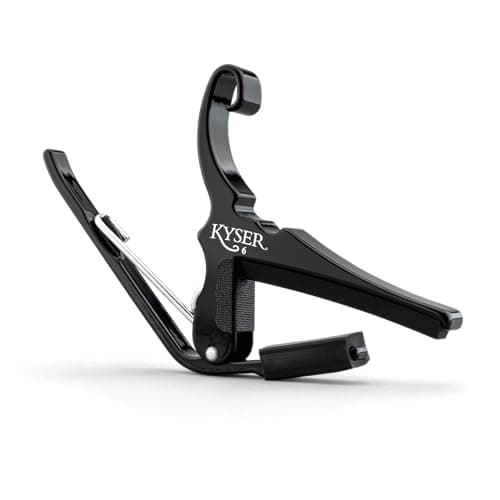
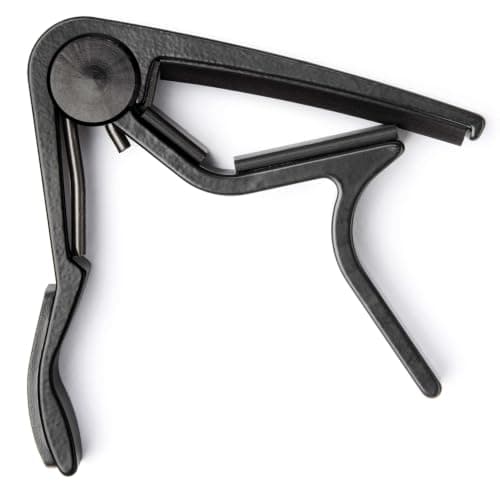
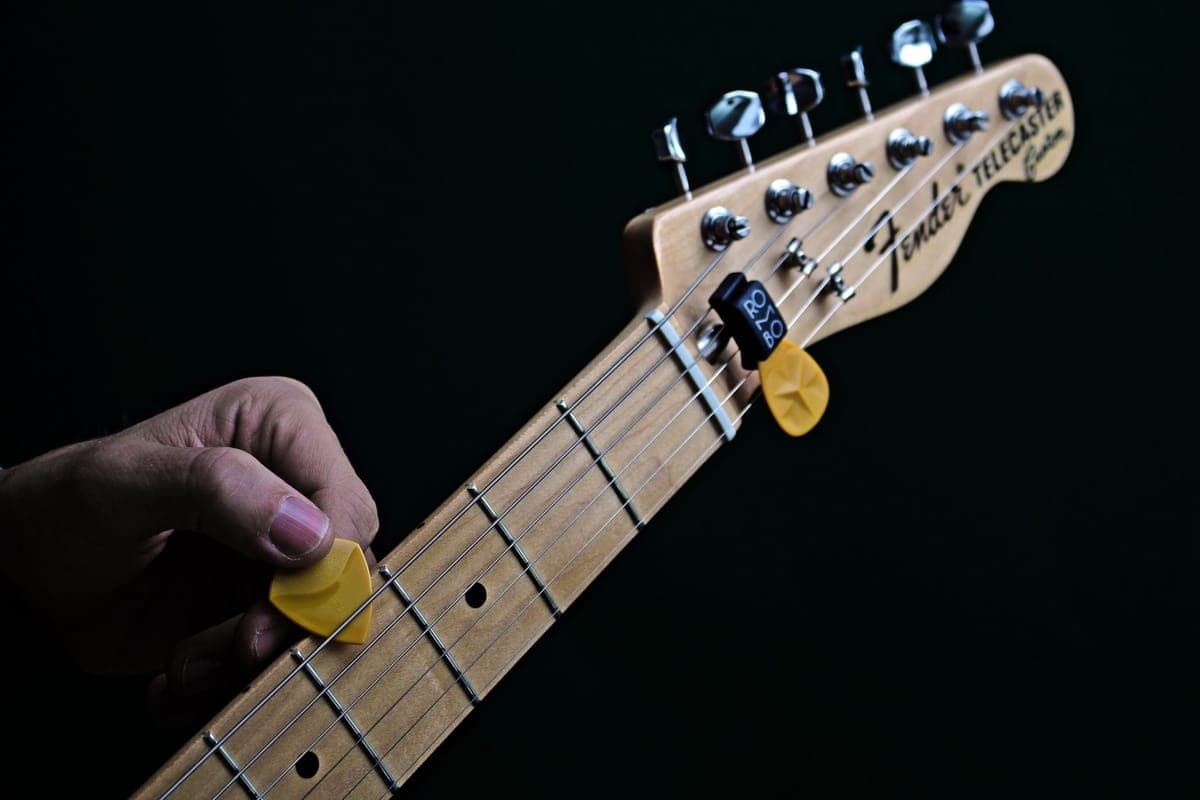
Fixed-tension spring (Kyser, Dunlop Trigger). A strong spring squeezes the neck. Squeeze the handle, slide it on, release — one-handed, instant, and it parks on the headstock between songs. The spring applies the same force regardless of your neck thickness or your string gauge, which means on some guitars it applies more than needed and pulls the strings sharp. There is no adjustment; that is the design, not a fault.
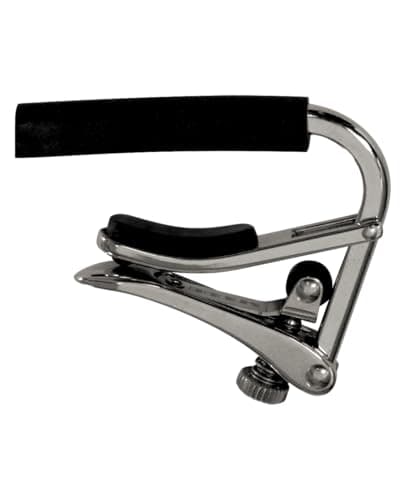
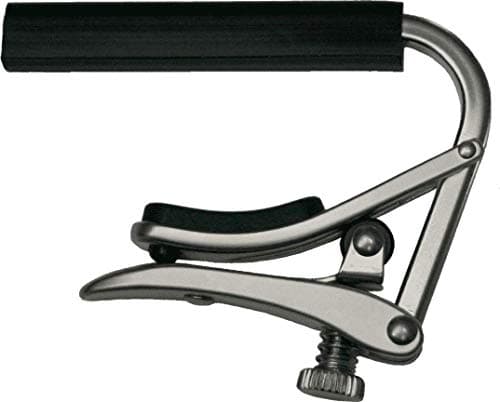
Adjustable screw (Shubb). A threaded barrel sets how far the lever closes. You set it once for your guitar, then the over-center lever locks at exactly that pressure every time. Slower to fit and to move, and dramatically better at not disturbing tuning. Shubb's own claim is that the closing action works like a fingertip and presses straight down rather than pulling the string off center — which is exactly the mechanism that causes drift in spring capos.
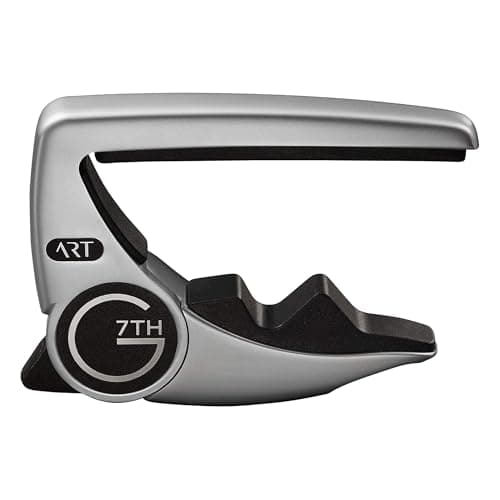
Radius-following (G7th Performance 3). Squeeze to attach, squeeze to release, and the string pad mechanically adapts to the curvature of your fretboard. G7th's stated aim is even pressure across all six strings with the minimum tension that works. It is the most expensive answer here and the one with the most engineering behind it.
Curvature is the thing nobody mentions
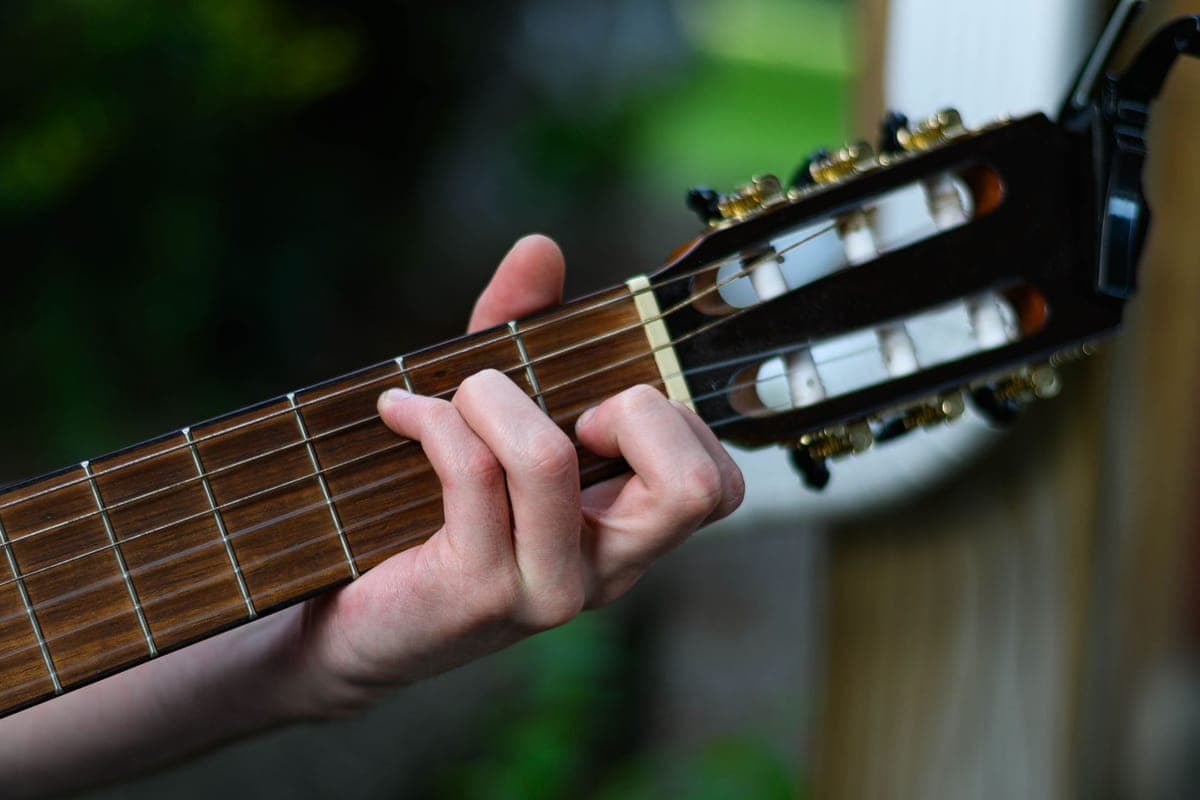
A guitar fretboard is not flat. It curves across its width, and the radius of that curve differs between instruments — a classical guitar is essentially flat, a vintage-style electric is strongly curved, a modern acoustic is somewhere between. A capo bar with the wrong curvature presses hardest on the middle strings and least on the outer ones, which produces buzzing on the edges and sharpening in the middle.
This is why a classical capo and a steel-string capo are different products and are not interchangeable, and it is the specific problem G7th's adaptive pad is built to solve. Capos for classical guitars takes that argument apart on published figures — including the width nobody mentions, because a nylon-string neck is about nine millimeters wider at the nut.
If the mechanism itself is what you are choosing between, capo types sets out spring, screw, squeeze and toggle in the makers' own published words. And a twelve-string needs both a wider bar and something done about the octave pairs — capos for 12-string guitars covers the one design built for them.
Where to put it
Directly behind the fret, not on top of it and not halfway between two. Behind the fret is where your finger goes for the same reason: the fret does the work, and the capo only needs enough pressure to hold the string against it. Too far back and you need far more pressure, which sharpens the strings. How to use a capo covers placement, pressure and the retune check.
Do you need one at all in month one?
Probably not. Do I need a capo as a beginner answers this honestly: a capo is the answer to a problem you have not hit yet, and you will know the moment you hit it — usually when a song you want to play sits in E flat and your fingers do not.