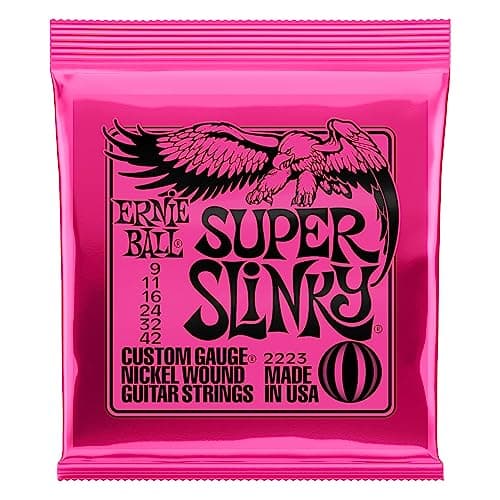
Electric strings are nickel or nickel-plated steel, because a magnetic pickup can only hear a magnetic string. That rules out the bronze sets on an acoustic — they produce almost no output through a pickup — and it means the electric category is a narrower decision than the acoustic one.
The decision is gauge, and it is basically nines or tens.
Nines, and why they are the right first set
A nine-gauge set runs .009–.042. A ten runs .010–.046. That sounds like a trivial difference, and in terms of your fingertips it is not: the thinner set needs less tension to reach pitch and therefore less force to fret, and — more importantly — far less force to bend.
Bending is where electric playing starts. It is in almost every solo and lick a beginner wants to play, and it is physically hard on a heavier set with a new hand. Players who start on nines are bending convincingly months earlier than players who start on tens, and that is not a small thing when the alternative is concluding you are not strong enough.
The cost of nines: a slightly thinner sound under high gain, more tendency to go sharp if you fret hard, and not enough tension for drop tunings. None of those matter in the first year.
.009 vs .010
One thousandth of an inch on the top string is the whole decision
It is also the difference between bending confidently in month three and bending confidently in month nine.
Published gauges and construction| Set | Gauges | Construction | Tension published? |
|---|
| Ernie Ball Super Slinky (2223) | .009–.042 | Nickel-plated steel on tin-plated hex core | No |
| D'Addario EXL120 | .009–.042 | Nickel-plated steel on hex core | Yes |
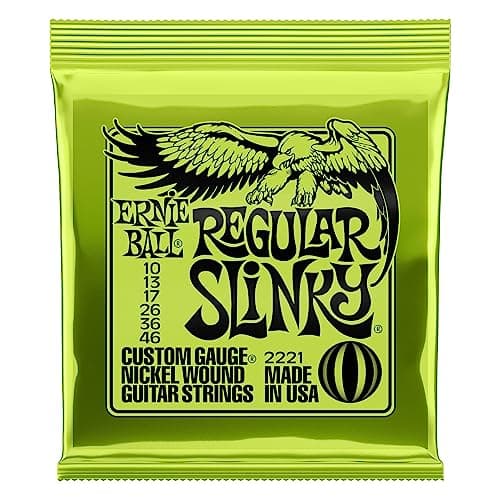
| Ernie Ball Regular Slinky (2221) | .010–.046 | Nickel-plated steel on tin-plated hex core | No |
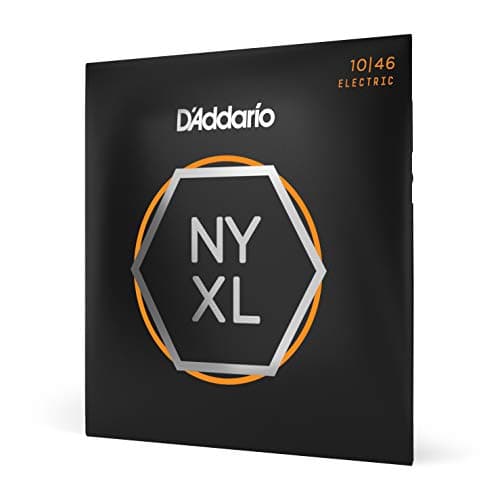
| D'Addario NYXL1046 | .010–.046 | High-carbon NY Steel core | Yes |
Slinky or XL: a coin toss with one asterisk
Ernie Ball Super Slinky and D'Addario EXL120 are the same gauges from the two dominant makers. Both are nickel-plated steel on a hexagonal core. Both cost about the same. Owner accounts differ on feel — D'Addario is often described as slightly stiffer — and that is genuinely within the range of individual perception rather than a measurable gap.
The asterisk: D'Addario publishes per-string tension and Ernie Ball does not. If you want to know exactly what changes when you move gauges, only one of these companies has given you the data.
NYXL, and the claim you can test yourself
D'Addario's NYXL line uses a different core steel and the claim is better tuning stability under bending. It costs roughly double a standard XL set.
We have not tested it and we are not going to imply we have. What we can say is that the claim is specific, falsifiable, and testable by you: bend the third string a full tone repeatedly and see whether it returns to pitch. If your current strings go flat after a few bends and NYXLs do not, the claim held for your guitar. That is a better experiment than any assertion we could make.
For a beginner, this is a month-nine purchase, not a month-one one. Spend the difference on changing strings twice as often instead.
Coated electric sets
They exist and they work the same way as coated acoustic sets: longer life, higher price, slightly different feel. The case for them is weaker on electric than acoustic, because electric strings are cheaper to begin with and because the dulling of an old electric string is less obvious under distortion than on a bare acoustic top.
If your hands are hard on strings — if you find a set goes dead in two weeks — a coated set is a reasonable answer. Coated vs uncoated has the general argument.
What we did not doWe have not played any of this gear. Every guide in this category says it tested twenty tuners; we would rather say plainly that we tested none. What we did instead is on this page in full: published specifications with their sources, the makers' own manuals read rather than paraphrased, and a note wherever a company publishes nothing at all.
What to actually buy
A first electric: nines. Either brand. Buy two sets, because the second one costs almost nothing extra and you will need it.
If you already play tens comfortably and nothing is bothering you, stay on tens. If you tune below standard, go heavier — but that is a conversation for when you get there, not before.
Then change them when they sound dull or feel gritty. How often to change strings works through the actual variables.