A practice amp is the thing that makes an electric guitar audible. It does not need to be big — a bedroom is a small room and most amps sound better pushed a bit than idling — and it does not need to be expensive.
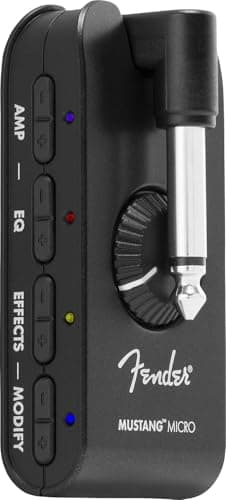
Before the picks, one honest point: for many beginners a headphone amp is the better first purchase. It costs less, works at any hour, and gives more amp voices than a small combo. Buy a practice amp when you specifically want to be heard in a room.
Wattage is not quality
Watts measure electrical power, not tone and not usable volume. A 10 W solid-state practice amp at bedroom volume sounds better than a 50 W amp at the same volume, because most amps only sound like themselves once they are working.
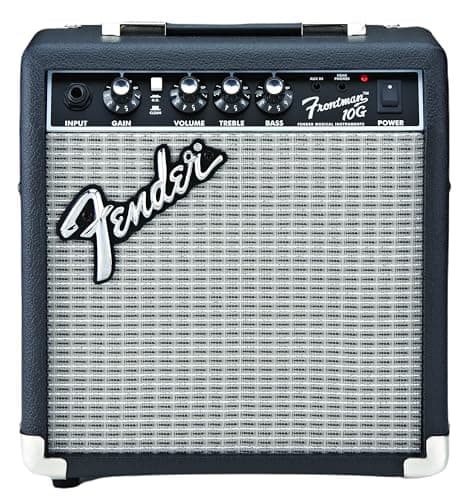
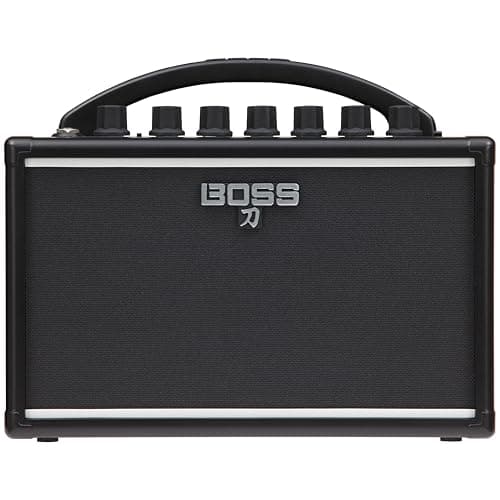
Speaker size does more for the sound than wattage at this scale. Fender publishes a 6" speaker for the Frontman 10G; Boss publishes a custom 4" for the Katana-Mini. Both are small; the 6" moves more air.
Published specifications | Boss Katana-Mini | Fender Frontman 10G |
|---|
| Power | Not published as a wattage figure | 10 W |
| Speaker | Custom 4" | 6" Fender Special Design |
| Amp voices | Clean, Crunch, Brown | Clean / overdrive switch |
| Tone controls | Three-band analog (bass, mid, treble) | Treble, bass |
| Effects | Tape-style delay | None |
| Battery | 6 × AA — approx. 7 h alkaline, 9 h Ni-MH | Mains only |
| Headphone out | Yes | Yes |
| Aux in | Yes | Yes |
What actually matters on a beginner amp
A headphone output. Non-negotiable. It is what lets you practice at eleven at night, which is when a lot of practice happens. No amp includes the headphones, and the jack size varies — headphones for guitar practice covers what fits which socket.
An aux input. Plug in a phone and play along with the recording through the same speaker. This is the single most useful practice feature on a small amp and it is easy to overlook when shopping.
Two usable sounds. A clean tone and a driven tone. Boss publishes three amp modes and a delay; Fender publishes a clean/overdrive switch. Either is enough — more voices than that are nice, not necessary.
Battery operation, if you want it. Boss publishes approximately seven hours from six AA alkaline cells and nine hours from 2500 mAh Ni-MH. Published battery figures are rarer than they should be in this category, and it is a genuine reason to prefer the Katana-Mini if portability matters.
7 hours
Boss's published battery life for the Katana-Mini, on six AA cells
Published under stated conditions and battery types, which is more than most amps in this class offer.
The Katana-Mini caveat, stated plainly
The Katana-Mini's headphone output is widely reported by owners as the weak point — thin, with no speaker simulation. If silent practice is your main use, that matters, and a headphone amp designed for the job does it far better.
We have not listened to it and are reporting a consistent pattern in owner accounts rather than a measurement. It is worth knowing before buying a battery amp specifically to practice quietly.
The AC adaptor footnote
Boss publishes that the AC adaptor for the Katana-Mini is sold separately. That is easy to miss and it changes the effective price if you do not intend to run it on batteries. The Frontman is mains-only and ships with what it needs.
What you do not need yet
- A tube amp. Louder than a bedroom allows, heavier, and needs maintenance.
- Anything above about 20 W. You will never turn it up far enough to find out what it does.
- Pedals. Both amps here have at least a driven sound; the Boss adds delay. That covers year one.
- A cabinet and head. A different category of purchase for a different situation.
One thing this page is not: an answer for an acoustic guitar. These amps are deliberately voiced to add character, which is what makes them good at electric and poor at reproducing an acoustic pickup faithfully. Acoustic amps is the separate category, and it starts with the cheaper options that are not an amp.
What we did not doWe have not played any of this gear. Every guide in this category says it tested twenty tuners; we would rather say plainly that we tested none. What we did instead is on this page in full: published specifications with their sources, the makers' own manuals read rather than paraphrased, and a note wherever a company publishes nothing at all.