Elixir strings cost several times what an uncoated set costs, and the question of whether that is justified is one of the oldest arguments in guitar. It is usually conducted as a matter of taste. It is not. It is arithmetic, and you can do it in about a minute.
This page is the brand-specific version of coated vs uncoated, which covers the mechanism. Here we are answering the narrower question people actually type: is this specific premium worth paying.
What the coating actually does
Elixir wraps the string in a very thin polymer film. That film keeps sweat, skin oil and dead skin out of the windings, which is where an uncoated string dies: the gunk in the gaps between the winding wraps damps the string and dulls it, long before the metal itself is worn out.
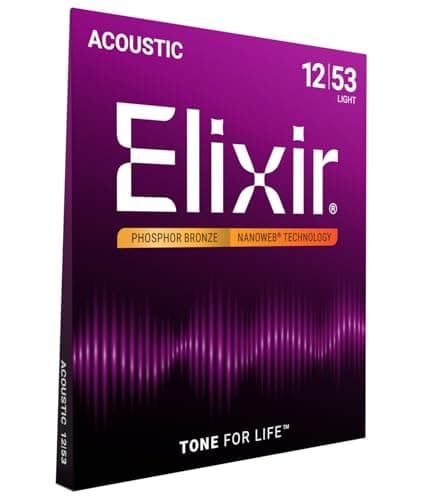
Elixir publishes the construction — phosphor bronze wrap wire with NANOWEB coating — and publishes the gauges. What no maker in this category publishes is a lifespan figure in hours or weeks, which is the number that would settle this argument outright. Nobody will commit to it, ourselves included.
3–4x
Roughly what a coated set costs against an uncoated one
Both prices on this page are live from Amazon and stamped with the date we checked. The multiple is what the decision turns on, not the absolute number.
The arithmetic
There is one question, and your answer decides this. How long do you currently leave a set of strings on?
If you change strings roughly monthly
You are the player coated strings were designed for, and the math works in their favor. A coated set that stays usable two or three times as long as an uncoated one at three to four times the price is roughly break-even on money and clearly ahead on hassle — you are restringing a third as often, and a restring costs you forty minutes.
There is a second benefit that does not show up in the arithmetic and that regular changers notice most: you spend far more of your playing time on strings that are in good condition rather than on strings halfway through dying.
If you change strings once or twice a year
This is most beginners, and here the math falls apart. A set left on for six months is well past dead in either construction. You would be paying a premium for longevity you are already not using, on a set that will be replaced on a schedule rather than on condition.
For this player, buying two uncoated sets and changing them twice as often is both cheaper and better sounding than one coated set left on for the same period. That is the honest answer and it is the one that sells us less.
If your hands eat strings
Some people corrode a set in two weeks. Sweat chemistry varies far more between players than any other variable in this decision, and if you are one of those people you already know it — your strings go black while a friend's stay bright.
For that player coated strings are the clearest win in this entire category, and the premium stops being a premium.
The three things you give up
Feel. A coated string is slicker under the fingers. Some players love it — sliding position changes are easier and finger squeak drops away. Others describe it as plasticky and never get used to it. It is genuinely divisive and you cannot know which you are without trying one set.
The brand-new sound. An uncoated string has a bright, zingy peak for a few days that a coated string never quite reaches. Coated sets start slightly duller and stay there. If you love that first-day sound, changing uncoated sets often gives it to you repeatedly, and coated sets structurally cannot.
The coating itself, eventually. On a heavily played set the film can start to shed in flakes at the contact points. It is cosmetic rather than harmful, and it is the point at which most people decide the set is done.
The honest alternatives
Published construction and gauges| Set | Coating | Gauges | Tension published |
|---|
| Elixir 16052 NANOWEB | NANOWEB polymer | .012 .016 .024 .032 .042 .053 | No |
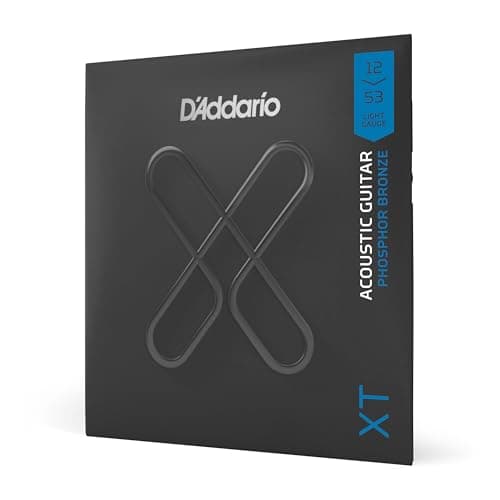
| D'Addario XT light | XT treated | .012 .016 .024 .032 .042 .053 | No |
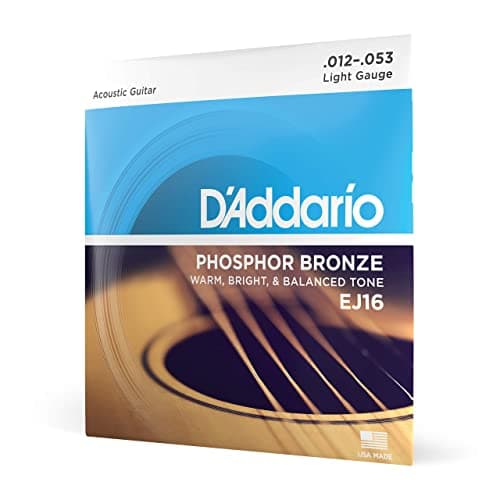
| D'Addario EJ16 | Uncoated | .012 .016 .024 .032 .042 .053 | Yes, per string |
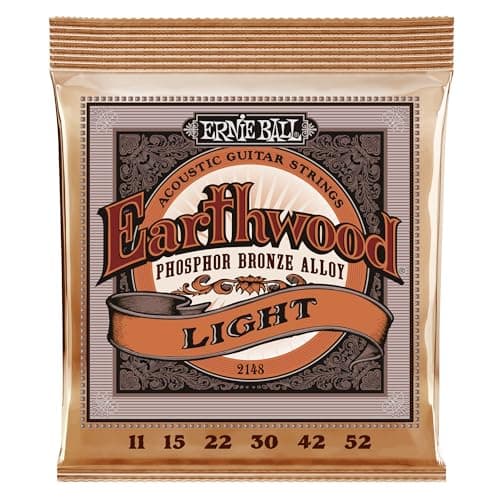
| Ernie Ball Earthwood light | Uncoated | .011 .015 .022 .030 .042 .052 | No |
Note that the first three are gauge-for-gauge identical. That makes this a clean comparison: the only variable between them is the treatment, and the price.
D'Addario XT is the closest direct competitor and usually sits below Elixir on price, at the same gauges. If you have decided you want a coated set, it is the one to price-check against.
D'Addario EJ16 is the uncoated baseline and the only set on this page whose maker publishes per-string tension. If the math above put you in the "change more often" camp, this is what to buy twice.
Wiping the strings with a dry cloth after every session is free, takes thirty seconds, and is the single largest life extension available to an uncoated set. It removes the oil and salt that do most of the damage. Doing this narrows the gap that Elixir is charging to close.
What this does not change
Alloy. Coating and alloy are separate choices that stack — phosphor bronze vs 80/20 is the other axis, and coated sets exist in both.
Gauge. A coated light set takes exactly as much force to fret as an uncoated light set. If your problem is effort rather than lifespan, this is the wrong page — the easiest strings to play is the right one.
Whether your strings are actually dead. Four signals, none of them a date: how often to change guitar strings.
The verdict
Worth it if you would otherwise change strings monthly, or if your sweat chemistry kills sets fast. In both cases you are buying back time and playing on better strings more of the time.
Not worth it if you change strings once or twice a year, which describes most beginners. Buy two uncoated sets instead and change them twice as often — cheaper, and you will hear the difference in the right direction.
Try one set before committing either way, because the slicker feel is genuinely divisive and no amount of arithmetic tells you which side of it you are on.
What we did not doWe have not played any of this gear. Every guide in this category says it tested twenty tuners; we would rather say plainly that we tested none. What we did instead is on this page in full: published specifications with their sources, the makers' own manuals read rather than paraphrased, and a note wherever a company publishes nothing at all.