An instrument cable is a conductor, a shield and two jacks. There is not much to it, and most of the marketing in this category is about the part that matters least.
Here is what actually matters, in order.
1. The warranty, because the jack will fail
Cables fail at the point where the cable meets the jack, where the conductor flexes every time you move. It is not a question of whether; it is a question of when.
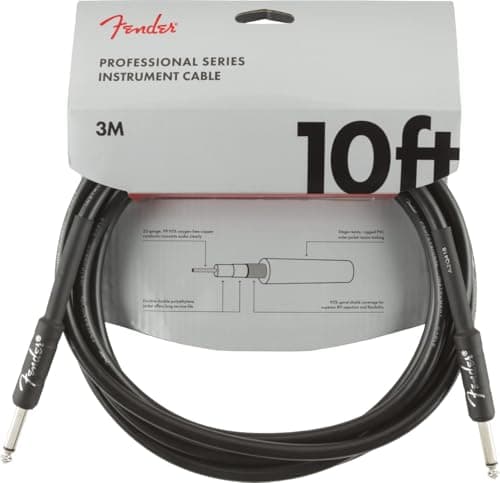
Fender publishes a limited lifetime warranty on its Professional Series cables. That is the single most useful specification in the category, because it converts an inevitable failure into a replacement rather than a repurchase.
2. The length you actually need
Ten feet is ample for a bedroom. Fifteen to eighteen suits a room where you move around. Longer cables add capacitance — which very slightly rolls off the top end — and add much more cable to trip over, which is the real problem rather than the tonal one.
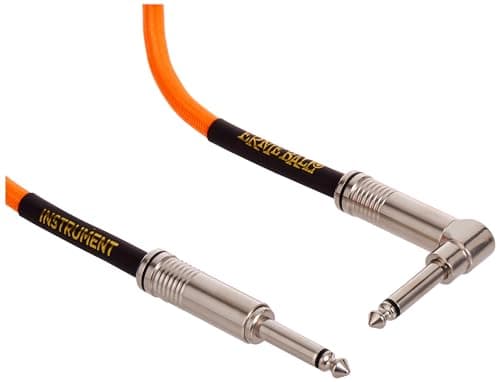
Fender publishes 10 ft, 15 ft and 18.6 ft in straight and angled-jack versions. Ernie Ball publishes 10, 18 and 25 ft. An angled jack is worth considering for a guitar with a top-mounted jack, where a straight plug sticks out and catches.
3. Shielding, published where anyone bothers
The shield is a braid or foil around the signal conductor that rejects interference from mains wiring, lighting and phone chargers. Poor shielding shows up as hum and buzz, especially with single-coil pickups.
Fender publishes 90% copper shield coverage on the Professional Series. Ernie Ball publishes no coverage figure. That is the sort of small disclosure difference this site keeps flagging, because it is the only thing separating two otherwise similar products.
Published specifications | Fender Professional Series | Ernie Ball Braided |
|---|
| Jacket | PVC | Braided |
| Shield coverage | 90% copper | Not published |
| Lengths | 10, 15, 18.6 ft, straight or angled | 10, 18, 25 ft |
| Warranty | Limited lifetime | Not published in the same terms |
| Capacitance per foot | Not published | Not published |
What does not matter as much as you are told
Oxygen-free copper, cryogenic treatment, directional cables. These claims appear on premium cables and the audible evidence for them at guitar-cable lengths is contested at best. Nobody in this roundup publishes measurements that would let you check.
Capacitance figures genuinely do matter at long lengths — high capacitance forms a low-pass filter with your pickup and dulls the top end. Neither maker here publishes a figure, so it cannot be compared. At ten feet the effect is small regardless.
The jack
Where every instrument cable eventually fails
Which is why a lifetime warranty is the specification worth paying for, and cable metallurgy is not.
The phantom fault problem
This is the specific reason not to buy the cheapest cable in the shop. A failing cable produces crackling, dropouts and intermittent silence — and every beginner who experiences that assumes the guitar or the amp is broken.
People spend money diagnosing an amp that is fine because a five-dollar cable is intermittently open circuit. Owning one reliable cable, or two cheap ones so you can swap to isolate a fault, is worth more than any tonal claim in this category.
Care
Coil it properly. Over-under coiling, where alternate loops are twisted the opposite way, prevents the internal twist that eventually breaks conductors. It takes a minute to learn and doubles a cable's life.
Do not pull it out by the cable. Pull the jack.
Unplug when you finish. On many guitars the output jack is the battery switch for active electronics, and on all of them a plugged-in cable is a lever waiting for someone to trip on it.
A cable is also the second half of amplifying an acoustic: fit a soundhole or bridge pickup, pick something to plug it into, and this is what carries the signal between them.
If the prices on this page are more than you want to spend on a lead, the budget cable page sets out what the cheap ones actually give up — which turns out to be the warranty rather than the tone.
Cable length is also the reason the buffer argument exists. Once the run gets long, or a pedalboard appears in the middle of it, a buffered pedal near the front preserves the high end the cable would otherwise lose — the tuner pedal roundup covers which tuners buffer, which bypass, and which let you choose.
What we did not doWe have not played any of this gear. Every guide in this category says it tested twenty tuners; we would rather say plainly that we tested none. What we did instead is on this page in full: published specifications with their sources, the makers' own manuals read rather than paraphrased, and a note wherever a company publishes nothing at all.