What thickness actually does
Thin (.50–.60 mm). The pick flexes as it crosses the strings, which smooths out an uneven strumming hand and produces a light, jangly attack. It also gives you very little control over individual notes, and produces an audible click as the pick snaps past each string. Good for strummed acoustic chords, poor for anything picked.
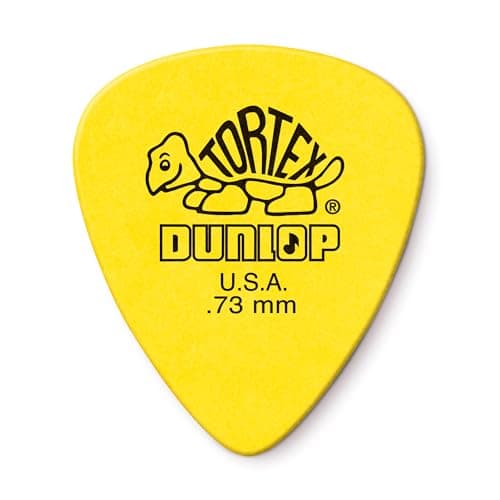
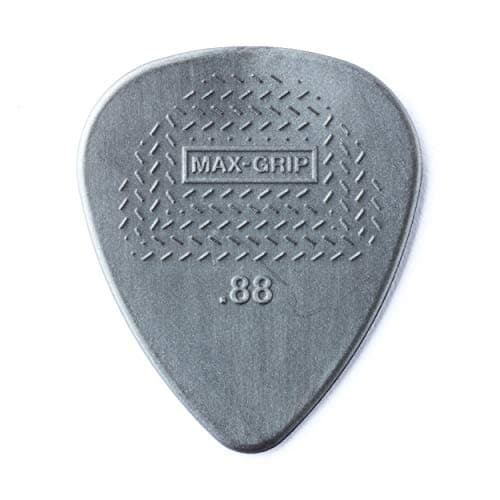
Medium (.73–.88 mm). Enough stiffness for single notes to speak clearly, enough flex that a strum does not sound like an attack. This is where most players end up and where most beginners should start. The .73 mm yellow Tortex is the single most-recommended gauge in guitar for exactly this reason.
Thickness is the bigger variable and it is not the only one. Two picks printed at the same millimeter figure in different plastics do not feel the same, because stiffness is a property of the material as well as the thickness — nylon, celluloid and Delrin compared covers what actually changes.
The band you want also depends on the instrument. Acoustic playing is mostly strumming, which rewards flex, and electric playing puts more weight on single notes, which rewards stiffness — picks for acoustic and picks for electric take the same decision to two different places.
Heavy (1.0 mm and up). Almost no flex. Every bit of your hand's motion reaches the string, which means a heavy pick is brutally honest about a sloppy right hand. Lead playing, fast single notes and anything where you want note definition.
Material matters less, but it is not nothing
Tortex has a matte, slightly chalky surface that grips dry fingers well and a warm, rounded attack. It wears down slowly and evenly.
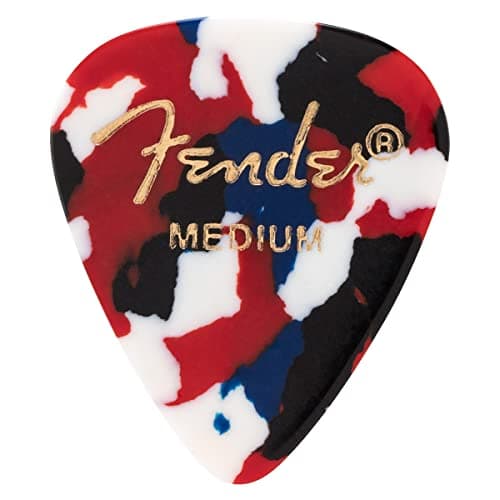
Celluloid — the classic glossy Fender 351 — is brighter and slicker. It sounds sharper on an acoustic and slides out of damp hands more easily. It also wears faster, which some players like, because a worn celluloid pick develops a shape that suits them.
Nylon is grippier and flexes more at the same thickness, which makes gauge comparisons across materials unreliable. A .73 mm nylon pick does not feel like a .73 mm Tortex one.
If the pick turns in your fingers whatever the material, picks that do not slip compares the three grip mechanisms anyone actually publishes — and starts with the two free fixes that work more often than a texture does.
Shape
The standard 351 shape is the rounded triangle everybody pictures, and it is the right starting point. Sharper "jazz" shapes give more precision and less surface area for strumming. Large triangles suit players with big hands or a firm grip. None of this matters until thickness is settled, because thickness dominates every other variable.
The one piece of advice worth acting on
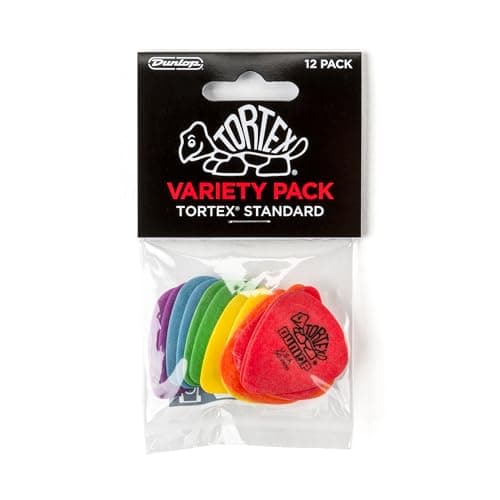
Buy a variety pack. Play the same thing with each gauge for ten minutes. Note which one makes chords sound the way you want and which one makes single notes come out cleanly, and if those are two different picks — which is common — keep both. The full breakdown of what changes between them is in the pick thickness guide.
Then buy a dozen of the winner, because you will lose them. There is no accessory in guitar with a higher loss rate and none cheaper to replace.
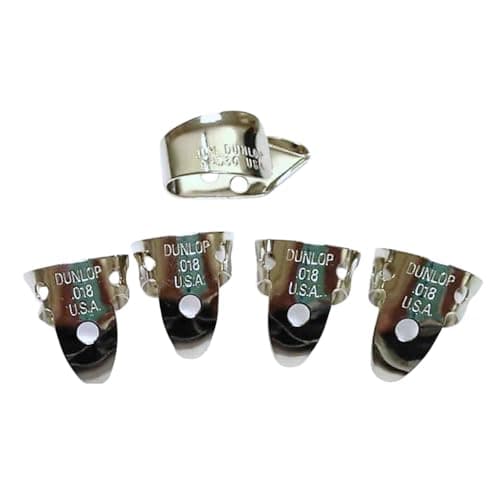
Fingerstyle players eventually face a different question: whether to wear picks rather than hold one. Thumb picks and finger picks covers what the makers publish about gauge and sizing, and the sizing chart that only one of them provides.