Every set of acoustic strings on the shelf is one of two alloys, and the packet almost never explains the difference. One says phosphor bronze. One says 80/20 bronze, or sometimes just bronze, or sometimes brass. They cost about the same, they look almost identical in the rack, and a first-time buyer picks one essentially at random.
The difference is real and it is smaller than the marketing suggests. Here is what each one actually is, what changes when you fit it, and which is the safer default when you do not yet know what you like.
What the two alloys are
80/20 bronze is 80 percent copper and 20 percent zinc. Metallurgically that is brass, which is why some makers label it that way and why D'Addario's own listing for the EJ11 says "80/20 Bronze (Brass)" rather than choosing between the two names.
Phosphor bronze is the same copper-and-zinc base with a small amount of phosphor added. The phosphor is not there for tone. It is a deoxidiser, and it slows the rate at which the alloy corrodes. That single change is the origin of almost every audible difference between the two.
Both are wrap alloys, which means they are what the outer winding is made of. The plain strings — the first and second, and often the third on lighter sets — are steel in both cases and identical between them. So the alloy argument is an argument about three or four strings, not six.
What you hear, honestly
Straight out of the packet, 80/20 is brighter. More high end, more initial attack, a slightly glassier sound under a pick. Phosphor bronze is warmer and rounder, with more apparent midrange.
That is the whole tonal difference and it is genuinely audible. It is also, for a beginner, much smaller than the difference between a well-set-up guitar and a badly set-up one, smaller than the difference between light and medium gauge, and smaller than the difference between fresh strings and three-month-old strings. Anyone telling you the alloy transforms an instrument is selling something.
Here is what actually matters. That extra brightness on 80/20 does not last. The alloy oxidizes faster, and the bright edge that makes it appealing in the shop is the first thing to go — often within a couple of weeks of regular playing. Phosphor bronze starts less bright and holds what it has for longer, so the two sets converge and then the 80/20 keeps going dull.
2
Alloys, and one deoxidising additive between them
Phosphor bronze is 80/20 bronze with phosphor added to slow corrosion. Everything you hear follows from that, including how fast the set dies.
The published specifications, side by side
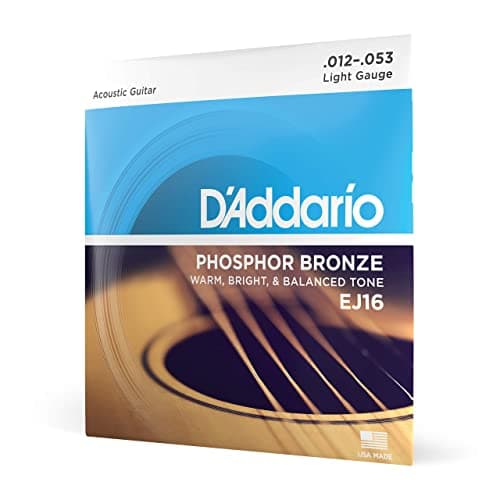
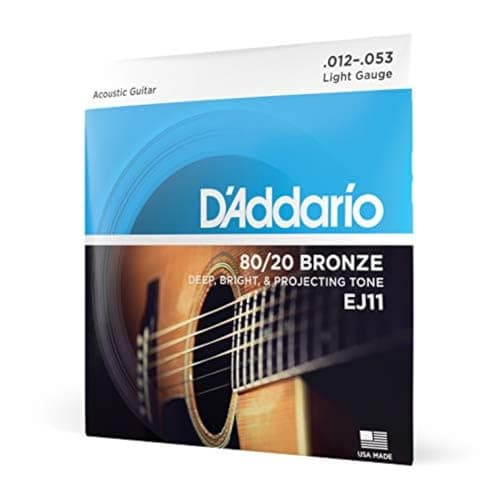
The useful comparison is not brand against brand, it is alloy against alloy at the same gauges — which the D'Addario pair makes possible, because the EJ16 and the EJ11 use an identical gauge spread in the two different alloys.
Published gauges and alloys| Set | Alloy | Gauges | What the maker publishes |
|---|
| D'Addario EJ16 | Phosphor bronze | .012 .016 .024 .032 .042 .053 | Per-string gauge and tension |
| D'Addario EJ11 | 80/20 bronze | .012 .016 .024 .032 .042 .053 | Gauges and winding; no tension on the listing we checked |
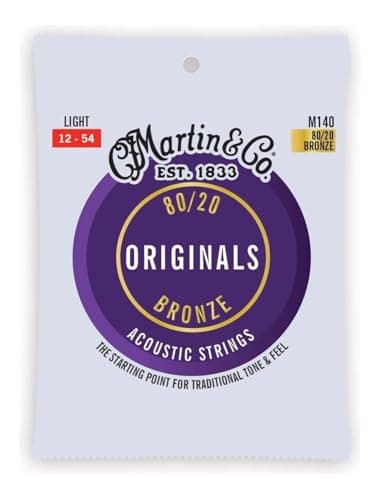
| Martin M140 | 80/20 bronze | .012 .016 .025 .032 .042 .054 | Gauges only; no core, winding or tension |
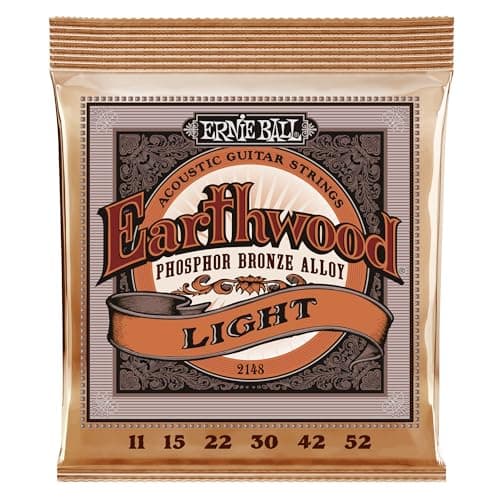
| Ernie Ball Earthwood Light | Phosphor bronze | .011 .015 .022 .030 .042 .052 | Gauges; no published tension |
Two things fall out of that table. The first is that the EJ16 and EJ11 are the same set in two alloys, which makes them the cleanest possible A/B test — change one variable, hear what it does. The second is that D'Addario is the only maker here publishing per-string tension anywhere in its range, which is the same finding as the gauge guide: the tension numbers that would let you compare sets properly mostly do not exist.
The Martin set is worth a separate note. Its third and sixth strings are heavier than the D'Addario equivalents — .025 against .024 and .054 against .053. That reads as trivial and is just about perceptible under the fingers, and it means the Martin set is very slightly stiffer overall than a set sold under the same "light" label. Gauge labels are not standardized between makers, which is exactly why the number matters more than the word.
Which should a beginner buy
Phosphor bronze, as the default. Not because it sounds better — it does not, it sounds different — but because it stays usable longer, and a beginner is not changing strings on a schedule. The set you fit in March is the set you are still playing in June, and over that window phosphor bronze is the one that has aged better.
80/20 if your guitar sounds dull to you. Some instruments, particularly mahogany-topped and laminate-topped ones, benefit audibly from the extra top end. If you have played your guitar for a month and the word you keep reaching for is "muddy", an 80/20 set is a cheap and reversible experiment and it is the right one to run before you start considering a new instrument.
Neither, if the real problem is that your strings are old. This is the most common case by a distance. A three-month-old set of either alloy sounds worse than a fresh set of the other, which makes alloy-swapping feel like a revelation when what actually happened is that you put new strings on. How often to change guitar strings has the four signals that tell you which situation you are in.
How this interacts with the coating decision
Coating and alloy are separate choices and they are often confused, because both get described as making strings "last longer". They do it by different mechanisms and they stack.
A coating is a physical film over the string that keeps sweat, skin and dirt out of the windings. The alloy determines how fast the metal underneath corrodes on its own. A coated 80/20 set will outlast an uncoated 80/20 set by a long way, and an uncoated phosphor bronze set will outlast an uncoated 80/20 set by a smaller margin. The full argument, including what coatings cost you in feel, is in coated vs uncoated.
If the reason you are reading this page is that your strings keep going dead, coating is the bigger lever than alloy. If the reason is that you want a slightly different sound, alloy is the cheaper one.
What neither alloy will fix
A guitar that is hard to play. That is action, and lighter strings are a workaround rather than a fix. See guitar action too high.
Buzzing. Alloy has nothing to do with it. Buzz is fret height, neck relief or a nut slot, and it is diagnosable in about ten minutes with five checks.
Strings that will not hold pitch. That is stretching in on a new set, a slipping winding at the tuner post, or a tuner that needs tightening. It is a fitting problem, covered in how to change guitar strings.
The one-line answer
Buy phosphor bronze. If after a month you wish your guitar were brighter, buy the identically gauged 80/20 set from the same maker and hear exactly what the alloy does with nothing else changed. That is a two-packet experiment that costs less than a lesson and settles the question for you permanently. Both alloys are in the acoustic string roundup.
What we did not doWe have not played any of this gear. Every guide in this category says it tested twenty tuners; we would rather say plainly that we tested none. What we did instead is on this page in full: published specifications with their sources, the makers' own manuals read rather than paraphrased, and a note wherever a company publishes nothing at all.