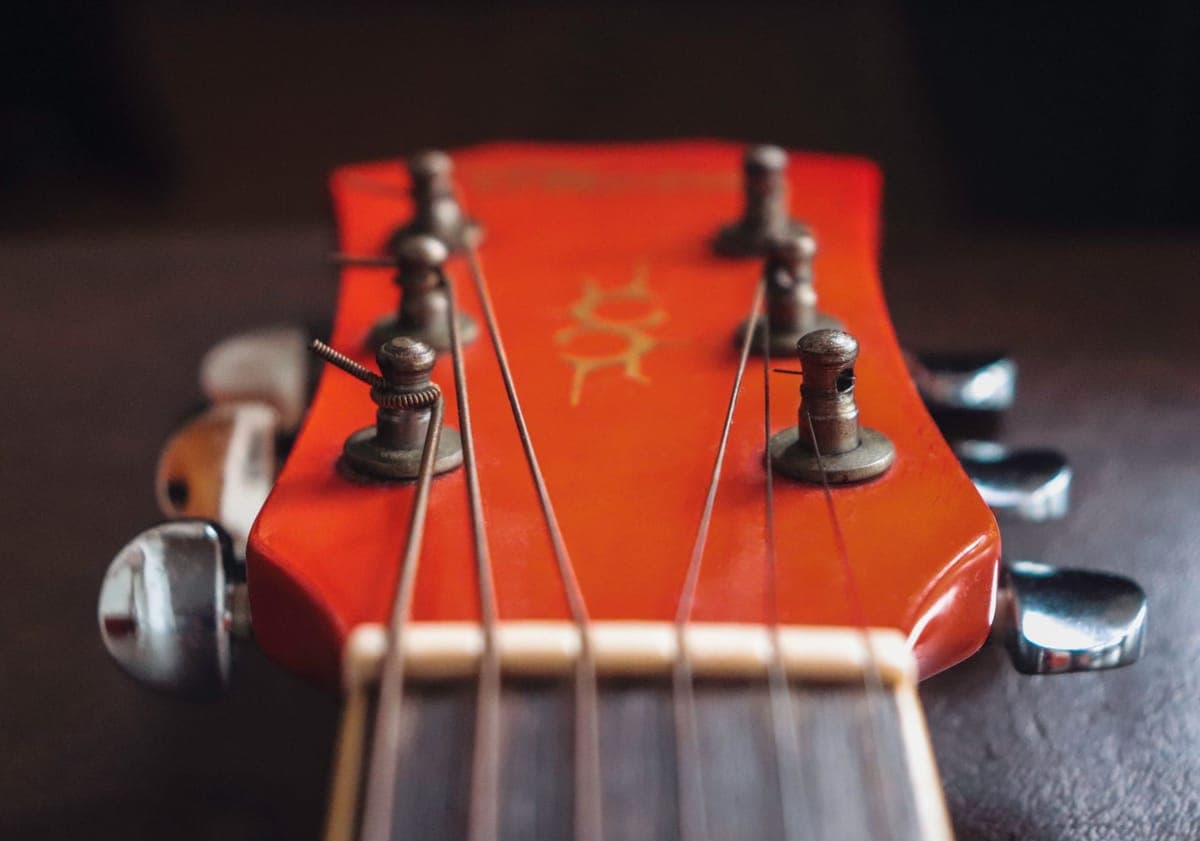
A guitar arrives, and it arrives alone. No tuner, no picks, usually no strap and definitely no spare strings. Then you search for "guitar accessories", get four hundred results sorted by nothing useful, and half of them are bundles containing eleven items you will never touch.
This is the short version. Six things matter in the first month, in roughly this order, and everything past number six can wait until you have a reason for it.
6
Things a first guitar genuinely needs before anything else
Two of them cost less than a takeaway. The most expensive one on the list is optional if you only ever play sitting down.
1. A tuner. Buy this before you play a chord.
An out-of-tune guitar does not sound like an out-of-tune guitar to a beginner. It sounds like you are playing badly. That misattribution is one of the most common reasons people quit in the first month, and it is entirely fixable for the price of a sandwich.
Buy a clip-on chromatic tuner. It clamps to the headstock and reads the vibration traveling through the wood, which means it works with a television on, in a busy shop, and on an acoustic guitar with no electronics at all. A phone app uses the microphone and fails in every one of those conditions.
What to look for: a published accuracy figure if you care (Korg publishes ±1 cent; several brands publish nothing), a display you can read from the playing position, and a clip that grips. The full comparison is in the tuner roundup, and how to use a clip-on tuner covers the part nobody explains — which way to turn the peg.
2. Picks, in several thicknesses
Nobody can tell you which pick gauge suits your hand. Not a shop assistant, not a teacher, and not this page. It depends on your grip, your hand size, and whether you mostly strum or mostly pick single notes.
Dunlop publishes the thickness of every Tortex pick in millimeters and color-codes them by gauge, so a variety pack turns the question into a twenty-minute experiment. Buy twelve picks in six thicknesses, play the same thing with each, and keep the ones that feel right. Then buy a dozen of the winner, because you will lose them — the loss rate on guitar picks is genuinely remarkable.
What changes between gauges, in one line each: thin picks flex and smooth out a strum; medium picks let single notes speak clearly without making chords harsh; heavy picks transmit everything your hand does, which is wonderful later and unforgiving now. The pick thickness guide has the detail.
3. Somewhere to keep it that is not the floor
More beginner guitars are damaged by falling over than by anything that happens while playing them. A guitar leaning against a wall or a sofa is a guitar waiting for someone to walk past.
You have two options and they solve different problems. A stand or wall hanger keeps it out and reachable, which is the single biggest factor in how much you actually practice — an instrument you can pick up in one movement gets played several times a day. A case or gig bag protects it when it leaves the house.
Most people need both eventually. If you can only buy one this month, buy the stand or hanger: the practice effect is real and immediate. The case matters the first time the guitar travels. See stands and cases.
4. A spare set of strings, and a winder
You will break a string. It will happen at the worst possible moment, probably mid-song, and if you have no spare set the guitar is out of action until a shop is open.
Buy the same gauge that is currently on the guitar unless you have a reason to change — and "my fingers hurt" is a perfectly good reason, in which case go one step lighter. The string gauge guide lays out what each step actually changes.
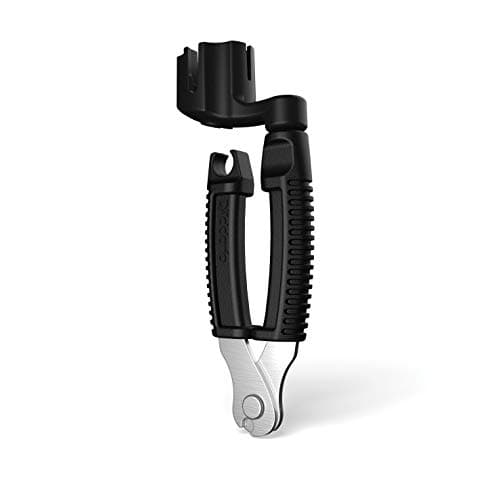
A winder with a built-in bridge-pin puller costs very little and turns a forty-minute struggle into a ten-minute job. The pin puller is the part that matters on an acoustic: levering bridge pins out with pliers or a screwdriver is how people put a permanent dent in a bridge.
The first-month list, and when to buy it| Item | Buy when | Can you skip it? |
|---|
| Clip-on tuner | Before your first practice | No |
| Pick variety pack | Week one | Only if you fingerpick exclusively |
| Stand or wall hanger | Week one | No — this is the practice multiplier |
| Spare strings | Week one | No |
| String winder | Before your first string change | You can do it by hand, slowly |
| Gig bag or case | Before the guitar first leaves home | Yes, if it never leaves |
| Strap | When you first stand up | Yes, if you always sit |
| Strap locks | The same day as the strap | No, if you bought a strap |
| Capo | Month two or three | Yes, for now |
| Humidifier | Only for a solid-wood acoustic in a dry winter | Usually yes |
| Setup kit | Once you decide to learn setups | Yes |
5. A strap — only if you intend to stand up
If you practice sitting down, a strap does nothing for you. Skip it and spend the money on strings.
If you do buy one, buy strap locks at the same time. A standard strap end is a hole in leather pushed over a mushroom-shaped button, held there by friction. Over months the leather stretches, the hole widens, and eventually the strap comes off — usually while you are standing, and the guitar lands headstock first. Strap locks replace the button with one that latches, they cost less than the strap, and they take five minutes with a screwdriver.
One thing to check first: many acoustics have only one strap button, at the base. The other end ties around the headstock. That is traditional and it works, and it means strap locks only solve half the problem on such a guitar.
6. That is the list
Everything else — capos, humidifiers, setup kits, wall hangers, pedals, a second guitar — is a real purchase at the right moment, and the right moment arrives when you can name the problem it solves.
A capo becomes useful when you want to play along with a recording sitting in a key your open chords do not reach. Usually month two or three, not week one.
A humidifier matters for a solid-wood acoustic in a dry winter and does very little for a laminate guitar in a mild climate. Do I need a humidifier answers it honestly for your situation rather than selling you one.
A setup kit is for someone who has decided to adjust their own instrument. Owning the wrench does not make the truss-rod adjustment a beginner job, and a professional setup usually costs less than the tools. Start with does my guitar need a setup.
Two questions that come up once the list is bought
Why do two picks of the same thickness feel different? Because the plastic differs as much as the number does. Pick materials compared is the follow-up to the thickness question.
Leather strap or nylon? Width and padding decide comfort, not the material, and both are sold in both. Leather vs nylon works through it, and either way buy the strap locks at the same time.
What we did not doWe have not played any of this gear. Every guide in this category says it tested twenty tuners; we would rather say plainly that we tested none. What we did instead is on this page in full: published specifications with their sources, the makers' own manuals read rather than paraphrased, and a note wherever a company publishes nothing at all.
If you own an electric, add two things
An electric guitar makes almost no sound on its own, so it needs a cable and something to plug into. The cheapest useful answer is a headphone amp — it plugs into the guitar jack, costs a fraction of a combo amp, and lets you practice at any hour without a conversation about volume. A practice amp is the answer when you want to be heard in a room.
The full electric list, including which parts of the acoustic checklist do not apply, is in the electric starter kit. The acoustic version is here.