A classical guitar is not a quieter acoustic. It has nylon strings at roughly half the tension, a wider neck, a flat fingerboard, no strap buttons in most cases, and usually no truss rod at all. Almost every beginner accessory list on the internet was written for a steel-string dreadnought, and a good part of it is either useless here or actively wrong.
This is the same list as the first-guitar checklist, corrected in the places where a nylon-string instrument genuinely differs.
1. A tuner, and nothing changes here
This is the first purchase regardless of what you play. A clip-on tuner reads the vibration traveling through the headstock rather than the sound in the air, so it works in a room with a television on and it works on an instrument with no electronics at all, which describes almost every classical guitar sold to a beginner.
Korg publishes plus or minus 1 cent for the Pitchclip 2 and Peterson publishes plus or minus 0.1 cent for the StroboClip HD; several other makers publish no accuracy figure at all. That is the entire basis on which the tuner roundup is ranked, and none of it changes for nylon.
One practical thing does change. Nylon stretches far more than steel, and a fresh set will drift flat for several days. That is normal and not a fault with the guitar, the strings or the tuner. Expect to retune three or four times in the first session and daily for about a week.
2. Strings, sold by tension rather than gauge
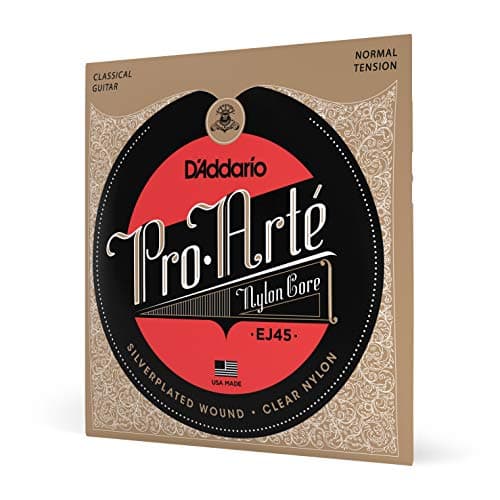
Nylon sets are sold by tension, not by gauge. Normal, hard and extra-hard describe how tight the set sits at pitch, and the sensible default for a beginner is normal tension: easier on untrained hands and gentler on a guitar whose bracing you know nothing about.
D'Addario publishes per-string gauges and tension figures across the Pro-Arte range, which is unusual and useful, because it lets you compare a normal-tension set against a hard-tension one as numbers rather than adjectives. Savarez publishes considerably less. Both sets, and the reasoning, are laid out in nylon strings for a first classical guitar.
The part that catches people out is fitting them. A classical guitar has no bridge pins. Each string is threaded through a hole in the tie block and knotted back on itself, and a knot tied badly slips under tension, usually about ten minutes after you finish and usually with a crack loud enough to make you drop the guitar. Give yourself an hour the first time. The method in how to change guitar strings still applies at the tuner end; it is only the bridge that differs.
0
Bridge pins on a classical guitar
The strings are knotted through a tie block instead. Every bridge-pin puller sold as part of a string-winder set is dead weight on this instrument.
Changing them is its own job, too: no bridge pins, a knot at each end and strings that go on stretching for days. How to restring a classical guitar sets it out from what the makers publish.
3. A capo, and this is where steel-string advice does damage
A steel-string fingerboard is curved. Makers describe the curve as a radius, quoted in inches, and every capo built for a steel-string guitar has a bar curved to match. A classical fingerboard is flat.
Put a radiused capo on a flat fingerboard and the bar touches in the middle first. To get the outer strings down you have to clamp far harder than the instrument needs, which pulls the middle strings sharp and presses the bar into the edges of the neck. The strings buzz, the chord sounds wrong, and the usual conclusion, that the guitar is set up badly, is not the problem.
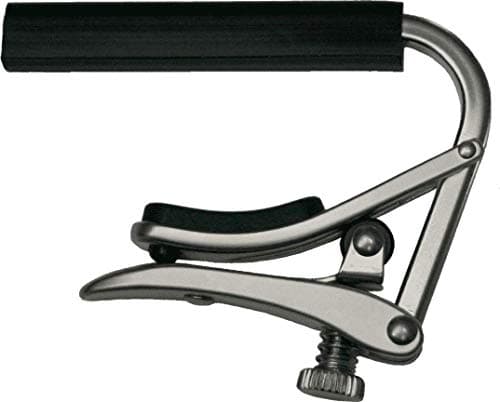
Shubb sells the C2 specifically for nylon-string guitars: the same adjustable over-center mechanism as the C1 that wins the acoustic capo roundup, with a flat bar. It is one dimension changed on a proven tool rather than a marketing variant. Shubb publishes no radius figure for either model, so flat against curved is the whole specification you get, and we have said so on the spec card rather than inventing a number. Classical guitar capos compares five of them on flat bars, published width and how the tension is set.
Whether you need a capo at all in your first months is a separate question, answered in do I need a capo as a beginner. The short version: not for technique, sometimes for singing.
4. A strap, probably not
Most classical guitars ship with no strap buttons at all. The classical playing position puts the instrument on the left thigh with the leg raised, and the guitar is held by its own geometry rather than by a strap. If you intend to learn in the traditional seated position, a strap is not a missing accessory. It is not part of the instrument.
What raises the leg is a footrest, a small adjustable step under the left foot, or a cushion that clamps to the guitar side. We do not recommend a specific one here, because the right height depends on your own proportions and on whether you have any back trouble, and because it is the one item on this page a teacher should watch you use before you buy. Ask in your first lesson. When you are ready to buy, guitar footstools and supports compares the two approaches on what each maker publishes, and explains why an adjustable one is the safe first purchase.
If you do want to stand up and play, fitting a strap to a classical guitar usually means a lace tied around the headstock behind the nut plus an endpin fitted at the base, and fitting an endpin means drilling the instrument. That is technician work, not a first month. Everything in the strap-lock page assumes two buttons already exist.
5. A case, the same decision in a different shape
Nothing about the case argument changes: the question is whether the guitar leaves your control, and it is worked through in gig bag vs hard case. What changes is fit. A classical body is smaller and shallower than a dreadnought and the neck is wider at the nut. A dreadnought bag will hold a classical guitar the way a coat hanger holds a scarf. It fits, and it does nothing.
Buy a bag or case listed for classical or 4/4 concert size. Where a maker publishes internal dimensions, use them. A lot of makers publish only the outside, which tells you nothing about whether your guitar goes in, and that gap is called out by name on every case page here.
6. Care, and the one product to be careful with
Cleaning is the same job as on any guitar and the method is in how to clean a guitar. Two classical-specific cautions are worth stating plainly.
Fretboard oil. Fine on an unfinished rosewood or ebony fingerboard, which is what most classical guitars have. But nylon strings pick oil up and hold it, and an oily nylon string sounds dead. Oil the board with the strings off, wipe it thoroughly, and do it while you are changing strings rather than as a separate job. The formulation argument is in the fretboard oil page.
Polish on a French-polished top. Some classical guitars, particularly hand-built ones, are finished in shellac rather than polyurethane. Shellac dissolves in alcohol and several general-purpose instrument polishes contain some. If you do not know what finish your guitar has, a dry microfiber cloth is the whole care routine, and it is enough.
7. Humidity, which matters more here
A solid wood top is more sensitive to dry air than a laminate, and classical guitars are more likely than cheap steel-strings to have a solid top even at the entry level. The advice in do I need a guitar humidifier applies with slightly more force: measure the humidity in the room before you buy anything, because the answer in a damp climate is usually no and in a heated winter flat is usually yes. A hygrometer costs less than a humidifier and tells you which of those you are in. See guitar hygrometers.
What a classical beginner does not need
A string winder with a bridge-pin puller. Half the tool is for a bridge you do not have. A plain winder still saves time.
A truss rod wrench. Most classical guitars have no truss rod. The neck is held straight by the wood and by the low string tension. There is nothing to adjust and nothing to buy, which also means the line drawn in the setup kit page does not apply to you in the same way.
A pick. Classical technique is fingers and nails. You may still want picks if you also play steel-string, and if so the pick thickness guide is the place to start, but nothing about learning classical guitar requires one.
An amp, a cable or a headphone amp. No pickup, no signal. Classical guitars with electronics exist, and they are not what most beginners are handed.
The order to buy in
Tuner first, because an out-of-tune instrument teaches your ear the wrong thing and makes practice sound like failure when it is not. Then a bag or case in the right size, because most first guitars are damaged by being knocked over rather than by being played. Then a spare set of strings, because you will break one and it will be at the worst possible moment. Then, if a teacher agrees you need it, a footrest. The capo comes when a piece of music asks for it, and not before.
What we did not doWe have not played any of this gear. Every guide in this category says it tested twenty tuners; we would rather say plainly that we tested none. What we did instead is on this page in full: published specifications with their sources, the makers' own manuals read rather than paraphrased, and a note wherever a company publishes nothing at all.