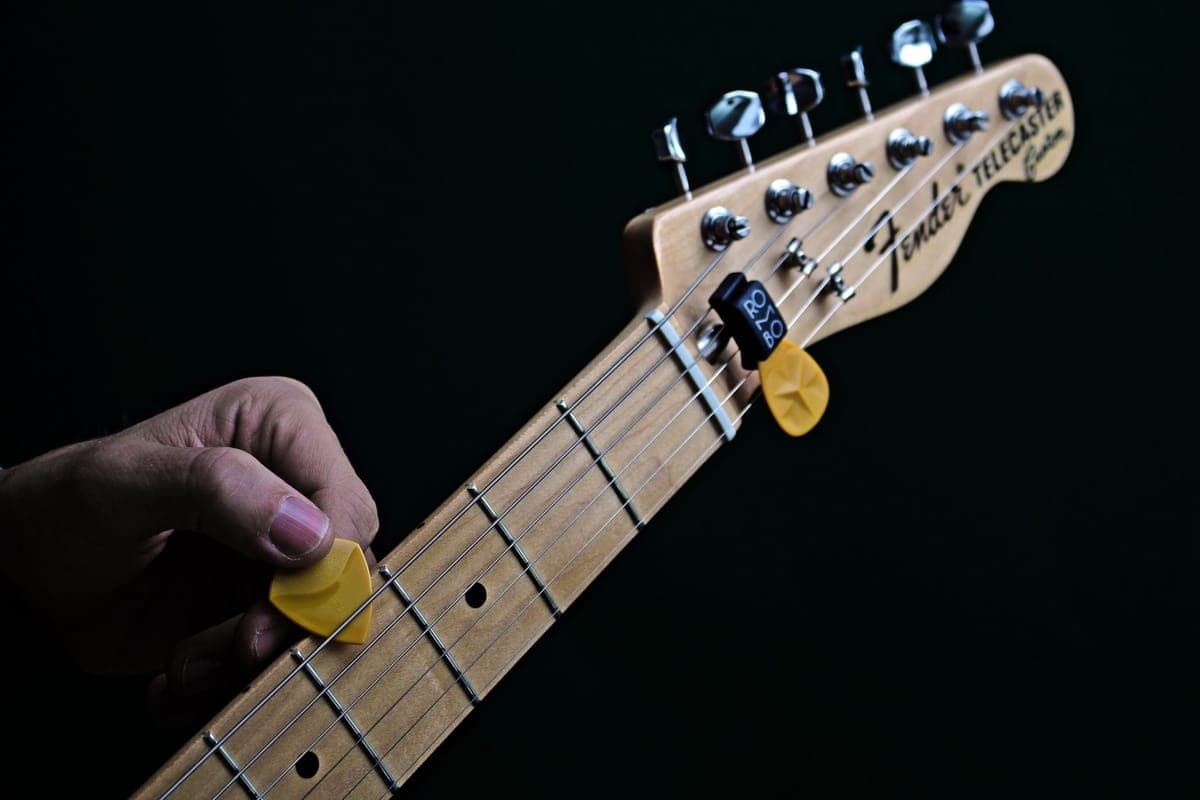
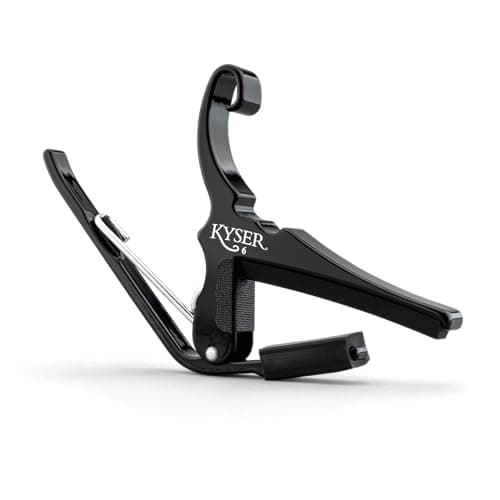
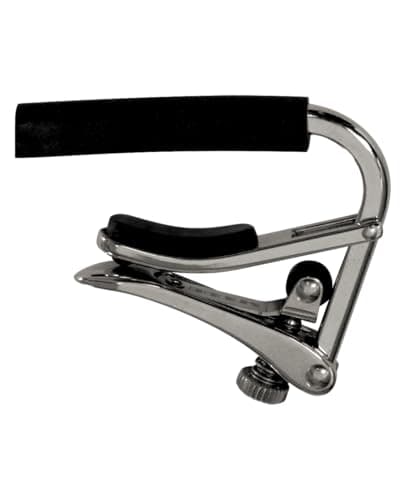
A capo clamps across all six strings at a chosen fret, which shortens every string by the same amount and raises the pitch of everything by the same number of semitones. Your fingers keep doing the shapes they already know; the guitar comes out in a different key.
The two problems it actually solves
1. A song sits in a key your open chords do not reach
Open chord shapes — G, C, D, E minor, A minor — are the first ones everybody learns, and they are easy because they use open strings. The keys those shapes live in are a small subset of the keys music is written in.
A recording in E flat has no comfortable open-chord shapes. Put a capo at the first fret, play the shapes for D, and you are in E flat. The alternative is barre chords, which take months.
This is the moment beginners discover capos, and it usually arrives in month two or three — the first time you try to play along with a record rather than a lesson.
2. Matching a singer
If you or someone else is singing, the key that suits the voice may not be the key the guitar is comfortable in. A capo moves the guitar to the voice without changing anything about how you play.
This is the reason capos are so common in folk and singer-songwriter contexts and comparatively rare in instrumental electric playing.
1 fret = 1 semitone
What a capo actually does
Capo at fret 2 and play G shapes, and the guitar sounds an A. The shapes do not change; the pitch does.
The third thing it does, which is not a problem to solve
A capo up the neck changes the character of the instrument. Shorter strings sound brighter and tighter, and the guitar takes on something of a mandolin quality high up. Plenty of arrangements use it deliberately for exactly that.
That is a creative use rather than a fix, and it is a reason to own one eventually rather than a reason to buy one in week one.
Why not in the first month
Because you have not run into the problem. In month one you are learning shapes, building calluses and working on changing between chords cleanly. None of that involves keys you cannot reach.
The list of things a first guitar genuinely needs is short, and a capo is not on it — the first-guitar checklist has the six that are.
The two arguments against relying on one
It postpones barre chords. Barre chords are hard and essential, and a capo makes it possible to avoid them for a long time. Use a capo because a song calls for it, not as a permanent workaround for a technique you have not learned.
It can hide tuning problems. A capo that pulls the guitar sharp teaches your ear that slightly-sharp is normal. Check the tuning after fitting one, every time — see how to use a capo.
When you do buy one
The decision is mechanism, not brand. A fixed-tension spring capo is instant and one-handed and applies the same force to every neck; an adjustable capo takes a moment to set and disturbs the tuning far less. Both arguments are laid out in the acoustic capo roundup.
One thing to check before buying: a classical guitar has a flat, wide fretboard and needs a classical capo. A steel-string capo on a classical guitar presses unevenly, and is usually too narrow for the neck as well.
What we did not doWe have not played any of this gear. Every guide in this category says it tested twenty tuners; we would rather say plainly that we tested none. What we did instead is on this page in full: published specifications with their sources, the makers' own manuals read rather than paraphrased, and a note wherever a company publishes nothing at all.