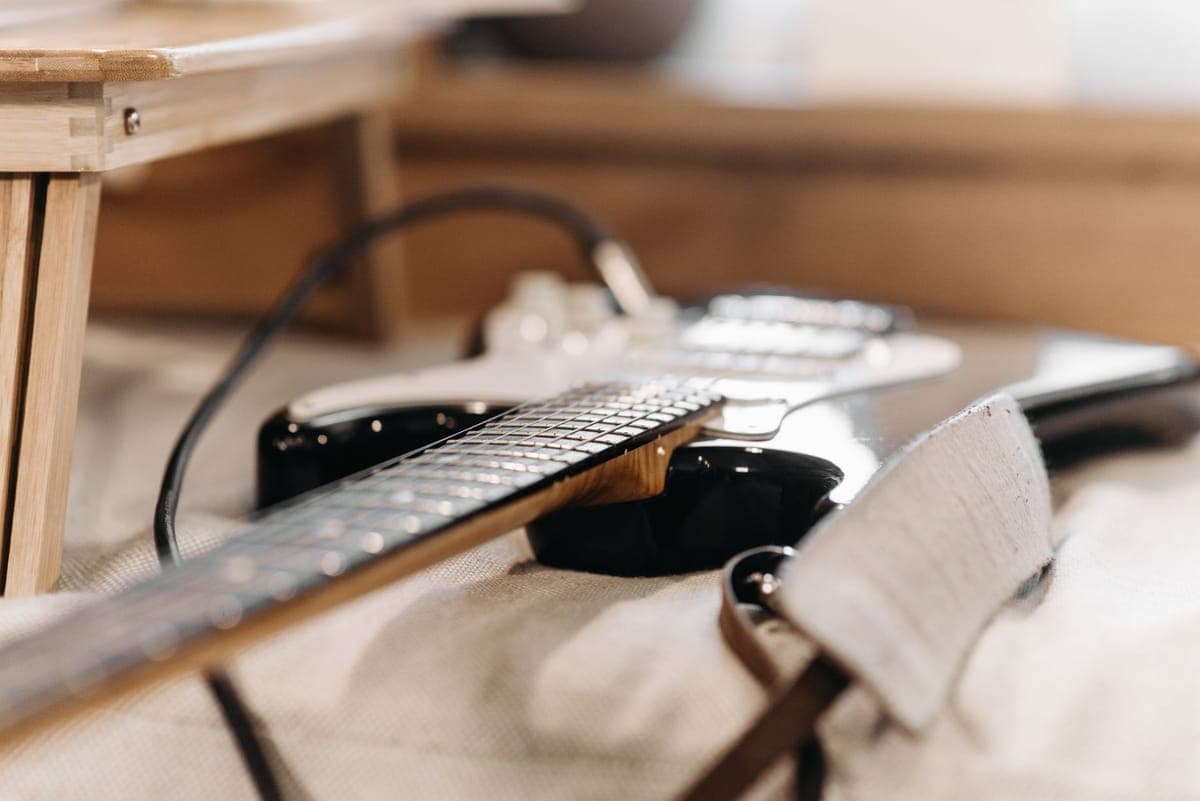
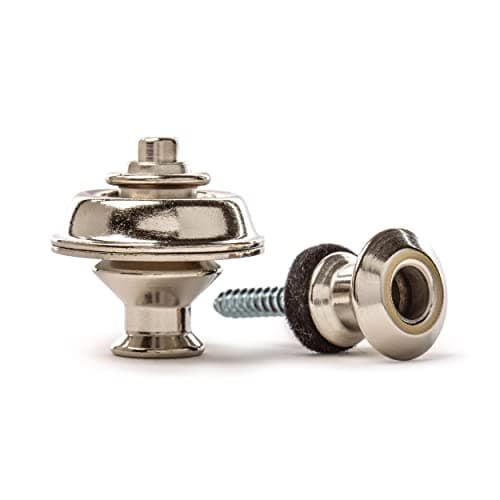
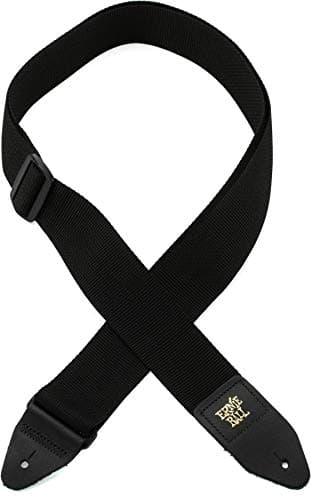
A standard strap end is a hole in leather pushed over a mushroom-shaped button. Nothing holds it there except friction and the button's lip.
Over months, the leather stretches and the hole widens. Eventually the strap comes off — usually while you are standing, usually without warning, and the guitar lands headstock first, which is the part most likely to break.
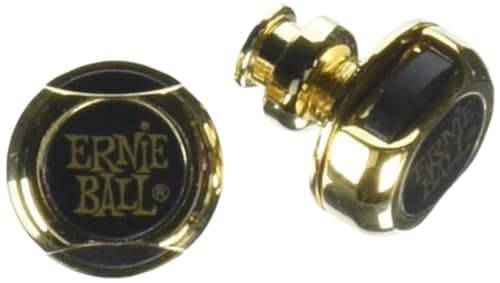
Strap locks replace the button with one that latches into a matching collar fitted to the strap. They cost less than the strap and fit in five minutes with a screwdriver.
The two systems
Ernie Ball Super Locks and Dunlop Straploks are the two long-standing designs. Both replace the guitar's strap buttons and add a collar to the strap ends. Both are widely used by working players.
They are not compatible with each other. A strap fitted with one system will not attach to a guitar fitted with the other. Pick one and stay on it across your instruments — otherwise you end up with straps that only fit some of your guitars, which defeats the point.
How they compare | Ernie Ball Super Locks | Dunlop Straplok |
|---|
| Fitting | Replaces existing strap buttons | Replaces existing strap buttons |
| Engagement | Locking cup on the strap end | Positive click into the button |
| Cross-compatible | No | No |
| Finish options | Limited | Several, to match hardware |
| Published load rating | None | None |
The specification nobody publishes
Neither maker publishes a load rating, a pull-out force, or a cycle count. Nor does anyone else in the category.
We are not going to invent one. What can be said is that the failure mode these products eliminate is the commonest cause of accidental guitar damage among beginners, and the cost of the product is a small fraction of a headstock repair. That is a sound argument without needing a number attached to it.
5 minutes
Fitting time, with one screwdriver
Unscrew the old button, screw in the new one, fit the collar to the strap. The hardest part is not losing the small parts.
Fitting: what to watch for
Screw size. The new button's screw is often slightly larger than the original. Usually fine — it bites into fresh wood. If the original hole is worn and the new screw does not grip, the standard fix is a matchstick or toothpick with wood glue in the hole, left to set, then re-drilled. That is a repair task rather than a five-minute job, so check before you assume.
Do not overtighten. Guitar body wood is soft and the screw will strip the hole if you lean on it.
Keep the original buttons. If you sell the guitar, the buyer may want them back, and they cost nothing to keep in the case pocket.
The acoustic problem
Many acoustics have only one strap button, at the base of the body. The other end of the strap is tied around the headstock behind the nut.
That means strap locks only secure one end on such a guitar. It also means the headstock end is a knot in a lace, which is more secure than it looks — knots do not stretch the way a leather hole does.
Fitting a second strap button at the neck heel is a common modification and a permanent one, involving drilling into the heel. It is a technician job, not a first-month one, and it is worth doing before you conclude you dislike playing standing up.
Do you need them?
If you ever play standing up: yes. The cost is trivial against the failure it prevents.
If you only ever play seated: no, and you probably do not need a strap either.
The strap itself is a simpler decision — width and adjustment range, both published. The straps roundup covers it, and leather vs nylon settles the material question, which matters less than the width one.
What we did not doWe have not played any of this gear. Every guide in this category says it tested twenty tuners; we would rather say plainly that we tested none. What we did instead is on this page in full: published specifications with their sources, the makers' own manuals read rather than paraphrased, and a note wherever a company publishes nothing at all.