An unplugged electric guitar is quieter than a conversation. That is not a defect — it is the point, and it is genuinely useful for silent practice — but it means two items on this list are not optional in the way the rest are. Without a cable and something to plug into, you own a very quiet piece of furniture.
The two things it cannot work without
A cable
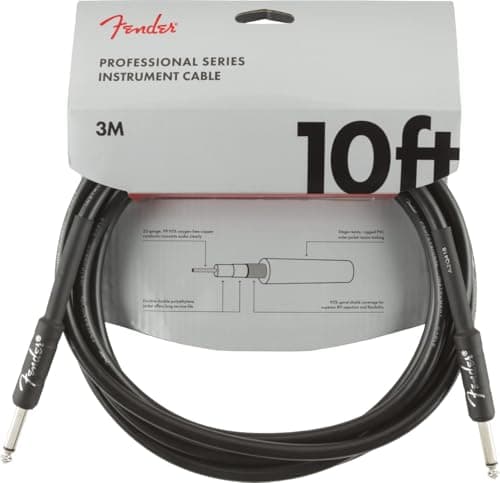
Buy the length you need and no more. A ten-foot cable is plenty for a bedroom; longer cables are more to trip over and, at real lengths, more capacitance between the guitar and the amp. Fender publishes 90% copper shield coverage and a limited lifetime warranty on its Professional Series — the warranty is the specification that matters, because instrument cables fail at the jack and they always will.
Do not buy the cheapest cable in the shop. A failing cable produces crackling, dropouts and intermittent silence, and every beginner who experiences that assumes the guitar or the amp is broken. The cable roundup covers what separates them.
Something to plug into — and it should probably be headphones
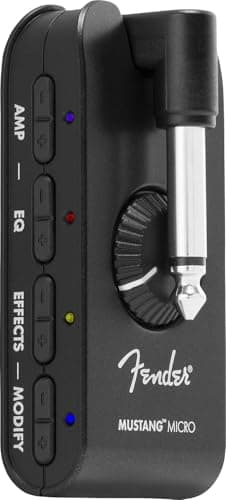
The conventional answer is a small practice amp. The better answer for most beginners is a headphone amp: a device the size of a matchbox that plugs straight into the guitar's jack and feeds amp modeling into headphones.
The reason is not tone, it is hours. A beginner improves by playing often, and playing often means playing at times when a speaker in the room is not welcome — early morning, late evening, in a flat, in a shared house. Fender's Mustang Micro publishes twelve amp models and twelve effect combinations with Bluetooth audio in, which means backing tracks come through the same headphones. Vox's amPlug 3 publishes its battery life in hours.
A practice amp is the right purchase when you want to be heard in a room — playing with someone else, or just because a speaker moving air feels different. Boss publishes about seven hours from six AA batteries for the Katana-Mini; Fender publishes 10 W through a six-inch speaker for the Frontman 10G. Both are covered in practice amps.
2
Items an electric guitar cannot make a sound without
A cable, and something to plug into. Everything else on this page is the same list any guitar needs.
Then the normal list
A clip-on tuner. Same as any guitar. A pedal tuner is an option on an electric and it is a later one — it needs power, a second cable and somewhere to put a pedal. See clip-on vs pedal vs app.
Picks. Electric players tend to end up slightly heavier than acoustic players, because a heavier pick gives more control over single notes. Start with a variety pack anyway.
Spare strings. Electric sets are nickel or nickel-plated steel. Nine-gauge sets (Super Slinky, EXL120) are noticeably easier to bend than tens, which matters a great deal in the first year — bending is where electric playing starts. Electric strings for beginners has the comparison.
A strap and strap locks. More urgent on an electric than an acoustic, because solid-body electrics are heavier and because they have two proper strap buttons, so a locking system secures both ends. See strap locks.
A stand. Same argument as always: a guitar within reach is a guitar that gets played.
What to skip in year one
- Pedals. A modern practice amp or headphone amp has drive and reverb built in. Individual pedals are a project for when you know what you want to change about your sound.
- A pedal tuner. Excellent, and pointless until there is a board to put it on.
- A humidifier. Solid-body electrics are far less humidity-sensitive than acoustics. Extremes still cause sharp fret ends, but this is not a first-year purchase.
- A big amp. Wattage is not quality. A 10 W practice amp at bedroom volume sounds better than a 50 W amp at the same volume, because most amps need to be pushed to sound like themselves.
The setup point, again
Cheap electrics leave the factory with high action and, often, sharp fret ends. Both are fixable in an hour by a technician, and both make an enormous difference to how the guitar feels. If your new electric is hard to fret above the fifth fret, that is not you. Guitar action too high explains how to check it and where the line is between a job you can do and a job you should pay for.