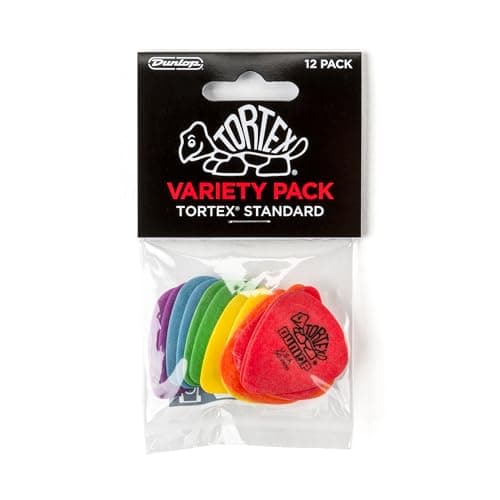
The pick thickness guide makes the case that thickness is the decision that matters and that a variety pack settles it in an afternoon. That is still true and this page does not contradict it. It answers the question that comes next, which people arrive at after a week of the variety pack: why do two picks that both say 0.60 mm feel like different objects?
The answer is the material. Thickness tells you how much plastic is between your fingers and the string. Stiffness tells you how much of your hand's motion reaches the string rather than being absorbed by the pick bending, and stiffness is a property of the plastic as much as of the thickness.
The three plastics you will actually encounter
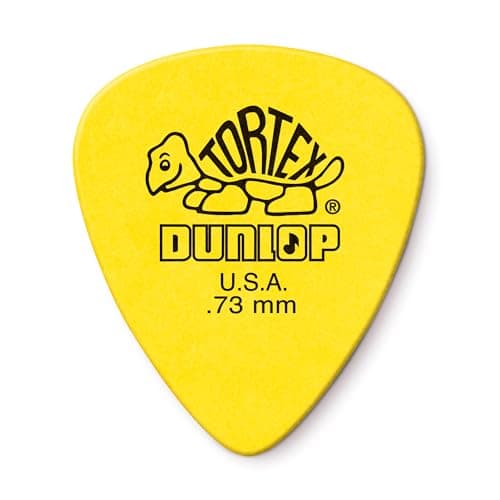
Delrin — Dunlop Tortex and its relatives
The matte, slightly chalky picks in the color-coded gauges. Dunlop publishes six Tortex Standard thicknesses — .50, .60, .73, .88, 1.0 and 1.14 mm — and color-codes them, which is why the thickness guide leans on them: the experiment is legible.
Delrin is stiff for its thickness and it has a naturally grippy surface that does not need texturing. It wears by developing a rough, slightly furred edge, which some players like as it happens and most replace at that point. It is the most neutral-sounding of the three, which is a large part of why it is the default recommendation.
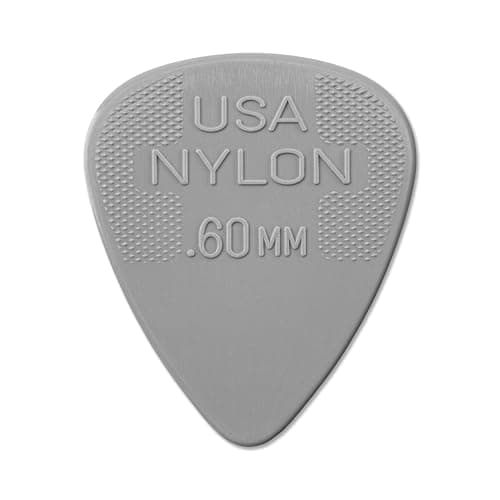
Nylon — Dunlop Nylon Standard and equivalents
The gray ones, usually with a molded grip pattern in the higher-grip versions. Nylon is noticeably more flexible than Delrin at the same printed thickness, so a 0.60 mm nylon pick bends further under the same hand pressure than a 0.60 mm Tortex does.
That extra give does two things. It smooths out the attack, which flatters strumming and makes an uneven right hand sound more even — a genuine benefit in the first months. And it slows down fast single-note playing, because the energy that went into bending the pick did not go into the string.
The plain Nylon Standard has a smooth face and can slide in a damp hand. Dunlop makes a Max Grip version of the same pick specifically to address that, which tells you the complaint is real. We have marked the grip treatment as unpublished on the plain model's spec card rather than describing a surface the listing does not claim.
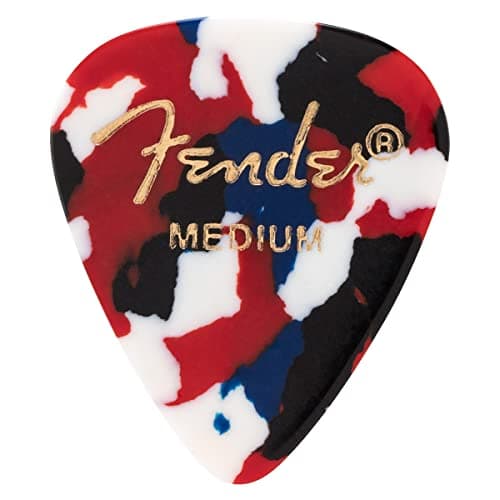
Celluloid — Fender 351 and the classic tortoiseshell look
The glossy, marbled ones. Celluloid is the oldest pick material still in wide use and it is the reference point that everything else gets described against, largely because it is what a generation of records was made with.
It is slick, it has a brighter and more percussive attack than Delrin, and it wears fastest of the three. The gloss surface is also the slipperiest here, which is why celluloid picks are so often the ones that end up on the floor.
The comparison that actually helps
Published material and thickness| Pick | Material | Published thickness | Feel at that thickness |
|---|
| Dunlop Tortex Standard | Delrin | .50 to 1.14 mm, six gauges | Stiff for the thickness |
| Dunlop Nylon Standard 0.60 | Nylon | 0.60 mm | Flexes further than Delrin at the same number |
| Fender 351 Classic Celluloid | Celluloid | Thin, medium, heavy | Bright attack, slick surface |
Note the third row. Fender sells the 351 in named grades rather than millimeters, which means you cannot line it up against the other two numerically — you are comparing a number to an adjective. That is a real gap and it is the single most annoying thing about buying picks.
6
Tortex Standard thicknesses Dunlop publishes in millimeters
Fender publishes thin, medium and heavy for the 351 instead. When one maker publishes numbers and another publishes adjectives, the numbers are the ones you can plan with.
How to run the experiment properly
The mistake is changing two things at once. If you switch from a 0.73 Tortex to a 0.60 nylon and decide you prefer it, you have learned nothing about whether that was the material or the thickness.
Step one: settle thickness first, in one material. Buy a Tortex variety pack, play each gauge for a couple of days, and find the one your hand stops arguing with. That is what the thickness guide is for and it is the bigger of the two variables by a distance.
Step two: change only the material. Buy a nylon and a celluloid pick as close to your settled thickness as each range allows. Play the same thing on all three. If nothing changes, you have your answer and you never need to think about pick material again, which is a perfectly good outcome and the most common one.
Step three: stop. There is a large and expensive world of boutique pick materials beyond these three, and none of it will affect your playing in the first years the way ten minutes of practice will. This is a settled-and-forgotten decision, not a hobby.
What material changes, and what it does not
It changes attack. Celluloid is the brightest and most percussive, Delrin sits in the middle, nylon is the warmest and roundest. The difference is audible unplugged and small.
It changes grip. Delrin is grippy without texturing. Celluloid is slick. Plain nylon is smooth but is widely sold in textured versions. If you drop picks constantly, this is the property to optimize for and it matters more day to day than tone.
It changes how they wear. Delrin furs up, celluloid wears fastest, nylon wears smooth. All three are consumables and none of them is expensive.
It does not change your tone the way strings do. The alloy and age of your strings is a much larger lever on how an acoustic sounds than any pick you can buy — phosphor bronze against 80/20 is a bigger difference than Delrin against celluloid, and old strings against new is bigger than both put together.
It does not fix technique. A flexible pick smooths out an uneven strum, which is useful and is also a way of not noticing that the strum is uneven. Both things are true.
Which to buy first
Delrin, in a variety pack, because it is the material with published thicknesses across a full range and it is the most neutral starting point. When you have settled a thickness, spend the price of a coffee on a nylon pack at roughly the same gauge and find out whether you are a person who prefers flex.
Buy celluloid last, and buy it because you like the way it looks and sounds rather than because you expect it to solve anything. That is a legitimate reason to buy a pick and there is no need to dress it up as a technical one.
Which gauge to settle on in whichever material depends on the instrument: picks for acoustic ranks on flex, and picks for electric ranks on stiffness.
What we did not doWe have not played any of this gear. Every guide in this category says it tested twenty tuners; we would rather say plainly that we tested none. What we did instead is on this page in full: published specifications with their sources, the makers' own manuals read rather than paraphrased, and a note wherever a company publishes nothing at all.