Before either material: if you only ever play sitting down, you do not need a strap. That is not a throwaway line. A large proportion of beginner strap purchases are made because a strap seems like a thing guitars have, and it then lives in a drawer. The first-guitar checklist puts it fifth for that reason.
If you do stand up, here is the honest version of a comparison that usually gets written as a materials argument.
The thing that actually decides comfort
A guitar has a fixed weight. A strap spreads that weight across your shoulder, and how well it does that is a function of width and padding, not of what the strap is made from.
A 2 inch strap concentrates the weight across two inches of trapezius. A 3 inch padded strap spreads the same weight across half as much pressure per unit area. That is the whole comfort story, and it applies identically whether the 3 inches are leather, nylon or anything else.
The reason leather gets the reputation is simply that wide padded straps are usually made of leather and cheap narrow ones are usually made of nylon. The correlation is real. The causation is not what people think it is.
41"–72"
Adjustment range Ernie Ball publishes for the Polypro strap
It is one of the few strap specifications any maker publishes as a number, and it covers essentially every player. Most makers publish nothing at all.
Nylon, honestly
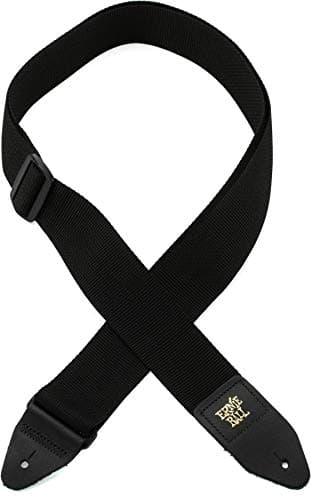
Ernie Ball's Polypro is the reference point: woven polypropylene, 2 inches wide, with a published adjustment range of 41 to 72 inches. It costs about as much as a set of strings.
What it does well. It is effectively indestructible, it does not care about rain or sweat, it does not stretch, and it is cheap enough that owning three is not a decision. The published adjustment range covers everyone from a seated child to a player wearing the guitar at their knees.
What it does badly. Two inches of unpadded webbing under a heavy solid-body gets uncomfortable inside an hour. The woven surface can also catch on knitwear, which is a small irritation that becomes a large one on stage.
Who it is for. Almost every beginner. It is the right first strap because it costs nothing to be wrong about, it does the job for a lightweight acoustic completely, and it lets you find out whether you are actually going to stand up before you spend properly.
Leather, honestly
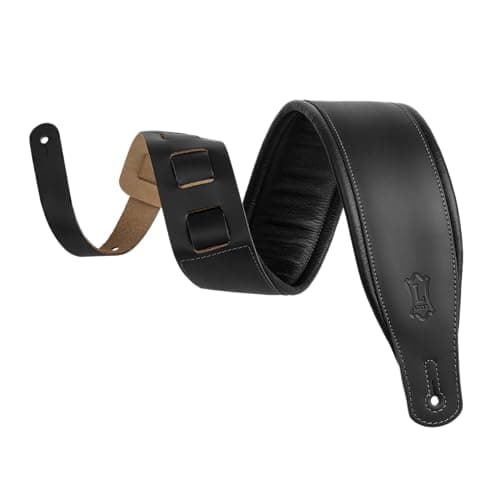
Levy's padded garment leather at 3 inches wide is the other end. Three inches with foam padding is a genuinely different experience under a heavy guitar, and leather softens and takes the shape of your shoulder over months in a way webbing never does.
What it does well. Comfort under weight, which is the entire point. It also lasts effectively forever if you keep it dry, and it looks and feels like a serious piece of equipment, which is not a technical argument and is a real reason people buy them.
What it does badly. It costs several times a nylon strap. It does not like being soaked. And it does nothing whatsoever for you if you play sitting down, which is how most practice actually happens.
The specification problem. Levy's publishes width and materials but adjustment range varies by model within the range, which means the number you need is on the specific listing rather than in the family description. We have marked that as unpublished on the spec card. If you are tall, or you wear the guitar low, check the range before ordering rather than after.
Side by side
What each maker publishes | Ernie Ball Polypro | Levy's padded leather 3" |
|---|
| Material | Woven polypropylene | Garment leather with foam padding |
| Width | 2" | 3" |
| Padding | None | Foam |
| Published adjustment range | 41"–72" | Varies by model — check the listing |
| Weather | Indifferent | Keep it dry |
| Relative cost | About a set of strings | Several times that |
The purchase that matters more than either
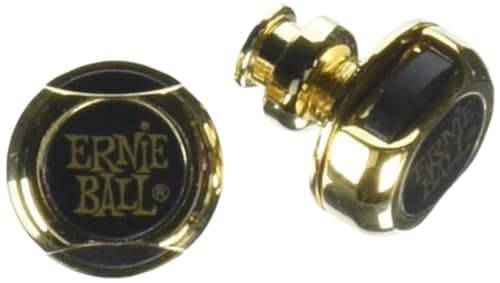
Whichever you buy, buy strap locks at the same time. And if the guitar is an acoustic with a single strap button, check straps for acoustic guitar before ordering — a standard strap has two slots and no way to attach the top end.
The most common way a beginner guitar gets its first crack is a strap end slipping off a strap button while the player is standing. It is not a rare event, it is not a sign of a cheap strap, and it happens to expensive leather exactly as readily as to cheap webbing, because the failure is at the button rather than in the strap.
A set of strap locks costs a fraction of the guitar and removes the failure mode entirely. The mechanisms, and the difference between a locking system and a rubber washer, are in the strap lock page. If your budget only stretches to one thing, buy the nylon strap and the locks rather than the leather strap alone.
Two things that are not about material at all
The end holes stretch. On any strap, of any material, the slot that goes over the button widens with use, and a widened slot is how straps come off. Check yours occasionally. Leather widens more slowly than nylon and it still widens.
Acoustics often have only one button. Many acoustic guitars have an endpin at the base and nothing at the heel, and the traditional fix is a lace tied around the headstock behind the nut. That works, it is what the little shoelace in the packet is for, and fitting a second button instead means drilling the instrument — which is technician work, not a first-month job. The same issue on classical guitars is covered in the classical starter kit page.
Suede is sold on grip, mostly without a grip claim. Exactly one major maker publishes that a suede backing helps hold an instrument still, and the belief that a rough backing grips your shirt is not published by anybody — neck dive goes through what each brand does and does not put in writing.
The answer
Buy the nylon strap and a set of strap locks. Play standing up for a month. If your shoulder complains, or if you have bought a heavy solid-body, buy a 3 inch padded leather strap and move the locks over to it — they unscrew.
That sequence costs less than buying the leather strap first and being wrong about whether you stand up, and it puts the money on the part that prevents damage rather than the part that looks good.
What we did not doWe have not played any of this gear. Every guide in this category says it tested twenty tuners; we would rather say plainly that we tested none. What we did instead is on this page in full: published specifications with their sources, the makers' own manuals read rather than paraphrased, and a note wherever a company publishes nothing at all.