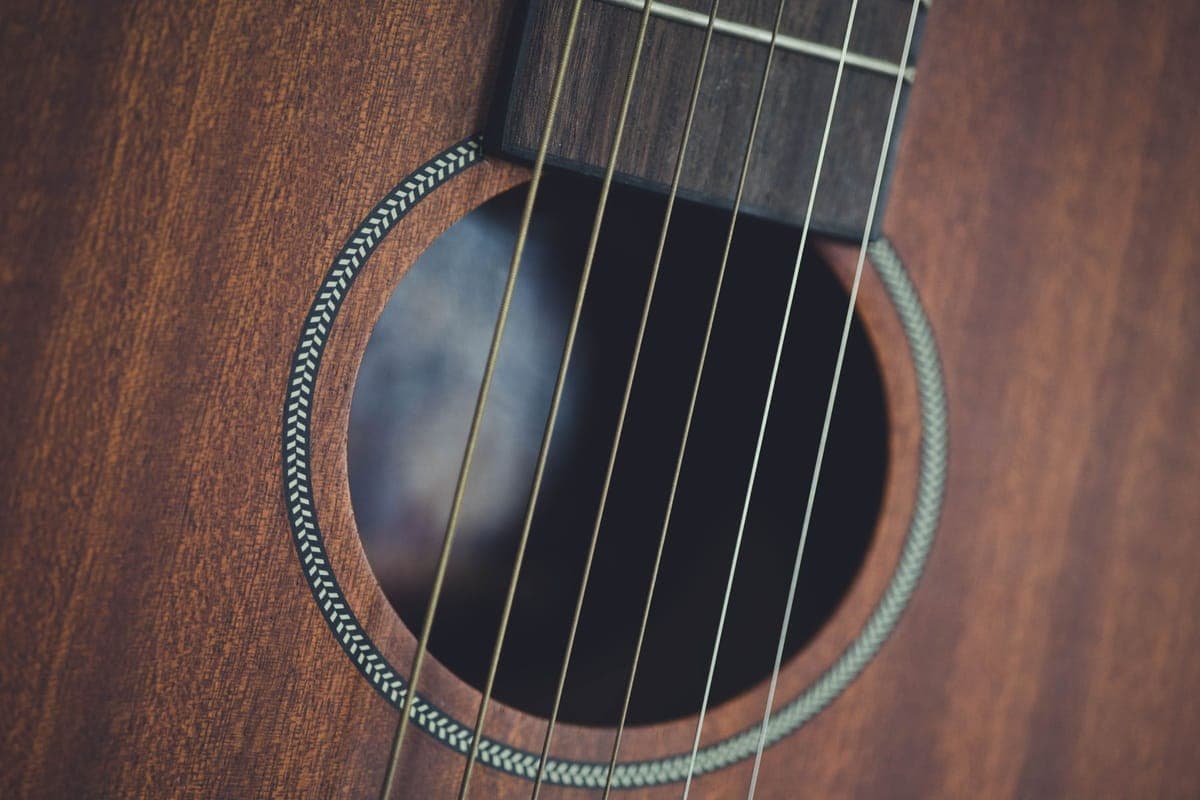
An acoustic guitar is the simpler instrument to accessorize. It needs no cable, no amp and no power. Plug nothing in, pick it up, and it makes a sound. That is most of its appeal and it is also why the accessory list is shorter.
Two things are genuinely specific to acoustics, and neither appears on a generic accessories list. The first is humidity: a solid-wood acoustic is a thin wooden box under tension and it responds to dry air in ways a solid-body electric simply does not. The second is bridge pins — the six small pegs holding the strings into the bridge, which need a proper tool to remove and are the commonest way a beginner damages an acoustic.
The list, in order
A clip-on tuner. More important on an acoustic than an electric, because an acoustic has no pickup, which means a pedal tuner is not an option and a phone app is your only alternative. A clip-on reads vibration through the headstock and works regardless of room noise. See tuners for acoustic.
Picks in several thicknesses. Thickness matters more on an acoustic than on an electric, because the guitar's whole voice comes from how the string is set moving. A thin pick strums an acoustic beautifully and picks single notes badly; a heavy pick does the opposite. Most acoustic players end up somewhere between .60 and .88 mm.
A spare set of strings. Acoustic strings are bronze or phosphor bronze over a steel core, and they are not interchangeable with electric strings — bronze produces almost no output through a magnetic pickup, and nickel electric strings sound thin and quiet on an acoustic top. Light gauge (12–53) is the default; extra light (10–47) if your fingertips are struggling. Full detail in acoustic strings for beginners.
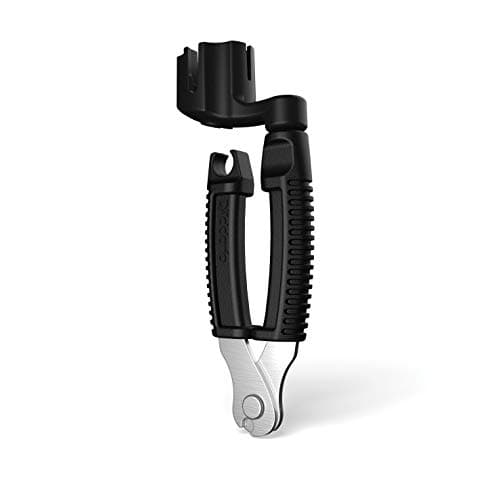
A winder with a bridge-pin puller. This is the acoustic-specific tool. Bridge pins wedge in tightly and people improvise with pliers, a screwdriver or a fork — all of which mark or chip the bridge. The notch on a proper winder lifts the pin straight out against the bridge surface without levering on the wood.
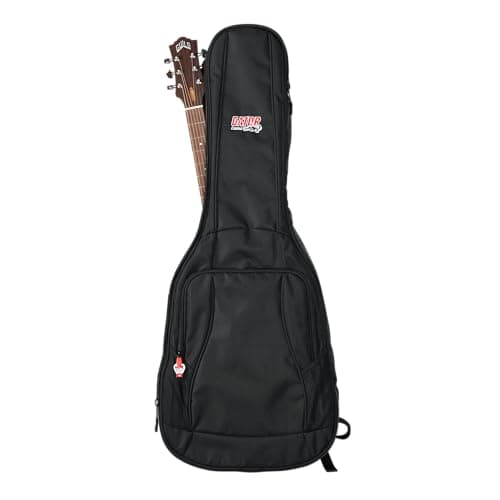
A gig bag or a case. Acoustics are more fragile than electrics in one specific way: the top is thin, braced wood, and a knock that would scuff an electric can crack it. See acoustic cases.
The humidity question, properly
Wood shrinks as it dries. A solid-wood acoustic top is a thin panel held rigid by braces, glued at a particular moisture content, and when the surrounding air is persistently dry the top loses moisture and contracts against those braces.
What you see, in rough order of severity: the action drops and the strings start buzzing, the top looks flat or slightly sunken, fret ends become sharp against your hand as the fingerboard shrinks across its width, and in bad cases the top cracks. The first two are reversible. The last is a repair.
D'Addario publishes a 45–50% relative humidity target for its two-way packs and states plainly that a sealed case is required for them to work as specified. That last part is the bit people miss: a humidity pack in a gig bag, or a guitar on a stand, is a pack doing nothing.
Whether you need any of this depends on your guitar and your climate. Do I need a humidifier works through how to tell whether your acoustic is solid or laminate — which changes the answer completely — and what a hygrometer costs versus a repair.
What acoustics do not need
- A cable. Unless your acoustic has a pickup and you intend to plug it in, you will never use one.
- An amp. Same reasoning. An acoustic-electric with a pickup needs an acoustic amp or a PA, not a guitar combo — that is a later purchase and a different category entirely.
- A pedal tuner. No pickup means no signal to send into one.
- Strap locks, immediately. Many acoustics have one strap button and the strap ties at the headstock, so a locking system only secures one end. Worth doing, less urgent.
One thing worth spending on that is not an accessory
A professional setup. Factory setups on inexpensive acoustics are often high, which means every chord takes more finger pressure than it should and barre chords feel impossible. A technician can lower the action at the nut and saddle in under an hour, and it usually costs less than a set of coated strings plus a capo.
This is the single highest-value thing you can do to a cheap acoustic, and it is not something a beginner should attempt with a file. Read does my guitar need a setup for how to tell whether yours does.