Skip to content
Capo & Cable
Roundup

A slide is sized like a ring, and that matters more than the material

Glass, brass and steel each get a tone description from the maker. Only one of them is explained by anything physical. The specification that decides whether you can play it at all is the inside diameter.

By Scooter M./Published September 21, 2026

A close-up of a musician playing an electric guitar

DisclosureSome links on this page are affiliate links. If you buy through one we may earn a commission at no extra cost to you. It never changes a ranking, and we accept no payment for placement. The full version.

The shortlist

Ranked, with the published numbers

Ranked on the specifications each maker actually publishes, on what they refuse to publish, and on what the thing costs today. Tap any row for the full write-up, including who should skip it.

#ProductBest forScorePrice
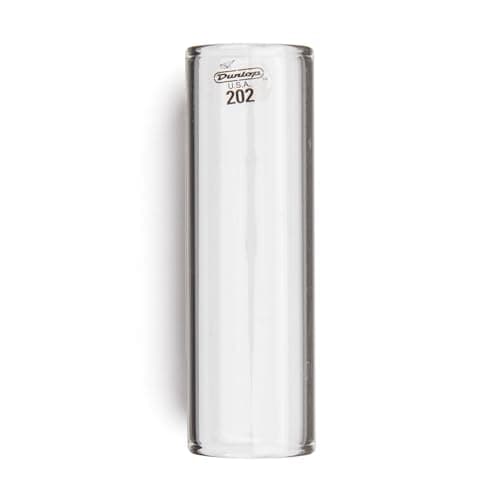
01Jim Dunlop Dunlop 202 Glass Slide, Regular Wall, MediumJim DunlopDunlop 202 Glass Slide, Regular Wall, MediumBest first slide8.7$8.99 · View on Amazon
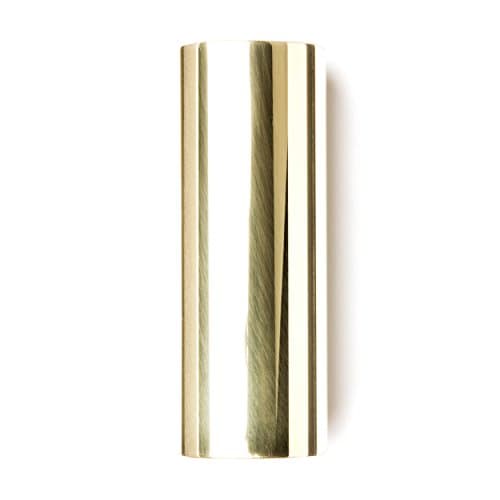
02Jim Dunlop Dunlop 222 Brass Slide, Medium Wall, MediumJim DunlopDunlop 222 Brass Slide, Medium Wall, MediumBest for weight and sustain8.6$12.59 · View on Amazon
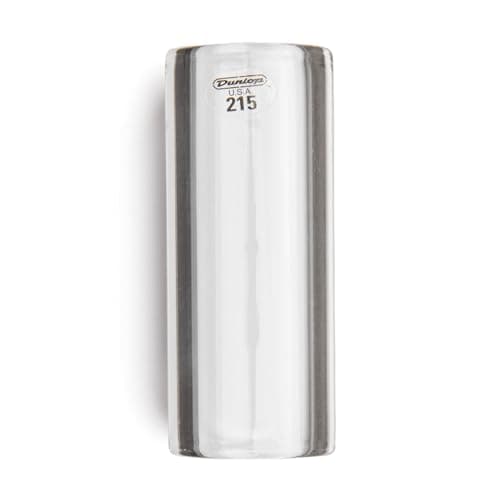
03Jim Dunlop Dunlop 215 Glass Slide, Heavy Wall, MediumJim DunlopDunlop 215 Glass Slide, Heavy Wall, MediumMost glass8.5$11.99 · View on Amazon
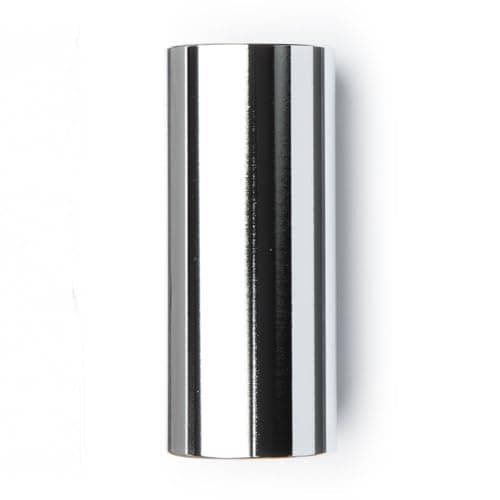
04Jim Dunlop Dunlop 220 Chromed Steel Slide, MediumJim DunlopDunlop 220 Chromed Steel Slide, MediumBrightest8.4$10.49 · View on Amazon
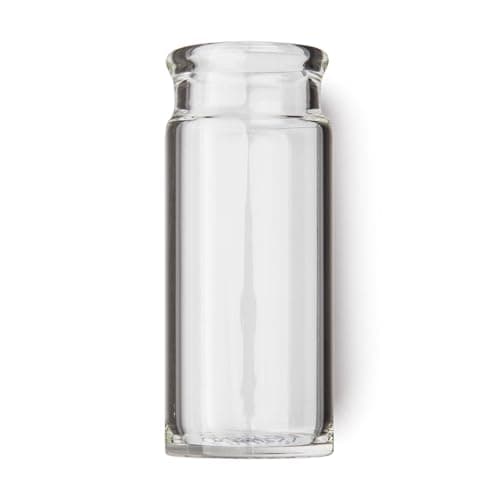
05Jim Dunlop Dunlop Blues Bottle Slide, Regular Wall, Large (273)Jim DunlopDunlop Blues Bottle Slide, Regular Wall, Large (273)Best long reach8.3$15.74 · View on Amazon

Scores are ours and editorial. They are never published as review or rating markup, because we have not played these instruments — here is how we pick.

Slides are sold by material — glass, brass, steel — and that is the part everyone argues about. It is also the part you can change later for the price of a coffee. What you cannot change is whether the thing fits your finger, and that is published as a number on every slide Dunlop makes.

So this page starts with sizing, then reports exactly what the maker does and does not claim about material, because the marketing is more careful than the internet summaries of it.

Sizing, which Dunlop publishes and almost nobody reads

Every Dunlop slide publishes an inside diameter in millimeters and a ring size. Dunlop also publishes a one-page sizing chart with a printable paper ruler and a conversion table: wrap the strip around your finger, read the circumference in millimeters, convert. 57 mm is a ring size 8, 62 mm is a 10, 68 mm is a 12.

Dunlop's own advice on top of that: "We recommend choosing a slide slightly larger than your ring size." And a caveat worth quoting before you order: "All slides are handmade. Actual measurements will vary slightly from slide to slide."

A slide that is too tight cannot be worn for a whole song. One that is too loose wobbles and clanks on the frets. Between those, most players want it snug enough to stay put when the finger points down.

18 to 22 mm

The inside-diameter range across the slides on this page

Four millimeters covers ring size 8 to ring size 12.5. That is the specification that decides whether a slide is playable for you, and it is published for every model.

What Dunlop actually claims about materials

Glass: "a warm, thick tone that accentuates the middle harmonics of your sound". That sentence appears word for word on the regular wall, medium wall and heavy wall glass slides alike.

Brass: "a warm, resonant tone thanks to its authoritatively hefty mass". This is the only tone claim in the range attributed to a physical property.

Chromed steel: "a bright tone and is comfortably lightweight".

The Blues Bottle, which is glass: "a crisp, bright tone", credited to the closed, weighted end — directly contradicting the generic glass line, on the same maker's site.

And the finding that matters most: because the glass tone sentence is identical across every wall thickness, Dunlop makes no published claim that a thicker glass wall changes tone or sustain. Heavier glass gives you more mass and a bulkier object. Any claim beyond that is somebody's opinion, including ours, and we have not played these.

The criteria, in the order they decide it

1. Inside diameter, against your finger

Measure first. Everything else is preference; this one is fit.

2. Length, against how many strings you play at once

Published lengths here are 60 mm for the brass and steel, 68 to 69 mm for the glass models. A longer slide covers all six strings for full chords; a shorter one clears the strings you are not using and is easier to angle.

3. Mass, which is the real material difference

Brass is the heavy option, steel the "comfortably lightweight" one in Dunlop's words, and glass sits between depending on wall thickness. More mass presses the string more easily and is less forgiving if your hand drifts; less mass needs cleaner technique to avoid fret rattle. Note that Dunlop publishes no weight for any slide, so mass here is inferred from material and wall thickness, not read off a spec.

4. Which finger you will wear it on

Third finger keeps two fingers free for fretting; little finger keeps three. Both want a different diameter from your ring finger measurement, which is another reason to measure rather than guess from a ring you own.

5. What your guitar is set up like

Slide playing wants a little more height than fingerstyle, because the slide rides above the frets. If your action is very low you will fight rattle whatever slide you buy — the action page covers measuring it, and the same measurements tell you if you have room to raise it.

Published dimensions, side by side

What Dunlop publishes for each slide
SlideMaterialInside dia.LengthRing size
Dunlop 202Glass, regular wall18 mm69 mm8
Dunlop 215Glass, heavy wall20 mm69 mm10–11
Dunlop 222Brass, medium wall19 mm60 mm9–10
Dunlop 220Chromed steel19 mm60 mm9–10
Dunlop 273 Blues BottleGlass, 2 mm wall22 mm68 mm12.5

No weights, because Dunlop does not publish any. Every figure above is from the maker's own product pages or its sizing chart.

The picks

Dunlop 202 glass — best first slide

Eighteen millimeters inside, ring size 8, 69 mm long and the lowest price here. Glass is the traditional starting point and the thin wall keeps the slide light enough that you can still fret chords with the other fingers while learning.

Against it: least mass of anything here, so it is the most sensitive to pressure and angle. Glass breaks. And stock was thin when we checked.

Dunlop 222 brass — best for weight and sustain

The one slide whose tone Dunlop explains by physics rather than adjective: warm and resonant because of the mass. Sixty millimeters long, 19 mm inside, and it will survive being dropped.

Against it: heavy enough to fret the strings unintentionally when your hand tires, no published weight to compare it by, and metal on wound strings is audibly noisier than glass.

Dunlop 215 heavy wall glass — most glass

Same 20 mm bore as a standard medium glass slide with 29 mm of outside diameter around it. If you want glass character with more mass behind the string, this is how Dunlop sells it.

Against it: bulky on the finger, costs more than the thin-wall glass, and Dunlop does not claim it sounds any different from the thin one.

Dunlop 220 chromed steel — brightest

Dunlop's only bright-and-light description in the standard range, which is why it turns up on electric guitars more than acoustics. Cheap and indestructible.

Against it: Dunlop's own page cannot decide whether it is regular or medium wall, steel is the noisiest material against wound strings, and no weight is published.

Dunlop 273 Blues Bottle — best long reach

A 68 mm medicine-bottle form with a closed, weighted end that Dunlop says balances it, and the largest bore here at 22 mm.

Against it: too large for slim fingers, the most expensive slide here, and Dunlop's description of it as crisp and bright sits oddly against its own claim that glass is warm and thick.

Making a slide sound like music

Play over the fret, not behind it. The slide replaces the fret, so the note is in tune when the slide sits directly above the fret wire.

Use almost no pressure. Enough to touch the strings, not to press them to the board. Pressure is what makes a slide clank.

Damp behind the slide. The fingers behind it mute the string noise that otherwise follows you up the neck.

Heavier strings help. More tension means less rattle under a slide — the gauge guide covers what moving up a gauge does to feel and tension.

What we would actually buy

A first slide: the 202 glass, after measuring your finger against Dunlop's chart. Wanting more weight and sustain: the 222 brass. Playing electric and chasing a bright, cutting voice: the 220 steel. Large hands or full six-string chords: the Blues Bottle. And buy one size up if you are between sizes, as Dunlop itself recommends.

What we did not do

We have not played any of this gear. Every guide in this category says it tested twenty tuners; we would rather say plainly that we tested none. What we did instead is on this page in full: published specifications with their sources, the makers' own manuals read rather than paraphrased, and a note wherever a company publishes nothing at all.

The write-ups

Each one in full, including who should skip it

01Best first slide
8.7/10
Jim Dunlop Dunlop 202 Glass Slide, Regular Wall, Medium

Jim Dunlop

Dunlop 202 Glass Slide, Regular Wall, Medium

A first slide on a medium finger

The default first slide: glass, thin-walled, 18 mm inside, and the lightest thing here to keep on a finger while you also try to fret chords with it.

Good
  • Full dimensions published, so you can size it before buying
  • Lightest feel of the glass slides here, easiest to fret around
  • Cheapest slide on this page
Less good
  • Least mass, so it needs the cleanest technique to avoid rattle
  • Glass breaks if you drop it on a hard floor
  • Stock was thin on the listing we checked
Skip this if

Your action is very low. A thin, light slide has least momentum to push the string down and rattles on the frets soonest.

Published specification

Material and wallGlass, regular wall
Inside diameter18 mm (outside 22 mm)
Length69 mm
Ring size8
WeightNot published
Live price$8.99
$8.99 · View on Amazon

#ad Price as of October 17, 2026, from Amazon. Prices change. How this site is funded.

Our scoring

Ease for a beginner9.0
Build8.0
Published-spec clarity9.0
Value at this price9.0
02Best for weight and sustain
8.6/10
Jim Dunlop Dunlop 222 Brass Slide, Medium Wall, Medium

Jim Dunlop

Dunlop 222 Brass Slide, Medium Wall, Medium

Weight and sustain without glass fragility

Brass is the one material change Dunlop actually explains: it credits the warm, resonant tone to the metal's hefty mass, and mass is the thing you can feel the moment you put it on.

Good
  • The only material here Dunlop links to tone by mass rather than by adjective
  • Shorter at 60 mm, which suits players who use three or four strings at a time
  • Will not shatter
Less good
  • Heavy enough to fret unintentionally if your hand tires
  • No weight published, which is the number you actually want for a metal slide
  • Metal on wound strings is noisier than glass
Skip this if

You are learning on a light acoustic. A heavy metal slide is unforgiving of pressure, and too much pressure is the beginner's mistake.

Published specification

Material and wallBrass, medium wall
Maker's tone claimWarm, resonant tone thanks to its authoritatively hefty mass
Inside diameter19 mm (outside 22 mm)
Length60 mm
Ring size9 to 10
Live price$12.59
$12.59 · View on Amazon

#ad Price as of October 17, 2026, from Amazon. Prices change. How this site is funded.

Our scoring

Ease for a beginner8.2
Build9.0
Published-spec clarity8.6
Value at this price8.6
03Most glass
8.5/10
Jim Dunlop Dunlop 215 Glass Slide, Heavy Wall, Medium

Jim Dunlop

Dunlop 215 Glass Slide, Heavy Wall, Medium

Glass tone with more weight behind it

The same 20 mm inside diameter as the medium glass slides with far more glass around it — 29 mm outside — which is the honest way to buy mass without switching to metal.

Good
  • Most glass of any slide here, at 29 mm outside diameter
  • Published inside diameter and ring size, like the whole Dunlop range
  • Made of borosilicate, which the listing states is heat treated and annealed
Less good
  • Bulky on the finger, and heavy to hold clear of the strings
  • Dunlop publishes no tonal difference for heavy wall over regular wall
  • Costs more than the thin-walled glass slides
Skip this if

You have small hands or you switch between slide and chords constantly. The extra wall makes this a noticeably bulkier object on your finger.

Published specification

Material and wallGlass, heavy wall
Inside diameter20 mm (outside 29 mm)
Length69 mm
Ring size10 to 11
Tone difference from wall thicknessNot published — Dunlop's glass tone description is identical across all wall thicknesses
Live price$11.99
$11.99 · View on Amazon

#ad Price as of October 17, 2026, from Amazon. Prices change. How this site is funded.

Our scoring

Ease for a beginner8.0
Build8.8
Published-spec clarity8.4
Value at this price8.4
04Brightest
8.4/10
Jim Dunlop Dunlop 220 Chromed Steel Slide, Medium

Jim Dunlop

Dunlop 220 Chromed Steel Slide, Medium

Bright, cutting slide tone on an electric

The bright one. Dunlop describes chromed steel as giving a bright tone while staying comfortably lightweight, which is the combination electric players usually want.

Good
  • The brightest option here, per Dunlop's own description
  • Lighter on the finger than brass at the same dimensions
  • Cheap, and effectively indestructible
Less good
  • Dunlop contradicts itself on this page about the wall thickness
  • Steel on wound strings produces the most string noise of the three materials
  • No weight published
Skip this if

You want warmth. Every other slide here is described by Dunlop as warm; this is the one it calls bright.

Published specification

MaterialChromed steel
Maker's tone claimBright tone, comfortably lightweight
Inside diameter19 mm (outside 22 mm)
Length60 mm
Wall thicknessDunlop's own page says regular in the title and medium in the description
Live price$10.49
$10.49 · View on Amazon

#ad Price as of October 17, 2026, from Amazon. Prices change. How this site is funded.

Our scoring

Ease for a beginner8.6
Build8.8
Published-spec clarity7.6
Value at this price8.8
05Best long reach
8.3/10
Jim Dunlop Dunlop Blues Bottle Slide, Regular Wall, Large (273)

Jim Dunlop

Dunlop Blues Bottle Slide, Regular Wall, Large (273)

Long reach across the strings, with a weighted end

A medicine-bottle shape with a closed, weighted end, and the one glass slide Dunlop describes as crisp and bright rather than warm and thick.

Good
  • Closed weighted end, which Dunlop says balances the slide
  • Long enough at 68 mm to cover all six strings comfortably
  • The only glass slide here Dunlop describes as bright
Less good
  • Largest inside diameter here — wrong for slim fingers
  • Dunlop's own description contradicts its generic glass tone line, and it does not explain why
  • The most expensive slide on the page
Skip this if

Your fingers are slim. At 22 mm inside and ring size 12.5 this is the largest slide here, and a loose slide is a wobbly one.

Published specification

Material and formGlass medicine bottle with a closed, weighted end for balance
Maker's tone claimCrisp, bright tone
Inside diameter and wall22 mm inside, 2 mm wall
Length68 mm
Ring size12.5
Live price$15.74
$15.74 · View on Amazon

#ad Price as of October 17, 2026, from Amazon. Prices change. How this site is funded.

Our scoring

Ease for a beginner7.8
Build8.6
Published-spec clarity8.4
Value at this price8.0
Questions

Frequently asked

What size guitar slide should I buy?
Measure the finger you will wear it on and compare against Dunlop's published chart — 57 mm circumference is a ring size 8, 62 mm a 10, 68 mm a 12 — then take Dunlop's own advice and choose a slide slightly larger than your ring size. Inside diameters on this page run from 18 mm to 22 mm.
Glass or metal slide for a beginner?
Glass is the usual starting point: Dunlop describes it as warm and thick, and the thinner-walled models are light enough to learn with. Brass adds mass, which Dunlop credits for its warm, resonant tone, and steel is described as bright and comfortably lightweight.
Does a thicker slide sound different?
Dunlop does not claim so. Its tone description for glass slides is identical across regular, medium and heavy wall thicknesses, so the published difference is mass and bulk, not tone. Be wary of anyone stating otherwise as fact.
Which finger should a slide go on?
Third finger leaves two fingers free to fret; little finger leaves three but is a smaller diameter. There is no maker guidance on this — it is a technique choice, so measure whichever finger you intend to use.
Do I need to change my guitar's setup to play slide?
Not necessarily, but very low action rattles under a slide because the slide rides above the frets rather than pressing behind them. Measure your action before changing anything — heavier strings and slightly more height both help.
Sources

Where these numbers came from

Every specification on this page came from one of these pages. Where a row reads "not published", it means we checked the page listed and the figure was not there.