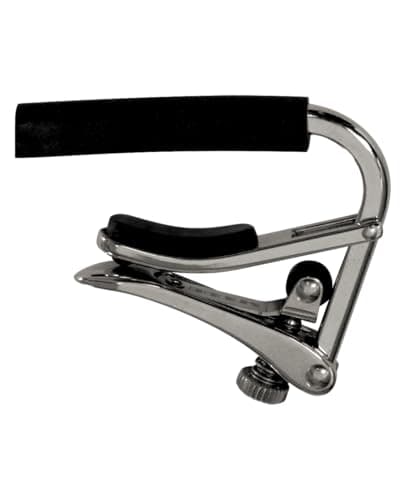
Capos are usually sold as one product for all guitars, and they are not. The bar that presses your strings down is shaped, and the shape it is cut to should match the curve of the fingerboard underneath it. Get that wrong and the capo has to be clamped much harder than the instrument needs, which is the single most common reason a guitar goes sharp at the capo.
The acoustic capo roundup covers the steel-string case, and the classical page covers flat nylon-string fingerboards. This page is the electric one, which sits between them and is the one nobody explains.
The criteria, in the order they decide it
1. Fingerboard radius — the number underneath everything
Makers describe fingerboard curve as a radius in inches: a smaller number is a tighter curve. Electric necks are typically more curved than acoustic ones, and a classical fingerboard is flat. That is three different shapes, and it is why a capo that works perfectly on one instrument can be a nuisance on another.
Here is the honest limitation of this whole page: almost nobody publishes the radius their capo bar is cut to. Shubb does not publish a figure. Kyser does not. G7th does not. What they publish instead is an intended instrument — acoustic, electric, classical — and you are trusting that label rather than a number. Every spec card here says so.
2. Adjustable tension against fixed tension
This is the criterion you can actually act on, and it splits the category cleanly.
A fixed-tension spring capo — Kyser, Dunlop Trigger — applies the same force to every neck it is ever clamped to. That is fast and one-handed, and on a guitar that does not need that much force it presses the strings further than necessary and pulls them sharp. On an electric with light strings and low action, that is a real and audible problem.
An adjustable capo — Shubb — is set once for your neck with a screw, then closed with an over-center lever. You choose the pressure. It takes a moment longer to fit and it is the reason Shubb wins this page.
0 of 4
Capos here whose maker publishes the fingerboard radius the bar is cut to
Every one publishes an intended instrument instead. That is a label, not a specification, and it is the honest state of this category.
3. One-handed operation, which is not a luxury
If a song changes key mid-piece, you need the capo on or off in about a second with one hand. Spring capos do that natively. A Shubb takes two hands the first time and one hand once the tension is set and you have practiced it. Whether that matters depends entirely on whether you play whole songs or move a capo between sessions.
4. What it does to the finish
A capo lives clamped on the neck or parked on the headstock, and both positions put rubber against a finish for long periods. On a polyurethane finish — which is almost every affordable electric — this is a non-issue. On nitrocellulose it is the same caution that applies to wall hangers: some rubbers react with the lacquer. None of these four publishes a statement about it.
The picks
Shubb C1 — best tension control
The C1 is sold for steel-string guitars, which includes electrics, and it wins because of the mechanism rather than the bar. You set the screw once for your neck and the over-center lever closes to that setting every time. On an electric with light strings that means you can use noticeably less force than a spring capo would apply, which is exactly the fix for going sharp.
It is also the capo that rewards owning one guitar: set it, and it is right for that instrument permanently.
Against it: it is slower to fit than a spring capo and genuinely awkward mid-song. If you move it between a Strat and a dreadnought you are re-setting the screw each time, which undoes most of the benefit. And Shubb publishes no radius figure, so "steel string" is the whole specification.
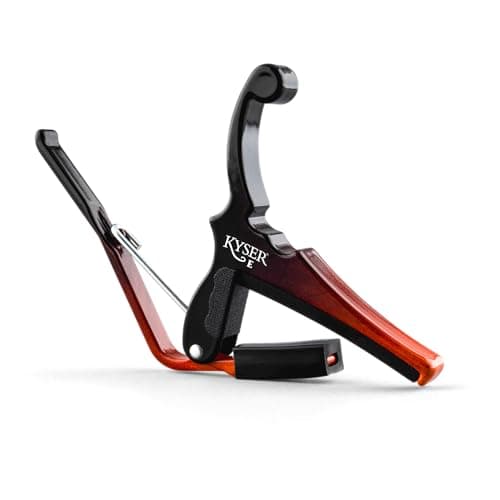
Kyser Quick-Change for electric (KGESNBA) — made for electric necks
The only capo on this page that Kyser markets for electric guitars specifically rather than selling as one-size-fits-all. Given that nobody publishes a radius, an explicit electric SKU from a maker who also sells an acoustic SKU is the strongest signal available that the bar is cut differently.
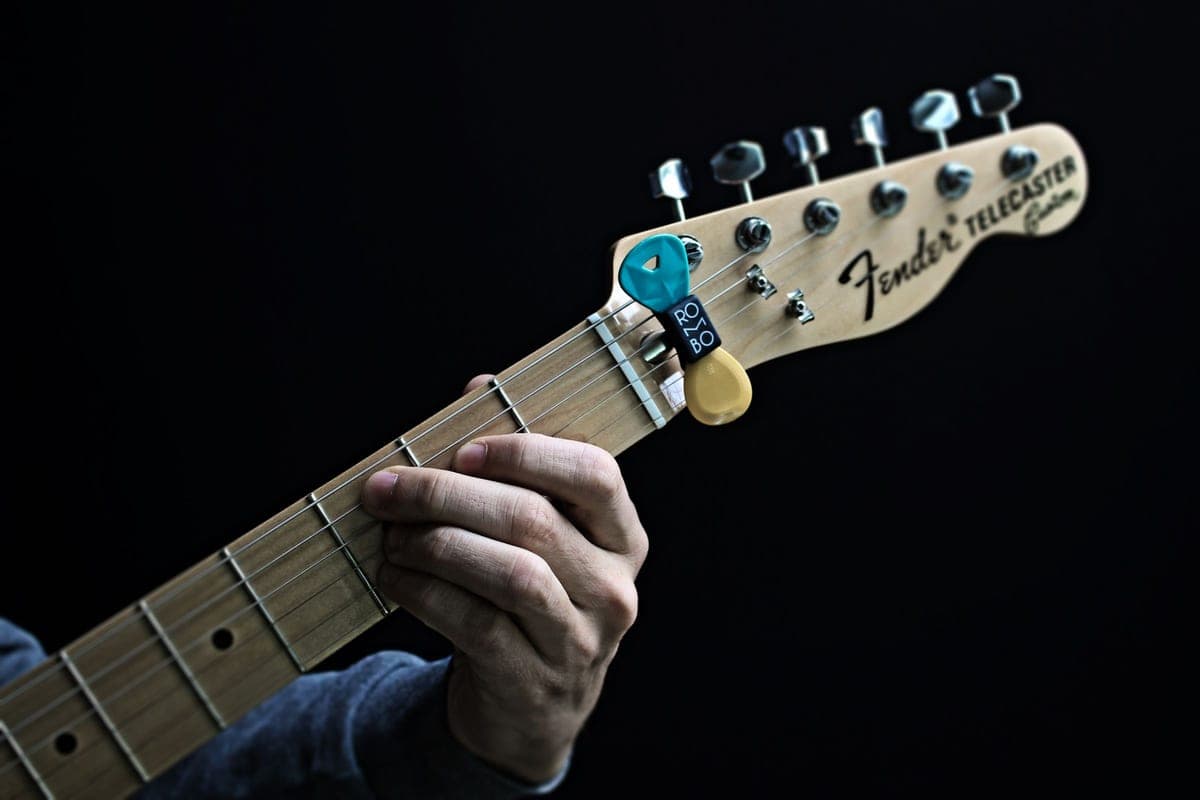
It is a true one-handed capo, on and off without looking, and it parks on the headstock between songs.
Against it: fixed tension, with all of that trade. Kyser publishes no clamping-force figure, so "right for electric" remains a claim rather than a number. And spring capos are the ones most often blamed when a guitar goes sharp at the capo — buying the electric version reduces that risk, it does not remove it.
G7th Performance 3 — best on an unfamiliar neck
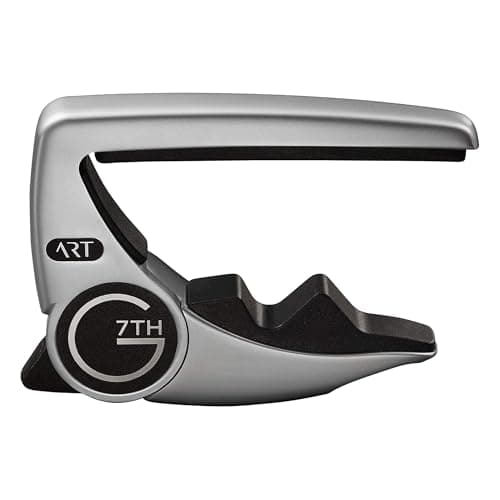
The Performance 3 uses a pad that mechanically conforms to whatever radius it is pressed against, which side-steps the entire problem this page is about. You squeeze it on by hand to the pressure you want and it holds there.
That makes it the right answer for someone who moves one capo between several different guitars, or who does not know their neck's radius and is not going to find out.
Against it: it is several times the price of the Kyser, which is a lot for an accessory a beginner may use twice. Releasing it takes a deliberate action rather than a squeeze. And an adapting pad is still not a published radius figure.
Dunlop Trigger — cheapest one-handed option
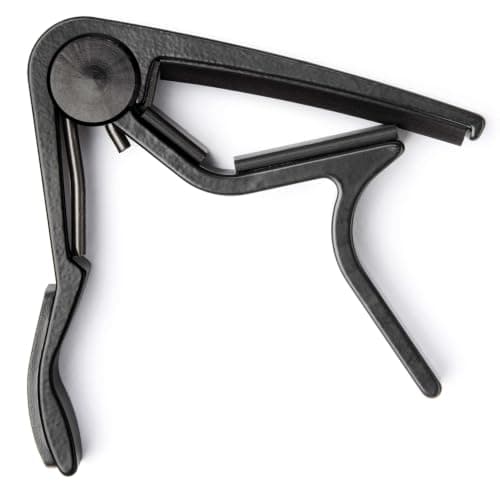
The Trigger is the spring capo most people picture, it costs the least here, and it does the one-handed job perfectly well. If you are testing whether you will use a capo at all before spending properly, this is the honest way to find out.
Against it: fixed tension again, and the Trigger is a firm one. Dunlop's Trigger range is sold in curved and flat versions for different instruments and the naming does not make the electric case obvious, so read the specific listing rather than assuming. It is also the pick here most likely to need a retune after fitting.
Side by side
Mechanism and what each maker publishes| Capo | Tension | One-handed | Intended for | Radius published |
|---|
| Shubb C1 | Adjustable, set once | After practice | Steel string | No |
| Kyser KGESNBA | Fixed spring | Yes | Electric guitars | No |
| G7th Performance 3 | Hand-set, adapting pad | Yes | Steel string | No |
| Dunlop Trigger | Fixed spring | Yes | Varies by model — check the listing | No |
The last column is the same answer four times, and it is the most useful thing on this page. Nobody in this category will tell you the number, so the decision has to be made on mechanism instead.
Fitting it so it does not pull sharp
Place it directly behind the fret, not on top of it and not halfway between two. This is the single biggest cause of a capoed guitar sounding wrong, and it is free to fix.
Use the least pressure that stops the buzz. On an adjustable capo that is a setting. On a spring capo it is not a choice, which is the argument of this entire page.
Retune after fitting, not before. Any capo moves the pitch a little. Tune with it on, at the fret you are playing. How to use a capo walks through it properly.
Do you need one at all
Possibly not yet. Do I need a capo as a beginner is the honest version: a capo is for matching a song to a voice, not for learning technique, and plenty of first years never require one. Buy when a piece of music asks for it.
What we did not doWe have not played any of this gear. Every guide in this category says it tested twenty tuners; we would rather say plainly that we tested none. What we did instead is on this page in full: published specifications with their sources, the makers' own manuals read rather than paraphrased, and a note wherever a company publishes nothing at all.