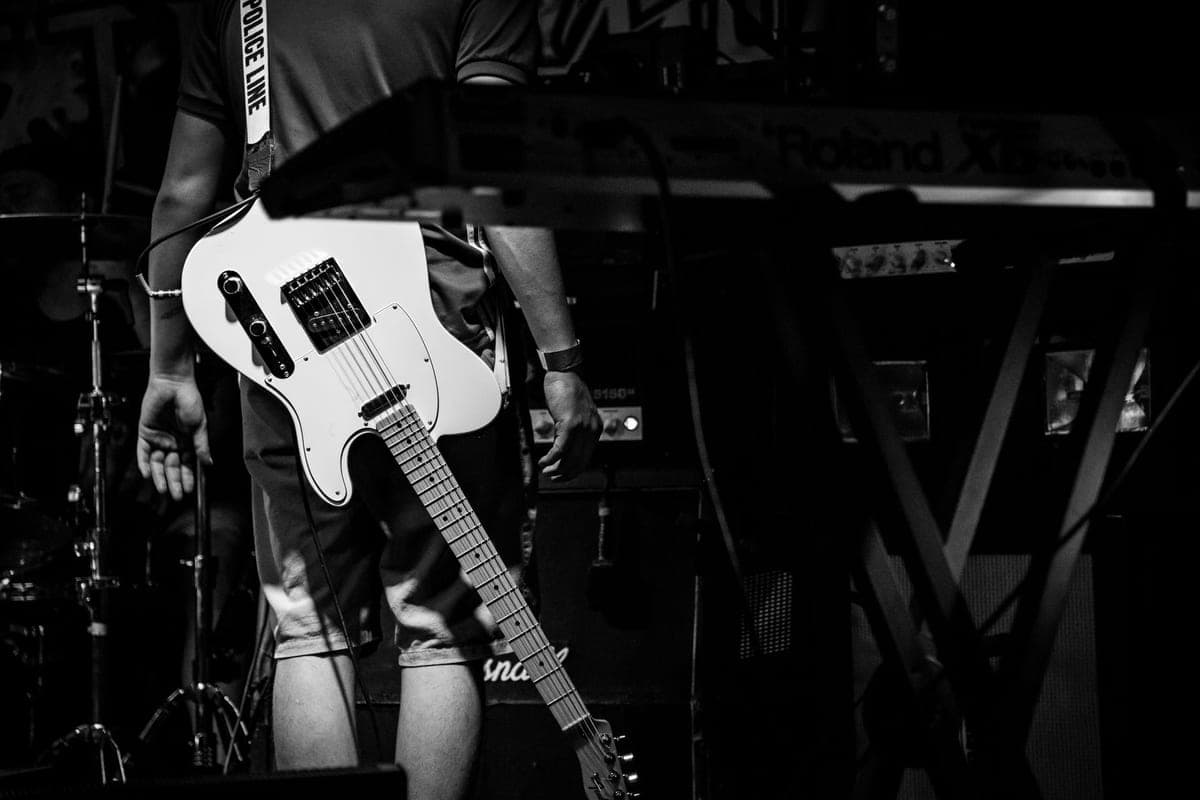
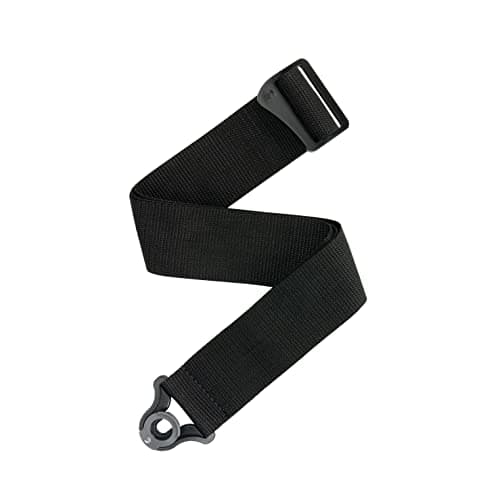
The strap that came in the box with your electric is two inches of webbing with two slots punched in it. It is holding an instrument that weighs more than most acoustics, by two buttons about the diameter of a pencil, above a hard floor.
That is the whole argument for spending anything here, and it splits into two questions: how the weight sits on your shoulder, and what stops the strap coming off the button. The acoustic strap page deals with a different problem — acoustics that only have one button.
What this category does not publish
We read the published specifications for every mainstream strap maker we could reach. Here is the honest state of it:
One maker publishes a load rating. DiMarzio says its nylon ClipLock straps are "strong enough to meet military specifications and easily hold 150 pounds". Ernie Ball, D'Addario and Levy's publish no weight limit at all. Note DiMarzio does not name the specification, so that half of the sentence cannot be checked.
One maker publishes a padding thickness. Levy's publishes "1/4" foam padding" on its Signature series. Ernie Ball's Cloud Comfort straps use what the company calls air cell technology with no thickness figure, and no other maker here gives one.
Everyone publishes width and length. Which makes them the two specifications this page can actually rank on.
1 of 4
Strap makers here who publish any load rating at all
DiMarzio publishes 150 pounds for its nylon ClipLock. Ernie Ball, D'Addario and Levy's publish none, so 'heavy duty' and 'maximum strength' are the strongest claims in a category that holds up your guitar.
The criteria, in the order they decide it
1. Width, because it sets the pressure on your shoulder
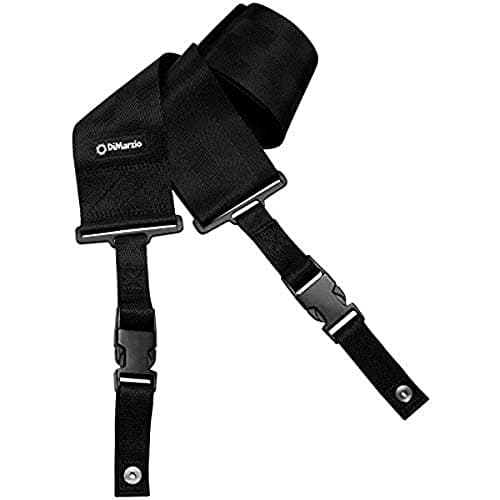
The same weight spread over three inches presses less hard than over two. Published widths here run from 2 in (Ernie Ball Polypro, D'Addario Auto Lock) through 2.5 in (Ernie Ball neoprene) to 3 in (DiMarzio ClipLock). DiMarzio is explicit about why it makes the 3 in version: it is "recommended for basses or heavy instruments requiring the support of a wider area of contact with your shoulder".
Width is published as a comfort figure, not a balance one. If your complaint is that the guitar rotates headstock-down rather than that your shoulder aches, neck dive is the page — and it is honest about how little any strap maker actually publishes on the subject.
2. Length, which is a fit issue and a style one
A strap that will not go long enough is unusable, and the ranges vary more than you would expect: Ernie Ball's Polypro adjusts 41 to 72 in, the DiMarzio 43 to 63 in, the D'Addario Auto Lock 35 to 55 in, and the Ernie Ball neoprene only 46 to 54 in. If you play low, read this column first.
3. What stops it coming off the button
This is the failure that damages guitars. Strap locks covers the aftermarket answer. Two straps here build it in instead: D'Addario's Auto Lock uses a spring-loaded latch that clamps onto a standard button and "won't release unless desired", and DiMarzio's ClipLock replaces your button fixings with its own brass bushings and clips the strap to them.
D'Addario also publishes the limits, which we wish more makers did: the Auto Lock "will not work with end pin jacks or plastic strap buttons", and the company says it cannot guarantee it works on all button designs. If your electric has a jack socket doubling as the rear strap button — common on many models — that rules it out.
4. Material, and what it does under a heavy guitar
Polypropylene webbing is cheap, strong and slippery on the shoulder. Nylon seatbelt webbing, in DiMarzio's words, has "a smooth, satin feel, allowing the guitar to slide freely". Neoprene grips and cushions instead. Leather vs nylon covers that choice in full; the short version is that width and padding matter more than material.
5. Whether you are willing to modify the guitar
The ClipLock system means unscrewing your strap buttons and fitting DiMarzio's bushings. That is a ten-minute job, and it is permanent enough that it belongs in the decision.
Published specifications, side by side
What each maker publishes| Strap | Width | Length | Locking | Load rating |
|---|
| D'Addario Auto Lock Polypro | 2 in | 35–55 in | Spring latch onto standard buttons | Not published |
| DiMarzio 3 in Nylon ClipLock | 3 in | 43–63 in | Clips to fitted brass bushings | 150 lb claimed |
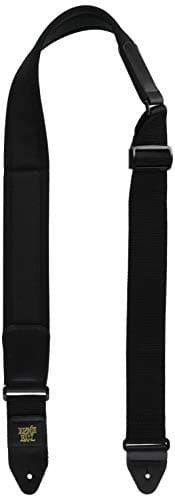
| Ernie Ball Padded Neoprene | 2.5 in | 46–54 in | None | Not published |
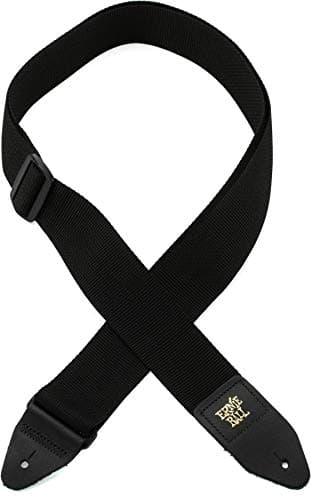
| Ernie Ball Polypro | 2 in | 41–72 in | None | Not published |
The picks
D'Addario Auto Lock Polypro — best electric guitar strap
It solves the expensive failure without modifying the guitar. The spring-loaded latch clamps onto the strap button you already have, and it costs less than a plain strap plus a set of strap locks. For a first electric that gets played standing up, that is the most useful money on this page.
Against it: D'Addario publishes that it will not work with endpin jacks or plastic buttons, which rules out a lot of guitars. It has no padding and is the narrowest option here alongside the Polypro. And like almost everyone, D'Addario publishes no load figure.
DiMarzio 3 in Nylon ClipLock — only published load rating
Three inches wide, seatbelt nylon, a published 150 lb claim and a quick-release clip that makes swapping guitars trivial once the bushings are in. DiMarzio recommends this width specifically for heavy instruments, and it is the only maker here putting a number behind the word strong.
Against it: fitting the bushings means taking a screwdriver to your guitar. The military specification is named nowhere, so that clause is marketing. And stock was thin when we checked.
Ernie Ball Padded Neoprene — best for long sessions
Two and a half inches of neoprene, which grips the shoulder and spreads the load, at a price well under padded leather. Ernie Ball publishes both the width and the adjustment range.
Against it: the 46 to 54 in range is the shortest here and will not suit players who wear a guitar low. No padding thickness published. And no locking feature, so budget for strap locks.
Ernie Ball Polypro — best budget strap
The 41 to 72 in range is the widest here by a distance, the leather ends are stitched rather than glued, and it costs less than a set of strings. If the guitar is light and the budget is tight, it does the job.
Against it: 2 in of unpadded webbing under a heavy solid-body is the combination that makes shoulders ache, and nothing stops it slipping off a button.
The part most people skip
Check the button screws. The strap is rarely what fails. A strap button screw backing out of soft wood is the common cause, and it costs nothing to check with a screwdriver before a gig.
Buy the locks with the strap, not after the drop. Unless your strap locks itself, the aftermarket pair is the cheapest insurance you will ever buy for an instrument.
Set the length standing up, with the guitar plugged in. A cable hanging from a side jack changes where the guitar wants to sit.
What we would actually buy
A first electric that will be played standing: the D'Addario Auto Lock, provided your guitar does not use an endpin jack. A heavy guitar or a long set: the DiMarzio ClipLock in 3 in, accepting the bushing fitting. Comfort without modification: the Ernie Ball neoprene, plus strap locks. Lowest spend: the Polypro, and check the button screws.
What we did not doWe have not played any of this gear. Every guide in this category says it tested twenty tuners; we would rather say plainly that we tested none. What we did instead is on this page in full: published specifications with their sources, the makers' own manuals read rather than paraphrased, and a note wherever a company publishes nothing at all.