Skip to content
Capo & Cable
Guide

Neck dive: the guitar will not stay where you put it

Exactly one major strap brand publishes a claim about holding an instrument still. The rest sell the fix and never name the problem, and the most repeated explanation online is not published by anybody.

By Scooter M./Published September 27, 2026

A guitarist playing an electric guitar standing up on stage

DisclosureSome links on this page are affiliate links. If you buy through one we may earn a commission at no extra cost to you. It never changes a ranking, and we accept no payment for placement. The full version.

The shortlist

Ranked, with the published numbers

Ranked on the specifications each maker actually publishes, on what they refuse to publish, and on what the thing costs today. Tap any row for the full write-up, including who should skip it.

#ProductBest forScorePrice
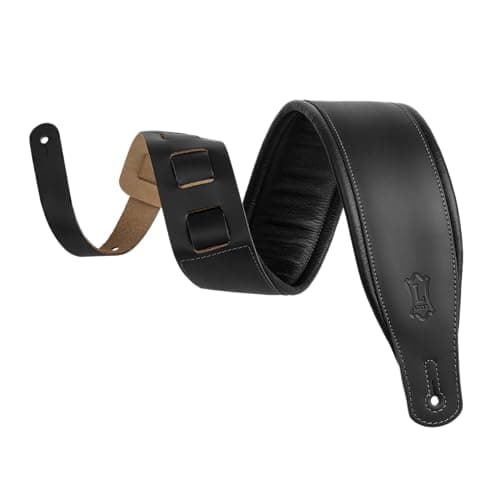
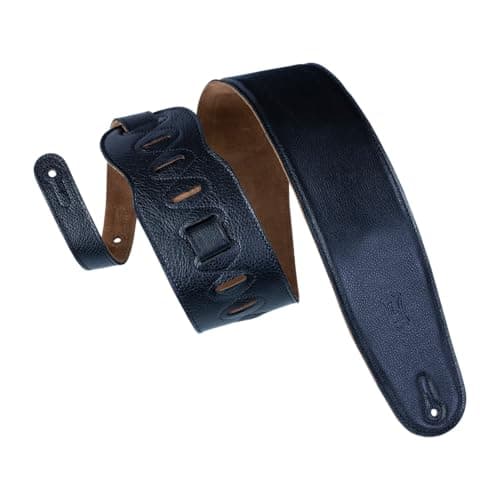
01Levy's Levy's Heritage Crafted Series padded strap, 3.5 inch (M4GF)Levy'sLevy's Heritage Crafted Series padded strap, 3.5 inch (M4GF)The only published anti-movement claim8.9$49.99 · View on Amazon
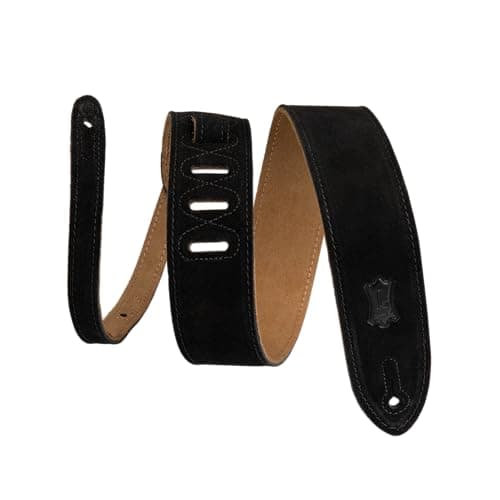
02Levy's Levy's Simply Suede Series, 2 inch (MS12)Levy'sLevy's Simply Suede Series, 2 inch (MS12)Cheapest way into suede8.0$29.99 · View on Amazon
03Levy's Levy's Padded Garment Leather Strap, 3"Levy'sLevy's Padded Garment Leather Strap, 3"Best padded leather at three inches8.6$29.99 · View on Amazon
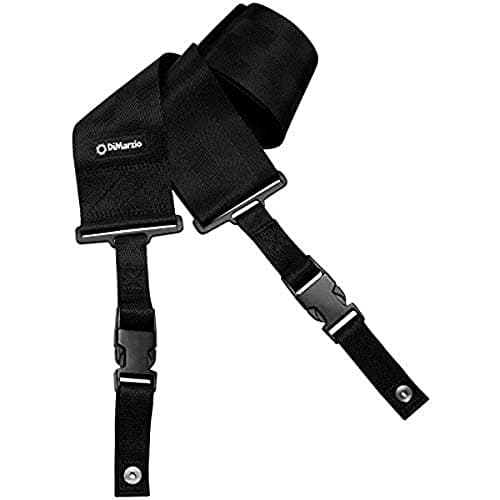
04DiMarzio DiMarzio 3 in Nylon ClipLock StrapDiMarzioDiMarzio 3 in Nylon ClipLock StrapBest locking attachment at three inches8.6$28.70 · View on Amazon
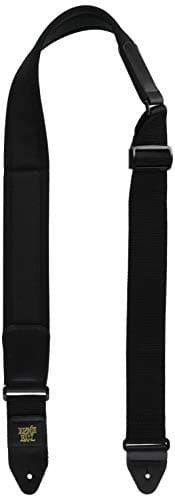
05Ernie Ball Ernie Ball Padded Neoprene Strap (P04144)Ernie BallErnie Ball Padded Neoprene Strap (P04144)Best comfort-first alternative8.5$34.99 · View on Amazon
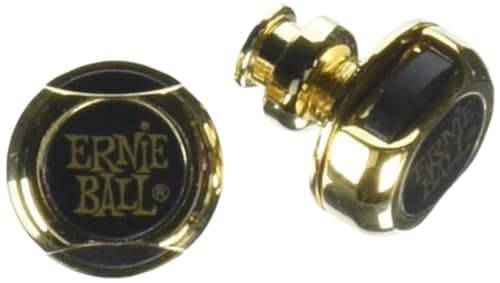
06Ernie Ball Ernie Ball Super LocksErnie BallErnie Ball Super LocksFor the other failure this does not fix8.9$40.28 · View on Amazon

Scores are ours and editorial. They are never published as review or rating markup, because we have not played these instruments — here is how we pick.

You stand up, take your left hand off the neck to turn a page or reach for a drink, and the headstock swings down toward the floor. Put the hand back and the guitar returns to where it should be. That is neck dive, and the reason it matters is not dignity: it means your fretting hand is quietly doing a second job — holding the neck up — for the entire time you are standing, and that hand has enough to do already.

It is also, as buying problems go, unusually badly documented. We went looking for what strap manufacturers publish about it and the answer is startling, so we will lead with it rather than bury it.

Almost nobody who sells the fix will name the problem

We checked the published product and support pages of Levy's, Franklin, Ernie Ball, DiMarzio and Souldier — five brands that between them sell most of the suede and leather straps a player is likely to consider. None of them publishes the words neck dive.

The only two manufacturers we found that publish an explanation are small. StrapGraphics publishes the mechanism for acoustics: "Acoustic guitars are notoriously 'neck-heavy' because the bodies are hollow and light while the necks are solid wood." And on why suede: "The natural 'nap' of the suede acts like a grip on your shoulder. It locks the guitar in place."

Guitar Gummy, which sells adhesive silicone strips rather than straps, is the only maker we found publishing anything resembling a physical claim: its grip strips are "specially designed with a high coefficient of friction to prevent all types of straps from slipping off your shoulder", and it is the only company that names neck dive as the problem it is solving.

That is the entire published record from manufacturers. Everything else you will read about neck dive — including a great deal of it stated very confidently — is somebody's reasoning rather than a maker's claim. We will be clear below about which is which.

One major brand does put it in writing

There is a single exception among the big names, and it is specific enough to be worth buying on. Levy's publishes, on its Heritage Crafted M4GF page, that the "Suede Backing Helps Hold Instrument On Shoulder And Prevent Unwanted Movement".

That is the closest thing to an anti-neck-dive claim any major strap maker publishes, and note what it is attached to: a strap where the suede faces your shoulder, is 3.5 inches wide, and is padded. Three things at once.

Souldier publishes a grip claim in similar language — its leather pad is "backed with suede for a solid grip" — and DiMarzio publishes one for its Cordura ClipLock, whose air-textured Cordura gives "more grip and less slide to the strap". Worth being precise here: that Cordura claim belongs to the Cordura model, not to DiMarzio's nylon ClipLock, and we are not going to transfer it between products.

The correction that will save you money

Two widely held beliefs about this did not survive contact with the published pages.

First: no maker publishes that a rough strap backing grips your clothing. Every grip claim we found locates the friction at the shoulder — "on your shoulder", "acts like a grip on your shoulder", "slipping off your shoulder". The familiar framing that flannel and denim hold a strap better than a smooth shirt appears only in third-party writing. It may well be true; it is simply not something any manufacturer stands behind, and you should not pay a premium for it as though it were a specification.

Second: Franklin's suede straps have a reputation they do not publish. Franklin is routinely credited with a deep nap that stops straps slipping. Its own Original Suede page publishes "supple feel" and "soft" — two-ply premium garment suede, 2.5 inches wide, adjustable 38 to 56 inches — and makes no grip, slip or friction claim at all. It is a lovely strap by every account. It is not a published anti-slip product.

What is actually happening, and we will label this as ours

The following is straightforward statics rather than a maker claim, and it is worth understanding because it explains why some fixes work and others cannot.

A guitar on a strap hangs from two points: the button at the base and either the button at the neck heel or the strap tied at the headstock. Draw a line between those two points. The guitar will rotate about that line unless its center of mass sits on it. If the mass sits behind the line — toward the body — the guitar leans back into you and stays put. If the mass sits forward of it, the neck goes down.

That gives you exactly three levers, and only one of them is a strap:

  • Move the hanging points. Relocating the upper strap button changes the line itself, and it is the only change that fixes the geometry rather than fighting it.
  • Change the mass distribution. Lighter tuners, a heavier bridge. Real, but this is instrument modification territory, not accessory buying.
  • Add friction. A strap that will not slide across your shoulder resists the rotation before it starts. This is the lever the strap industry actually sells, and it is why suede appears in every conversation about this.

Friction is a genuine fix, not a workaround — but notice that it works by resisting movement, so it helps most when the imbalance is mild. A guitar that is badly out of balance will drag a suede strap across your shoulder too, just more slowly.

The specifications that are published, side by side

Since the anti-slip claims are mostly absent, the honest way to compare these straps is on the numbers every maker does publish: width, because it spreads the load, and adjustment range, because a strap that will not shorten enough cannot hold a guitar close to your body.

Published width and adjustment range, from each maker's own product page
StrapWidthAdjustment rangePublished grip claim?
Levy's Heritage Crafted M4GF3.5″To 52″ (no minimum published)Yes — helps hold instrument on shoulder and prevent unwanted movement
Levy's Simply Suede MS122.00″ (2.50″ and 3.50″ also sold)36″ to 52″None published
Levy's Signature Suede MSS2.50″, 3.25″ or 4.00″37″ to 52″Slippage claim on the Suede Harmony line only
Franklin Original Suede2.5″38″ to 56″None published
Souldier Vintage Leather SaddleNot published47″ to 57″ (small runs 8″ shorter)Yes — backed with suede for a solid grip
DiMarzio Cordura ClipLock2″ (5 cm)43.5″ to 63.5″Yes — more grip and less slide

Two things jump out of that table. The 3.5-inch Levy's is the only one combining width, padding and a published grip claim — but Levy's publishes only a maximum length for it, which is a real gap if you have a short torso. And several of these straps do not go short enough to hold a guitar high against your body, which is the position that reduces the leverage on the neck in the first place.

The suede may not be where you think it is

This is the trap that costs people money in this category, and it is entirely visible in the published descriptions if you read them carefully. "Suede" on a strap label can mean three different things, and only one of them puts suede against your shoulder.

  • Suede backing. The shoulder face is suede. Levy's Heritage Crafted M4GF is described as "genuine garment leather front, natural suede backing", and it is the one with the anti-movement claim attached.
  • Suede top. The suede is the outward, visible face. Levy's Simply Suede is published as a "Two-Ply Strap With Black Suede Top And Natural Backing" — so the suede is the part you see, not the part doing the gripping.
  • Suede ends only. Levy's Suede Harmony Series is "one-ply printed polyester with suede leather ends". The body of the strap, which is the part on your shoulder, is printed polyester.

All three are honestly described by the maker. None of them is a bad strap. But if you are buying specifically to add friction at the shoulder, only the first one is doing that, and it is the most expensive of the three.

A second published route is worth knowing about because it is cheaper than a new strap: adhesive grip strips that stick to whatever strap you already own. Guitar Gummy publishes silicone strips at 7 by 1.5 inches, sold in sets of four, which it says adhere to "virtually any flat guitar straps - including nylon, leather, synthetics, suede, fabric, vinyl". It is also, as noted above, the only maker publishing a friction claim in physical terms. We do not stock them and cannot verify how well they hold, but if you like your current strap the published logic is sound: you are adding the friction without replacing anything.

Try the free fixes first

Before buying anything, three adjustments cost nothing and address the geometry rather than the friction.

Shorten the strap. A guitar worn high sits closer to your body and its neck extends less far out from the pivot. Lower looks better and makes every balance problem worse. The strap you already own can probably test this in ten seconds.

Check where the strap actually sits on your shoulder. Moved an inch or two toward your neck, the same strap crosses a different, less sloping part of the shoulder. This is folk wisdom rather than anything published, but it is free.

Try it over a different shirt. Again — not a published claim, and we said so above. But if the guitar behaves over a cotton shirt and slides over a smooth one, you have learned that friction is your lever, and that a suede strap is likely to help you. That is a much better reason to buy one than a review saying it should.

Where strap locks fit, which is not here

Strap locks are the best-value purchase in this whole category and they do not fix neck dive. They solve a different and more serious failure: the strap end working off the button entirely and the guitar hitting the floor. The strap locks roundup covers them properly.

They are worth mentioning on this page for one reason. A guitar that rotates neck-down is constantly working the strap end against the button, which is exactly the motion that eventually walks a strap off. If your guitar dives, you have more reason to fit locks than somebody whose guitar sits still — not because locks fix the dive, but because the dive makes the other failure likelier.

The one real fix, and why we are not recommending it lightly

Moving the upper strap button changes the geometry, and on a guitar that dives badly it is the only change that genuinely solves it rather than resisting it. It also means drilling a new hole in a guitar, usually at or near the neck heel.

That is permanent, it is a technician's job rather than a first-year owner's, and on an acoustic it is a more serious proposition than on a solid body — the straps hub covers the acoustic case, where many guitars have only one button to begin with and the second end ties at the headstock. Do the free tests and try a friction strap before you put a drill anywhere near an instrument.

What we would actually buy

If the guitar dives mildly and you play standing often: the 3.5-inch padded Levy's with suede backing. It is the only strap here where the maker publishes an anti-movement claim, and the width and padding help with the load at the same time. Two caveats you should know going in: Levy's sells it as a bass strap, and it publishes no minimum length.

If you want to test whether friction helps before spending much: the 2-inch Simply Suede. It is the cheap way to find out, with the honest proviso that Levy's describes the suede as the top face on that series and publishes no grip claim for it at all.

If comfort is the real complaint and the dive is secondary: a wide padded strap, and read straps for electric guitars instead — a heavy solid body standing for an hour is a load problem before it is a balance problem, and leather versus nylon compares the materials at the widths each is actually sold in.

Whatever else you do: strap locks. They are the cheapest thing here and they address the failure that actually breaks guitars.

The write-ups

Each one in full, including who should skip it

01The only published anti-movement claim
8.9/10
Levy's Levy's Heritage Crafted Series padded strap, 3.5 inch (M4GF)

Levy's

Levy's Heritage Crafted Series padded strap, 3.5 inch (M4GF)

A heavy guitar that slides forward while you play

The only strap we found whose maker puts the anti-movement claim in writing: suede backing that Levy's says helps hold the instrument on your shoulder. It is also 3.5 inches wide and padded, which is the other half of the answer to a guitar that will not sit still.

Good
  • The suede backing faces your shoulder, and Levy's publishes what it is for
  • 3.5 inches wide and padded, so it spreads a heavy instrument over more of your shoulder
  • Two-ply garment leather rather than a printed webbing strap
Less good
  • Levy's publishes no minimum length, only a 52 inch maximum
  • Sold as a bass strap, and it looks like one on a small acoustic
  • Costs more than a strap plus a set of strap locks would
Skip this if

You have a small-bodied acoustic. Levy's sells this as a bass strap, and 3.5 inches is a lot of strap on a light guitar.

Published specification

Width3.5"
Adjustment rangeAdjustable to 52" — a maximum only; Levy's publishes no minimum
ConstructionTwo-ply bass strap with padding: genuine garment leather front, natural suede backing
Published grip claimSuede backing helps hold instrument on shoulder and prevent unwanted movement
Made inHand-crafted in Nova Scotia, Canada
Live price$49.99
$49.99 · View on Amazon

#ad Price as of October 17, 2026, from Amazon. Prices change. How this site is funded.

Our scoring

Ease for a beginner8.4
Build9.2
Published-spec clarity8.8
Value at this price7.8
02Cheapest way into suede
8.0/10
Levy's Levy's Simply Suede Series, 2 inch (MS12)

Levy's

Levy's Simply Suede Series, 2 inch (MS12)

A first suede strap at a sane price

A two-ply suede strap at the price plain leather straps start at, and the cheapest way into the suede-versus-webbing question. Read the construction carefully though: Levy's publishes the suede as the top face, not the shoulder face.

Good
  • Published adjustment range, 36" to 52", which is shorter at the bottom end than most
  • Two-ply leather construction rather than a single thin layer
  • Handcrafted, and priced against mass-market webbing straps
Less good
  • The suede is the top face; the shoulder side is described only as natural backing
  • Levy's publishes no grip or anti-slip claim for the series
  • 2" is narrow if the reason you are here is a heavy guitar
Skip this if

You are buying it specifically to stop a guitar sliding. Levy's publishes no grip claim for this series at all.

Published specification

Width2.00" (also sold 2.50" as MS26 and 3.50" as MS4)
Adjustment rangeAdjustable from 36" to 52", loop and ladder
ConstructionTwo-ply strap with black suede top and natural backing
Made inHandcrafted in Nova Scotia, Canada
Grip or anti-slip claimNone published for this series
Live price$29.99
$29.99 · View on Amazon

#ad Price as of October 17, 2026, from Amazon. Prices change. How this site is funded.

Our scoring

Ease for a beginner8.8
Build8.6
Published-spec clarity6.8
Value at this price8.2
03Best padded leather at three inches
8.6/10
Levy's Levy's Padded Garment Leather Strap, 3"

Levy's

Levy's Padded Garment Leather Strap, 3"

Standing up with a heavy guitar

Three inches wide and padded, which is the difference between a two-hour practice standing up and a sore shoulder. It costs several times the polypro and is worth it only if you stand up.

Good
  • Real padding across a wide shoulder area
  • Leather softens and improves with use
  • Feels like a serious piece of gear
Less good
  • Several times the cost of a polypro strap
  • Adjustment ranges differ per model, so check before buying
  • Pointless if you always play seated
Skip this if

You practice sitting down. A padded strap does nothing at all in a chair.

Published specification

Width3"
MaterialGarment leather with foam padding
Adjustment rangeVaries by model — check the specific listing
Live price$29.99
$29.99 · View on Amazon

#ad Price as of October 17, 2026, from Amazon. Prices change. How this site is funded.

Our scoring

Ease for a beginner8.6
Build9.4
Published-spec clarity6.4
Value at this price7.8
04Best locking attachment at three inches
8.6/10
DiMarzio DiMarzio 3 in Nylon ClipLock Strap

DiMarzio

DiMarzio 3 in Nylon ClipLock Strap

A heavy guitar, and a published number behind the claim

The only strap in this category whose maker publishes a load figure — DiMarzio says it easily holds 150 pounds — on a quick-release clip system designed for heavy instruments.

Good
  • The only published load figure in this category
  • Widest strap here at 3 in, and DiMarzio recommends it for heavy instruments
  • Quick release, so moving between guitars takes seconds once the bushings are fitted
Less good
  • You have to fit DiMarzio's bushings, which means a screwdriver and a commitment
  • DiMarzio names no specific military specification, so that half of the claim is unverifiable
  • Stock was thin on the listing we checked
Skip this if

You do not want to fit hardware. The ClipLock works by screwing DiMarzio's own bushings into your guitar's strap button holes.

Published specification

Width3 in (7.5 cm)
Length43 to 63 in (110 to 160 cm)
Load claimStrong enough to meet military specifications and easily hold 150 pounds
AttachmentTwo brass bushings and extra-long screws, included, replacing the strap button fixing
MaterialHigh quality nylon webbing, identical to car seatbelts
Live price$28.70
$28.70 · View on Amazon

#ad Price as of October 17, 2026, from Amazon. Prices change. How this site is funded.

Our scoring

Ease for a beginner7.8
Build9.2
Published-spec clarity9.0
Value at this price8.0
05Best comfort-first alternative
8.5/10
Ernie Ball Ernie Ball Padded Neoprene Strap (P04144)

Ernie Ball

Ernie Ball Padded Neoprene Strap (P04144)

Long sessions with a heavy electric

Two and a half inches of neoprene, which is the cheapest real answer to a heavy solid-body digging into one shoulder for an hour.

Good
  • Widest published width here after the ClipLock, at 2.5 in
  • Neoprene spreads load without the bulk of a padded leather strap
  • Ernie Ball publishes both width and adjustment range
Less good
  • 46 to 54 in is a short range — tall players and low slingers will run out
  • No padding thickness published
  • No locking feature, so you still need strap locks
Skip this if

You need length. It adjusts from 46 to 54 inches, a far narrower range than the plain webbing straps here.

Published specification

Width2.5 in
Length46 to 54 in
MaterialNeoprene, described as durable, flexible and cushiony for several hours of playing
Padding thicknessNot published
Load ratingNot published
Live price$34.99
$34.99 · View on Amazon

#ad Price as of October 17, 2026, from Amazon. Prices change. How this site is funded.

Our scoring

Ease for a beginner8.8
Build8.6
Published-spec clarity8.0
Value at this price8.2
06For the other failure this does not fix
8.9/10
Ernie Ball Ernie Ball Super Locks

Ernie Ball

Ernie Ball Super Locks

Anyone who plays standing up, ever

The cheapest insurance in guitar. A strap coming off a button is how most beginner guitars get their first real crack, and this replaces the button with one that latches.

Good
  • Removes the single most common way a guitar hits the floor
  • Cheap relative to a repair
  • Fits in five minutes with a screwdriver
Less good
  • Requires replacing the factory strap buttons
  • No published load rating from any maker in this category
  • Your strap now only fits guitars with the same locks
Skip this if

You never take the guitar off the stand. Fitting these means driving a new screw into the body.

Published specification

TypeReplacement strap buttons with locking cups
FittingReplaces the existing strap buttons
Load ratingNot published
Live price$40.28
$40.28 · View on Amazon

#ad Price as of October 17, 2026, from Amazon. Prices change. How this site is funded.

Our scoring

Ease for a beginner8.4
Build9.0
Published-spec clarity5.8
Value at this price9.4
Questions

Frequently asked

What causes guitar neck dive?
Weight distribution. StrapGraphics publishes the acoustic version: "Acoustic guitars are notoriously 'neck-heavy' because the bodies are hollow and light while the necks are solid wood." The guitar pivots about the line between its two strap buttons, and if its center of mass sits forward of that line the neck goes down. That last part is our explanation, not a published maker claim.
Does a suede strap stop neck dive?
It can reduce it, by resisting the rotation before it starts. Only one major brand publishes a claim to that effect: Levy's says the suede backing on its M4GF "Helps Hold Instrument On Shoulder And Prevent Unwanted Movement". Friction works best when the imbalance is mild; it will not fix a badly balanced guitar.
Do suede straps grip your clothing?
No manufacturer publishes that they do. Every grip claim we found locates the friction at the shoulder, not at the shirt. The flannel-grips-better framing is third-party writing rather than a maker statement, so treat it as untested when you are deciding what to pay for.
Will strap locks stop my guitar diving?
No. Strap locks stop the strap coming off the button, which is a different and more expensive failure. They are still worth fitting to a guitar that dives, because the constant rotation is exactly the motion that works a strap end loose over time.
Is a wider strap the answer to neck dive?
A wider strap spreads the weight and is more comfortable, and a wider contact patch gives friction more to work with — but width is published as a comfort specification, not a balance one. The strap that combines width with the only published anti-movement claim is the 3.5-inch padded Levy's.
Should I move my strap button to fix neck dive?
It is the only change that fixes the geometry rather than resisting it, and it is permanent — it means drilling a new hole, usually near the neck heel, and it is a technician's job. Shorten the strap and try a friction strap first, because both are reversible and one of them usually does enough.
Sources

Where these numbers came from

Every specification on this page came from one of these pages. Where a row reads "not published", it means we checked the page listed and the figure was not there.