Buy a guitar strap for an acoustic and there is a good chance it will not fit. Not because of length or width, but because a great many acoustic guitars have a strap button at the base and nothing at the heel of the neck — one attachment point where the strap expects two.
That is the decision this page is organized around, because it is the one that sends straps back. Everything else — width, padding, material — is covered in leather vs nylon and applies identically here.
First: does your guitar have one button or two?
Look at the base of the body, at the bottom edge. There will almost certainly be a button there — often it doubles as the endpin. Now look at the heel of the neck, where the neck meets the body. Many dreadnoughts and most inexpensive acoustics have nothing there.
Two buttons: any strap fits. Buy on width and comfort, skip to the picks.
One button: you need a strap whose top end is a lace or a tie, which goes around the headstock behind the nut. That is a real product category and it is what wins this page.
The third option is having a technician fit a second button at the heel. It is a small job, it is permanent, and it means drilling into the neck joint of your guitar. That is not a first-month decision and it is not one to do yourself.
41"–72"
The adjustment range Ernie Ball publishes for the standard Polypro
It is one of the very few strap specifications any maker prints. Ernie Ball publishes no range for its acoustic model, and we mark that as unpublished rather than assuming it is the same.
The criteria, in the order they decide it
1. How the top end attaches
Covered above, and it is first because it is binary. A strap that cannot attach is not a comfort compromise, it is a returned parcel.
One caveat worth knowing about the lace method: it puts the strap load on the headstock rather than on the body. The neck carries far more than that in string tension alone, so this is not a structural worry — but the lace does sit against the back of the headstock, and on a gloss finish it will mark over years.
2. Width, which is the entire comfort story
A strap spreads a fixed weight across your shoulder. How well it does that is a function of width and padding, not of what it is made from. Two inches of unpadded webbing is fine for a light acoustic played occasionally standing; three inches with foam is a different experience under a heavy dreadnought over an hour.
The good news for acoustic players is that acoustics are generally lighter than solid-body electrics, so the two-inch option is adequate far more often here than it is on an electric.
3. Published adjustment range
Almost nobody publishes one. Ernie Ball publishes 41 to 72 inches for the standard Polypro, which covers essentially every adult player. Levy's publishes ranges that vary by model within a family, so the figure is on the specific listing rather than the family page. And Ernie Ball publishes no range for its acoustic model, which we have marked as unpublished on its spec card.
4. Whether you bought strap locks
This is not really a strap criterion and it belongs on every strap page anyway. The most common way an acoustic gets its first crack is a strap end slipping off the endpin while the player is standing. It happens to expensive leather exactly as readily as to cheap webbing, because the failure is at the button.
The picks
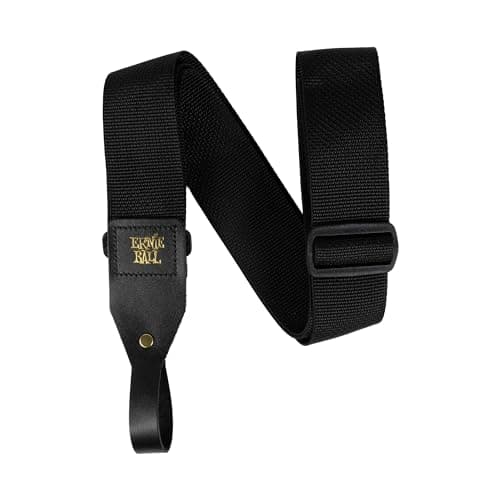
Ernie Ball Polypro Acoustic — solves the one-button guitar
The same two-inch polypropylene webbing as the standard Polypro, with a lace at the top end. That one change is the difference between a strap that fits your guitar and one that does not, and it is why this wins a page that is otherwise about comfort.
Polypro is also the right material for a strap that will live on a guitar: it does not care about sweat or weather, it does not stretch, and it costs little enough that a second one is not a decision.
Against it: Ernie Ball publishes no adjustment range for this model, unlike the standard one, so you are buying without the number. Two inches of unpadded webbing gets uncomfortable under a heavy guitar inside an hour. And the lace puts wear on the back of the headstock.
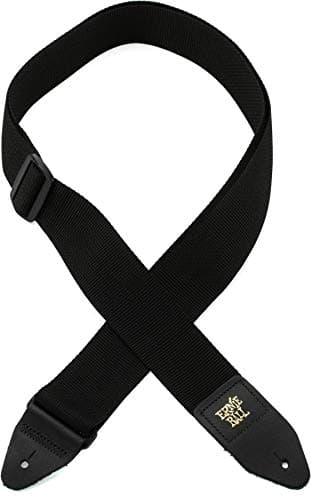
Ernie Ball Polypro — best if you have two buttons
If your acoustic already has a heel button, buy this instead and save the difference. Identical webbing, a published 41 to 72 inch range that covers everyone, and the cheapest honest strap in our coverage.
Against it: it will not attach to a one-button guitar at all, which is the whole reason it is second rather than first. Same comfort ceiling as the acoustic version. And the woven surface catches on knitwear, which is a small irritation that becomes a large one on a stage.
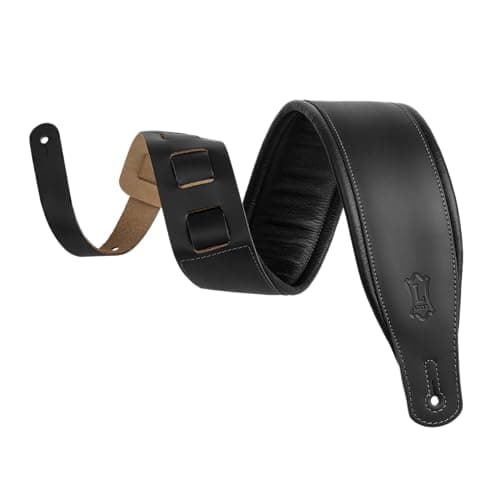
Levy's 3-inch padded garment leather — best for a long session
Three inches with foam padding is a genuinely different experience under weight, and leather softens to the shape of your shoulder over months in a way webbing never does. For a heavy dreadnought played standing for a whole set, this is the honest upgrade.
Against it: several times the price of the Polypro, it does not like being soaked, and it has two slots rather than a lace — so on a one-button acoustic it needs a separate strap lace, or a second button fitted. And Levy's publishes adjustment range per model, so check the specific listing before ordering if you are tall.
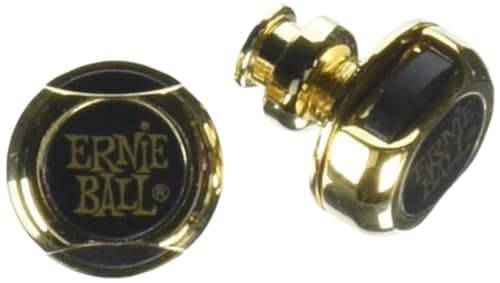
Ernie Ball Super Locks — buy this with whichever strap
Ranked as a pick rather than an afterthought deliberately. Strap locks cost a fraction of a guitar repair and remove the single most common cause of a first crack. The mechanisms, and the difference between a locking system and a rubber washer, are in the strap lock page.
Against it: it replaces your existing strap buttons, which means turning a screw in the body of your guitar. On a one-button acoustic it only secures the bottom end anyway — the headstock lace is not a failure point in the same way. And the version we could verify in stock is the gold finish, which may not be what you want on a black strap.
Side by side
What each maker publishes| Strap | Width | Top end | Published adjustment | Padding |
|---|
| Ernie Ball Polypro Acoustic | 2" | Lace for the headstock | Not published | None |
| Ernie Ball Polypro | 2" | Standard slot | 41"–72" | None |
| Levy's padded garment leather | 3" | Standard slot | Varies by model | Foam |
If you only ever play sitting down
Then you do not need any of this. A strap does nothing in a chair, and it is fifth on the first-guitar checklist for exactly that reason. A large share of beginner strap purchases are made because a strap seems like a thing guitars have, and then live in a drawer.
The one genuine argument for buying one anyway: standing up changes your wrist angle, and a player who only ever practices seated can find the first time they stand up surprisingly awkward.
What we would actually buy
Check the heel of your neck first. One button, buy the acoustic Polypro and a set of strap locks. Two buttons, buy the standard Polypro and the same locks, and spend the difference on a spare set of strings. Upgrade to three inches of padded leather only after you have found out, over an actual hour of standing, that your shoulder minds.
What we did not doWe have not played any of this gear. Every guide in this category says it tested twenty tuners; we would rather say plainly that we tested none. What we did instead is on this page in full: published specifications with their sources, the makers' own manuals read rather than paraphrased, and a note wherever a company publishes nothing at all.