Skip to content
Capo & Cable
Guide

A guitar that will not stay in tune is usually telling you which part is at fault

Strings that have not settled, string ends wound badly, a nut that grips, or a capo clamped too hard — each drifts in its own pattern. Work out the pattern and the fix is usually cheap.

By Scooter M./Published September 21, 2026

A black and white close-up of guitar tuning pegs

DisclosureSome links on this page are affiliate links. If you buy through one we may earn a commission at no extra cost to you. It never changes a ranking, and we accept no payment for placement. The full version.

The shortlist

Ranked, with the published numbers

Ranked on the specifications each maker actually publishes, on what they refuse to publish, and on what the thing costs today. Tap any row for the full write-up, including who should skip it.

#ProductBest forScorePrice
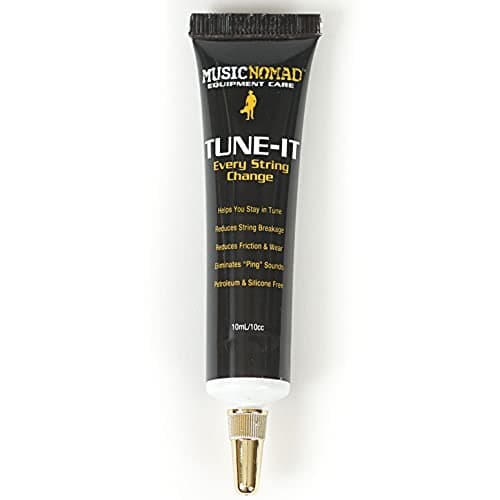
01MusicNomad MusicNomad TUNE-IT Nut and Saddle Lubricant (MN106)MusicNomadMusicNomad TUNE-IT Nut and Saddle Lubricant (MN106)Best fix for a sticking nut8.7$9.99 · View on Amazon
02A clip-on tuner on an acoustic guitar headstock — a stand-in for the Korg Pitchclip 2 (PC-2), not a photograph of this modelKorgKorg Pitchclip 2 (PC-2)Best tuner to diagnose with8.8Check price on Amazon
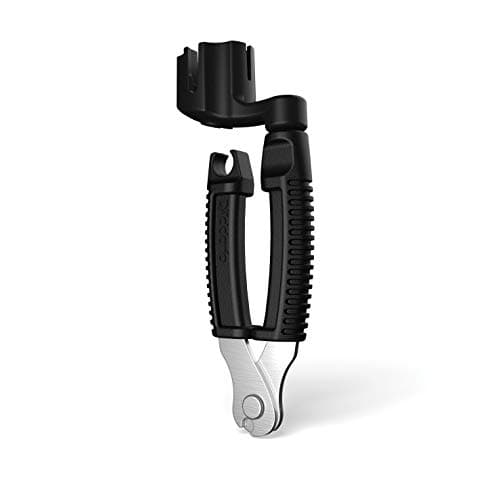
03D'Addario D'Addario Pro-WinderD'AddarioD'Addario Pro-WinderBest for winding strings properly9.1$12.99 · View on Amazon
04Elixir Elixir Phosphor Bronze NANOWEB Light, 12–53 (16052)ElixirElixir Phosphor Bronze NANOWEB Light, 12–53 (16052)Best strings to stop blaming8.8$21.99 · View on Amazon

Scores are ours and editorial. They are never published as review or rating markup, because we have not played these instruments — here is how we pick.

"It will not stay in tune" is four different faults wearing the same coat. The good news is that they drift in distinguishable ways, and that three of the four are fixed by things costing less than a set of strings.

The bad news is that the fourth — a badly cut nut — is bench work. So the first job is telling them apart.

Match the pattern to the cause

Everything goes flat, steadily, for the first week. New strings settling. Normal, temporary, and not a fault. It ends.

One string drops suddenly, always the same one. The winding at the post is slipping. That is a technique problem at the last string change, not a hardware fault.

A string pings when you tune, then reads sharp. Friction: the string is binding in the nut slot, releasing all at once. Classic on the G and B of an acoustic, and on any guitar after a bend.

It goes sharp only with a capo on. Capo pressure or placement, not the guitar — how to use a capo covers both.

It drifts when the room changes. Wood and steel move with temperature and humidity. A guitar carried in from a cold car will not settle for a while.

Every string change

How often MusicNomad says to apply nut and saddle lubricant

It is the only maintenance interval published in this whole problem area, and it targets the one cause most players never think to check: friction where the string crosses the nut.

The five causes, and what each is worth spending on

1. New strings that have not settled

Every set stretches. Tune up, play, retune, repeat — over a few days the drift stops. D'Addario's own stretching advice adds the one caution worth repeating: do not overdo it, or you can break strings. How to change guitar strings covers the routine.

Spend nothing. This one is time.

2. String ends wound badly at the post

Too few turns and the string slips; too many and they climb over each other and creep. Neat, downward turns with the string locked under itself hold. A winder with a built-in cutter makes the job quick enough that you do it properly.

Spend a little. A pro-style winder pays for itself in restrings, and the winder roundup compares the options on published specs.

3. Friction at the nut, saddle and string trees

This is the cause most people never check. The string does not glide through the nut slot; it grips, tension builds behind it, then it releases with an audible ping and lands sharp. MusicNomad sells TUNE-IT precisely for this and publishes where it goes — nut slots, saddles, string guides, every point the string passes over — and how often: every string change.

It also publishes a warning worth reading before you apply it anywhere: do not put it on tuning machine eyelets, because that is an anchor point and slipping there is the opposite of what you want.

Spend a little. This is the cheapest real fix in the list.

4. A nut slot that is cut wrong

Lubricant helps a slot that grips. It does nothing for a slot that is too narrow, too tight at the back, or cut at the wrong angle. If a string still pings and jumps after lubrication, that is bench work — and does my guitar need a setup sets out what a technician does and what it is worth.

5. The room

Taylor publishes a target range of 40% to 60% relative humidity for its guitars. Outside that, wood moves, and a moving neck moves tuning with it. A hygrometer answers this for the price of a couple of picks — guitar hygrometers covers what the makers publish for accuracy.

What to check, in order

Symptom, cause and the cheapest fix
What you hearLikely causeFixCost
Everything flat for daysNew strings settlingPlay and retune; stretch gentlyNothing
One string drops suddenlySlipping winding at the postRewind it properlyNothing, or a winder
Ping, then sharpBinding in the nut slotNut and saddle lubricantLow
Still pinging after lubricantNut slot cut wrongTechnicianBench rate
Sharp only with a capoCapo pressure or placementMove it behind the fret; less pressureNothing
Drifts with the weatherHumidity or temperature swingHygrometer, then humidity controlLow

The picks

MusicNomad TUNE-IT — best fix for a sticking nut

A PTFE-fortified gel with a fine applicator, aimed at exactly the contact points where tuning stability is lost. MusicNomad publishes the application points, the interval, and the one place not to use it. It also states it does not affect the sound or sustain of the strings.

Against it: no volume published on the maker's own page, it may slightly color a wooden nut, and it cannot rescue a badly cut slot.

Korg Pitchclip 2 — best tuner to diagnose with

You cannot diagnose drift you cannot see. The Pitchclip 2 publishes ±1 cent accuracy and around 24 hours of battery, which is enough resolution to watch a string creep and enough runtime to leave it clipped on.

Against it: a clip-on reads the whole instrument's vibration, so it is less precise than a strobe for fine work, and it needs the room reasonably quiet.

D'Addario Pro-Winder — best for winding strings properly

The winding at the post is the cause people least suspect and most often have. A winder with an integrated cutter and bridge-pin puller makes a tidy restring quick, which is how the winding stops slipping.

Against it: it fixes the cause only if you use it to wind neatly — the tool does not make the turns for you.

Elixir Phosphor Bronze NANOWEB — best strings to stop blaming

If your strings are old, every diagnosis above is contaminated. A coated set stays serviceable longer, which removes the variable for months at a time rather than weeks.

Against it: coated strings cost several times a plain set, the feel is different, and they still stretch in like any other new string.

Things that are not the problem

Cheap tuning machines, usually. They get blamed far more often than they fail. Slipping at the post looks identical from the player's seat, and it is free to fix.

The tuner being wrong. If two tuners agree and the guitar still drifts, the guitar is drifting.

Intonation. A guitar that holds its pitch perfectly well but sounds sour on chords up the neck has the opposite fault, and it is set at the saddle rather than the nut — guitar intonation covers the check and which way the saddle moves.

A string that snaps rather than drifting. That is a mechanical failure with its own causes, most of them at the bridge saddle or the nut — why strings keep breaking reads the break location.

Needing a setup, immediately. A setup is worth paying for when the nut or the neck is genuinely out. Try the free causes first — they cover most cases.

What we would actually buy

If a string pings and lands sharp: TUNE-IT, applied at the next string change. If you cannot tell what is drifting: a clip-on tuner you can leave on the headstock. If a single string keeps dropping: nothing — rewind it, with a winder if restringing is a chore. And if the strings on the guitar are older than you can remember, start there.

What we did not do

We have not played any of this gear. Every guide in this category says it tested twenty tuners; we would rather say plainly that we tested none. What we did instead is on this page in full: published specifications with their sources, the makers' own manuals read rather than paraphrased, and a note wherever a company publishes nothing at all.


The write-ups

Each one in full, including who should skip it

01Best fix for a sticking nut
8.7/10
MusicNomad MusicNomad TUNE-IT Nut and Saddle Lubricant (MN106)

MusicNomad

MusicNomad TUNE-IT Nut and Saddle Lubricant (MN106)

A guitar that goes sharp after bending or using a capo

A PTFE gel for the places a string actually sticks — nut slots, saddle, string trees — sold specifically to stop the ping-and-go-sharp cycle rather than to clean anything.

Good
  • Targets the actual mechanism — friction at the nut and saddle
  • Maker publishes where to apply it and, unusually, where not to
  • Also claimed to reduce string breakage at those contact points
Less good
  • MusicNomad publishes no volume on its own page
  • On a wooden nut the maker says it may color the wood slightly
  • Does nothing for a badly cut nut slot, which is the other half of this problem
Skip this if

Your tuning problem is new strings settling. No lubricant shortens the stretching-in period; time and stretching do that.

Published specification

What it isGel with anti-wear, antioxidant and anti-corrosion additives, fortified with PTFE
Where it goesNut slots, saddles, string trees and guides — every point the string passes over
How oftenEvery string change
Published warningDo not use on tuning machine eyelets — that is an anchor point and you do not want slipping
Effect on toneMaker states it does not affect the sound or sustain of the strings
Live price$9.99
$9.99 · View on Amazon

#ad Price as of October 17, 2026, from Amazon. Prices change. How this site is funded.

Our scoring

Ease for a beginner8.6
Build8.8
Published-spec clarity8.6
Value at this price8.8
02Best tuner to diagnose with
8.8/10
A clip-on tuner on an acoustic guitar headstock — a stand-in for the Korg Pitchclip 2 (PC-2), not a photograph of this model

Stock photo of the product type, not this model. We publish no product photography we cannot source.

Korg

Korg Pitchclip 2 (PC-2)

Wanting the numbers published before you buy

The one clip-on in this price class whose maker publishes a full spec sheet: detection range, accuracy, battery hours, weight. You can check every claim before you spend anything.

Good
  • ±1 cent is published, not implied
  • Genuinely tiny — 17 g, so it can live on the headstock
  • 24 hours of battery from one CR2032
Less good
  • Monochrome display next to the Snark's color screen
  • No metronome, no transpose
  • 24 h is real playing time, so it needs a spare cell in the case
Skip this if

You want a metronome or a transpose function built in — this does one job and does not pretend otherwise.

Published specification

Detection rangeA0 (27.5 Hz) – C8 (4186 Hz)
Accuracy±1 cent
BatteryCR2032 × 1, approx. 24 h
Weight17 g (0.6 oz) with battery
Size52 × 24 × 34 mm (2.05 × 0.94 × 1.34")
Live priceCheck price
Check price on Amazon

#ad We hold no verified live price for this one, so we show none. How this site is funded.

Our scoring

Ease for a beginner8.8
Build8.2
Published-spec clarity9.6
Value at this price8.6
03Best for winding strings properly
9.1/10
D'Addario D'Addario Pro-Winder

D'Addario

D'Addario Pro-Winder

A first string change on an acoustic

Winder, wire cutter and bridge-pin puller in one handle. That third function is the one that saves an acoustic bridge from being levered at with a pair of pliers.

Good
  • The pin puller alone justifies it on an acoustic
  • Cutters are strong enough for wound bass strings
  • One tool instead of three
Less good
  • Peg cup does not fit every vintage-style tuner
  • Plastic body — this is not a lifetime tool
  • Nothing here you cannot do slowly by hand
Skip this if

You only own an electric with a through-body bridge — then you are paying for a pin puller you will never use.

Published specification

FunctionsWinder, cutter, bridge-pin puller
CuttersHardened steel
FitsGuitar, bass, banjo, mandolin pegs
Live price$12.99
$12.99 · View on Amazon

#ad Price as of October 17, 2026, from Amazon. Prices change. How this site is funded.

Our scoring

Ease for a beginner9.6
Build8.0
Published-spec clarity8.6
Value at this price9.4
04Best strings to stop blaming
8.8/10
Elixir Elixir Phosphor Bronze NANOWEB Light, 12–53 (16052)

Elixir

Elixir Phosphor Bronze NANOWEB Light, 12–53 (16052)

Sweaty hands, or leaving the guitar out for weeks

Coated strings that survive sweat, cheap humidity and a month of neglect. You pay several times the price of an uncoated set for a set you change several times less often.

Good
  • Stay bright for weeks rather than days
  • Much less finger squeak than an uncoated set
  • Identical gauges to the EJ16, so nothing changes on the guitar
Less good
  • The most expensive strings a beginner is likely to buy
  • Elixir publishes no tension figures to compare against
  • The coating dulls the very-new brightness some players want
Skip this if

You like the bright zing of a brand-new uncoated string. Coated sets never sound quite that raw, even on day one.

Published specification

Gauges.012 .016 .024 .032 .042 .053
Part number16052 (Light)
CoatingNANOWEB — ultra-thin, covers the windings
TensionNot published
Live price$21.99
$21.99 · View on Amazon

#ad Price as of October 17, 2026, from Amazon. Prices change. How this site is funded.

Our scoring

Ease for a beginner8.8
Build9.4
Published-spec clarity6.6
Value at this price7.4
Questions

Frequently asked

Why does my guitar go out of tune after I change strings?
New strings stretch, and the windings at the post bed in. Expect a few days of drifting flat, with gentle stretching to speed it up — D'Addario warns not to overdo that, since you can break strings. If one string drops suddenly rather than drifting, the winding is slipping and needs redoing.
What is the pinging noise when I tune?
The string binding in its nut slot and then releasing in one go. Tension builds behind the nut and lets go, which is why the note lands sharp. A nut and saddle lubricant is the standard fix; MusicNomad publishes application at every string change.
Will nut lubricant fix my tuning problems?
It fixes friction, which is one cause of several. It will not fix a slot cut too narrow or at the wrong angle, a slipping winding, or strings that have not settled. MusicNomad also publishes that you should not apply it to tuning machine eyelets.
Do expensive tuning machines keep a guitar in tune better?
Sometimes, but they are blamed far more often than they deserve. Slipping at the post, binding at the nut and unsettled strings all look the same from the player's chair and all cost nothing or nearly nothing to fix. Rule those out before spending on hardware.
Can humidity make a guitar go out of tune?
Yes. Taylor publishes a target of 40% to 60% relative humidity for its instruments. Wood moving with the seasons changes neck relief and tuning, and a guitar brought in from the cold will drift until it reaches room temperature.
Sources

Where these numbers came from

Every specification on this page came from one of these pages. Where a row reads "not published", it means we checked the page listed and the figure was not there.