Skip to content
Capo & Cable
Roundup

The best clip-on tuner for an electric has a harder job than you think

A clip-on reads vibration through the headstock. A solid-body transmits less of it than an acoustic does, which is why the cheapest clip-ons behave differently on an electric.

By Scooter M./Published September 13, 2026

The headstock and tuning pegs of an electric guitar

DisclosureSome links on this page are affiliate links. If you buy through one we may earn a commission at no extra cost to you. It never changes a ranking, and we accept no payment for placement. The full version.

The shortlist

Ranked, with the published numbers

Ranked on the specifications each maker actually publishes, on what they refuse to publish, and on what the thing costs today. Tap any row for the full write-up, including who should skip it.

#ProductBest forScorePrice
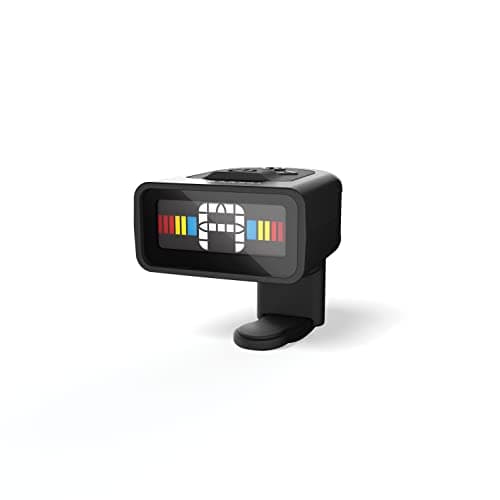
01D'Addario D'Addario Micro Headstock Tuner (PW-CT-12)D'AddarioD'Addario Micro Headstock Tuner (PW-CT-12)Least in the way8.5$21.99 · View on Amazon
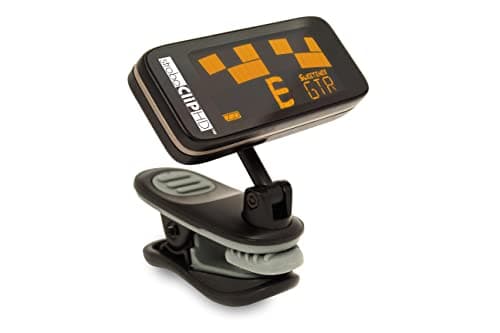
02Peterson Peterson StroboClip HDPetersonPeterson StroboClip HDFinest published accuracy8.9$56.99 · View on Amazon
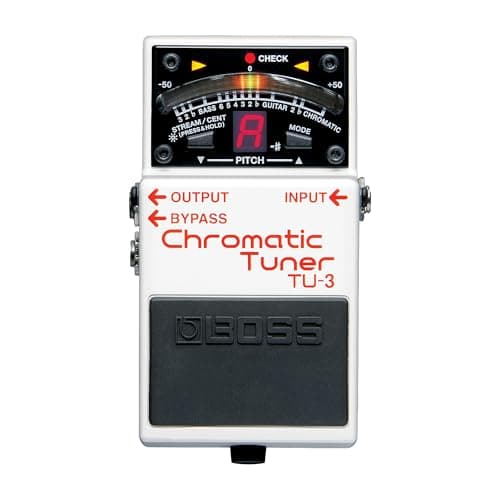
03Boss Boss TU-3 Chromatic Tuner pedalBossBoss TU-3 Chromatic Tuner pedalBest if you have an amp8.7$103.99 · View on Amazon
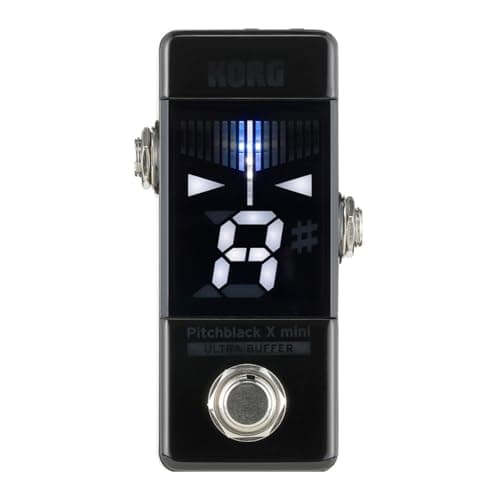
04Korg Korg Pitchblack X MINI (PB-X-MINI)KorgKorg Pitchblack X MINI (PB-X-MINI)Smallest pedal option8.8$77.98 · View on Amazon

Scores are ours and editorial. They are never published as review or rating markup, because we have not played these instruments — here is how we pick.

A clip-on tuner works by reading the vibration traveling through the headstock rather than the sound in the air. That is why it works in a noisy room, and it is also why an electric guitar is a slightly harder job for one than an acoustic is.

An acoustic body is a resonating chamber built to amplify string vibration; a solid slab of wood is built not to. Less energy reaches the headstock, and cheap clip-ons — the ones with the least sensitive sensors — are noticeably more hesitant on a solid-body, especially on the lowest string.

The acoustic version of this page ranks the same category for the easier job. This one adds the two things an electric player has that an acoustic player does not: an output jack, and somewhere to put a pedal.

The criteria, in the order they decide it

1. Published accuracy, in cents

A cent is a hundredth of a semitone. The ear starts noticing a beat between two notes somewhere around five cents, so anything under about one cent is beyond what you can hear on a single note — and starts mattering when you set intonation at the bridge, which is an electric job far more than an acoustic one.

We rank on it because a maker who publishes a figure has committed to something measurable. Peterson publishes plus or minus 0.1 cent for the StroboClip HD. Korg publishes plus or minus 1 cent for the Pitchclip 2 and plus or minus 0.1 cent for the Pitchblack X MINI. Boss publishes plus or minus 1 cent for the TU-3. Snark and D'Addario publish nothing we could find, and their spec cards say so.

2. Where it sits, because an electric headstock is crowded

This is the criterion that does not appear on the acoustic page. An electric headstock is usually smaller, often angled back, and on a six-in-line design the tuning posts run down one edge with very little clear space. A large clip-on body ends up fouling a post or hanging in your eyeline.

It is also the thing you leave clipped on, and a heavy tuner on a light headstock is noticeable in a way it is not on a dreadnought.

3. Whether you already own an amp

If you do, a pedal tuner becomes a real option and it does one thing no clip-on can: it mutes the output while you tune. Tuning through a live amp in a room with other people in it is the sound of an apology.

That is the whole argument of the tuner pedal roundup, and the honest position from that page carries over here: for a bedroom player with one guitar, a clip-on is still the better purchase.

±0.1

Cents of accuracy Peterson publishes for the StroboClip HD

An order of magnitude finer than the clip-on almost everyone owns. Irrelevant for tuning open strings, genuinely useful for setting intonation at the bridge.

4. Battery type, which is a small recurring cost

Clip-ons run on coin cells and none of them last forever. Korg publishes about 24 hours of continuous use from a CR2032 on the Pitchclip 2. Several makers publish nothing. It is a minor criterion and it is the one people forget until the tuner dies mid-session.

The picks

D'Addario Micro Headstock Tuner — least in the way

It wins the electric page for a reason it would not win the acoustic one: it is the smallest of the clip-ons we cover, and it is designed to sit behind the headstock rather than on top of it. On a crowded six-in-line headstock that is the difference between a tuner you leave on and one you keep taking off.

Out of sight also means it is not in your eyeline while you play, which on a guitar you perform with matters more than it sounds.

Against it, and it is a real mark on a page ranked this way: D'Addario publishes no accuracy figure for it that we could find, on any listing or manual. The small display is harder to read than a Snark's. And a rear-mounted tuner means turning the guitar to read it if you have not set it up facing you.

Peterson StroboClip HD — finest published accuracy

Plus or minus 0.1 cent, published, which is an order of magnitude finer than the clip-on most people own. On an electric that is not a vanity figure: setting intonation at the bridge is a genuinely common electric job, and it is the one task where this resolution earns its cost.

It also has the most sensitive sensor here, which is exactly what the solid-body problem at the top of this page calls for.

Against it: it costs several times any other clip-on on this page, and for tuning open strings before practice that accuracy is unusable by the human ear. It is the largest clip-on here, which cuts against the crowded-headstock criterion. For a first guitar it is more tuner than the situation needs — the main tuner roundup has the cheaper answers.

Boss TU-3 — best if you have an amp

The moment you own an amp and a cable, the mute becomes available, and the TU-3 is the pedal that has earned its reputation: a Boss enclosure that survives being stood on, published plus or minus 1 cent accuracy, and a DC output jack that can feed power onward to whatever you add next.

It is also the pedal with the deepest used market, which is a legitimate reason to recommend something to a beginner.

Against it: it needs an amp, a cable and a power supply, so it is several purchases rather than one. Its published accuracy is the coarsest on this page by an order of magnitude. It is buffered with no true-bypass option. And it does nothing at all for an acoustic without a pickup.

Korg Pitchblack X MINI — smallest pedal option

Plus or minus 0.1 cent published, in a pedal 45 mm wide. If you have decided on a pedal but your board is already tight, this is the most published specification per millimeter available.

Against it: buffered at all times with no true-bypass switch, no battery option at all — it is 9 V adapter only, which turns it into two purchases — and a small display that is the price of the footprint. The full comparison against the alternatives is in the tuner pedal roundup.

Side by side

What each maker publishes
TunerTypePublished accuracyMutes the ampNeeds power
D'Addario MicroClip-onNot publishedNoCoin cell
Peterson StroboClip HDClip-on±0.1 centNoCoin cell
Boss TU-3Pedal±1 centYes9 V supply
Korg Pitchblack X MINIPedal±0.1 cent (strobe)Yes9 V adapter only

The two columns that actually decide a purchase are the last two. If you have no amp yet, the bottom half of this table is not available to you at any price.

The electric-specific things a tuner will not fix

A note that is in tune open and sharp at the twelfth fret. That is intonation, set at the bridge saddles. A tuner tells you it is happening; it does not fix it. On many guitars the underlying cause is action set too high — guitar action too high.

A guitar that will not stay in tune after bends. That is usually the nut binding or a string wound badly at the post, not the tuner and not the machine heads. How to change guitar strings covers winding properly.

A floating tremolo that moves every string when you tune one. That is how a floating bridge works, and the fix is patience and a second pass rather than a better tuner.

What we would actually buy

One electric guitar and a small amp at home: the D'Addario Micro, and spend the difference on strings. Playing anywhere with other people in the room: the TU-3, because the mute is the feature and nothing else on this page provides it. Setting your own intonation: the StroboClip HD, which is the only clip-on here with the resolution to do that job properly.

What we did not do

We have not played any of this gear. Every guide in this category says it tested twenty tuners; we would rather say plainly that we tested none. What we did instead is on this page in full: published specifications with their sources, the makers' own manuals read rather than paraphrased, and a note wherever a company publishes nothing at all.

The write-ups

Each one in full, including who should skip it

01Least in the way
8.5/10
D'Addario D'Addario Micro Headstock Tuner (PW-CT-12)

D'Addario

D'Addario Micro Headstock Tuner (PW-CT-12)

Leaving clipped on and forgetting about

The tuner you leave attached. It hides behind the headstock, the ratchet clamp actually grips, and nobody watching sees a lump of plastic on your guitar.

Good
  • Nearly invisible from the front of the guitar
  • The ratchet clamp holds better than a friction clip
  • Tunes in a noisy room because it reads vibration
Less good
  • No published accuracy figure
  • Small screen — harder to read than the Snark
  • Fiddly to reposition with cold hands
Skip this if

You need to read it at arm's length. It is small on purpose, and small means squinting.

Published specification

DisplayFull color, 4 selectable viewing angles
MountRatchet clamp, front or back of headstock
Stated accuracyNot published
Live price$21.99
$21.99 · View on Amazon

#ad Price as of October 17, 2026, from Amazon. Prices change. How this site is funded.

Our scoring

Ease for a beginner8.6
Build8.4
Published-spec clarity6.4
Value at this price8.8
02Finest published accuracy
8.9/10
Peterson Peterson StroboClip HD

Peterson

Peterson StroboClip HD

One tuner you will still be using in ten years

A strobe tuner in a clip-on body, with sweetened tuning presets for particular instruments. Genuinely more accurate than anything else here, and genuinely more tuner than a first guitar needs.

Good
  • The most accurate reading of anything in this roundup
  • Instrument-specific sweetened presets built in
  • Metal-bodied clip rather than molded plastic
Less good
  • Several times the price of the tuner a beginner needs
  • Strobe readout is unfamiliar at first
  • Overkill until you are doing your own setups
Skip this if

This is your first month of playing. A strobe display takes learning, and the Korg gets you in tune faster today.

Published specification

Accuracy±0.1 cent
DisplayBacklit strobe LCD
PresetsSweetened tunings for named instruments
Live price$56.99
$56.99 · View on Amazon

#ad Price as of October 17, 2026, from Amazon. Prices change. How this site is funded.

Our scoring

Ease for a beginner6.4
Build9.4
Published-spec clarity9.0
Value at this price6.8
03Best if you have an amp
8.7/10
Boss Boss TU-3 Chromatic Tuner pedal

Boss

Boss TU-3 Chromatic Tuner pedal

An electric player who already has a board

The tuner that lives on a pedalboard and mutes your signal while you use it. Boss publishes ±1 cent, and the box is the same one that has survived on stages for decades.

Good
  • Silent tuning on stage — the audience hears nothing
  • Powers other pedals from its DC output
  • Published ±1 cent and a famously indestructible enclosure
Less good
  • Needs a power supply and two cables to do anything
  • Useless for an acoustic with no pickup
  • Costs more than the guitar strap, the picks and the tuner combined
Skip this if

You have no amp, no board and no cables. Then this is a heavy metal box that needs power to do what a clip does for a fifth of the price.

Published specification

Accuracy±1 cent
MuteOutput muted when the tuner is engaged
Power outDC output jack for daisy-chaining pedals
DisplayHigh-brightness mode for stage lighting
Live price$103.99
$103.99 · View on Amazon

#ad Price as of October 17, 2026, from Amazon. Prices change. How this site is funded.

Our scoring

Ease for a beginner6.0
Build9.6
Published-spec clarity8.8
Value at this price7.4
04Smallest pedal option
8.8/10
Korg Korg Pitchblack X MINI (PB-X-MINI)

Korg

Korg Pitchblack X MINI (PB-X-MINI)

A first pedalboard with no room left on it

Korg publishes +/-0.1 cent in strobe mode on a pedal 45 mm wide, which is more published specification per millimeter of board space than anything else in the category offers.

Good
  • A published +/-0.1 cent figure, which most pedal makers do not print
  • Four display modes including a true strobe
  • Smallest footprint here by a wide margin
Less good
  • No true bypass — it is always in your signal path
  • No battery option at all, so it needs a supply on day one
  • The display is small, which is the price of the footprint
Skip this if

You want your signal to pass through untouched when the tuner is off. This model is buffered at all times; the XS below lets you switch to true bypass.

Published specification

Stated accuracy+/-0.1 cent (strobe mode)
Detection rangeE0 (20.60 Hz) – C8 (4,186 Hz)
CalibrationA4 = 436–445 Hz in 1 Hz steps
Signal pathBuffered only (Ultra Buffer), no true-bypass option
Power9 V adapter only, max 30 mA — no battery
Size and weight45 x 93 x 43 mm, 124 g
Live price$77.98
$77.98 · View on Amazon

#ad Price as of October 17, 2026, from Amazon. Prices change. How this site is funded.

Our scoring

Ease for a beginner8.6
Build8.8
Published-spec clarity9.6
Value at this price8.8
Questions

Frequently asked

Do clip-on tuners work on electric guitars?
Yes, and it is a slightly harder job than on an acoustic. A solid body transmits less string vibration to the headstock than a resonating acoustic body does, so less sensitive clip-ons hesitate, particularly on the lowest string.
Clip-on or pedal tuner for electric guitar?
A clip-on if you play at home with one guitar — cheaper, no power needed, and it works on an acoustic too. A pedal once you play with other people, because it mutes the amp while you tune and no clip-on can do that.
What accuracy do I need in a guitar tuner?
For tuning open strings, anything at or under one cent is beyond what you can hear. Finer resolution earns its cost when you set intonation at the bridge, which is a common electric job and a rare acoustic one.
Why does my tuner struggle on the low E?
Less energy from a thick, low-frequency string reaches the headstock on a solid-body than on an acoustic. Clip the tuner firmly, damp the other strings, and pick a little harder. A more sensitive tuner also genuinely helps here.
Where should I clip a tuner on an electric headstock?
Wherever the clamp gets a firm grip without fouling a tuning post — usually the flat of the headstock near the nut, or behind it on a small rear-mounting tuner. A loose clip is the most common cause of an unstable reading.
Sources

Where these numbers came from

Every specification on this page came from one of these pages. Where a row reads "not published", it means we checked the page listed and the figure was not there.