The brief for this page is the hardest one in gift buying: they play a lot, they have been playing for a while, and they have already bought everything obvious. A tuner, picks, a strap, a stand, a cable, a bag. Buying any of those again is buying a spare.
There is a reliable gap and it is not a subtle one. Guitarists buy things that make noise and things that are consumable. What they persistently do not buy is the third category: the tools that measure, the things that protect, and the small hardware that prevents an expensive accident. Those purchases are never urgent, so they never happen, and they are exactly what a gift is good at.
Everything below works on any guitar. You do not need to know their model, their string gauge, their body shape or their size — the same rule that governs the whole gifts section, and the reason these pages exist.
Why the measuring tools are the answer
Ask a guitarist whether their guitar is set up correctly and most will say they think so, or that it feels a bit high, or that they have been meaning to get it looked at. Almost none of them will give you a number, because almost none of them own the thing that produces one.
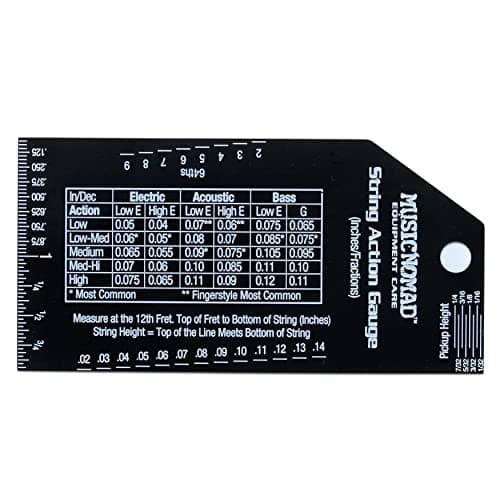
A string action gauge costs less than a set of strings and converts "it feels high" into a measurement they can compare against what their guitar's maker specifies. It is the single most useful object a long-time player can be handed, and the reason they do not own one is that it is never the thing you buy when you are already in the shop buying strings.
The full case, and what each gauge can and cannot measure, is in the action gauge roundup.
3
Categories a guitarist will not buy for themselves
Measuring tools, protective hardware and anything that only prevents a problem they have not had yet. Every pick on this page is in one of them.
The picks, and who each one is for
A string action gauge — best gift they would never buy
One piece of etched stainless steel with metric, imperial and 64ths scales and the recommended heights printed on the tool. It also works as a fret rocker, which finds the single high fret that no adjustment will fix.
Right for: anyone who has ever said their guitar is hard to play. Wrong for: nobody, really, which is unusual on a gift page. It is cheap enough to be a stocking filler and useful enough to be a main present for a player who likes tools.
A hygrometer — best gift for a good guitar
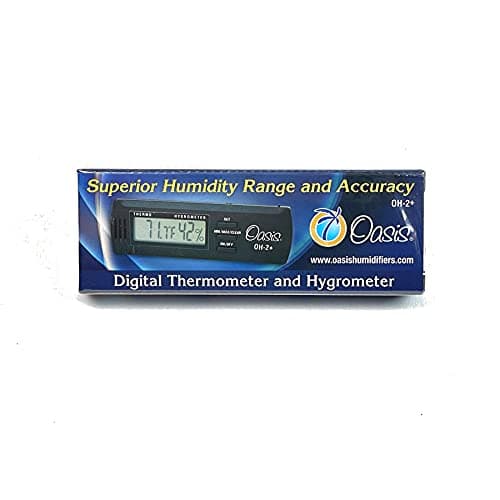
If they own a solid-wood acoustic, this is the gift that quietly protects it. Oasis publishes plus or minus 3 percent relative humidity accuracy, which is the only published figure in its category, and the max/min recording catches the overnight dry spell in a heated house that nobody is awake for.
Right for: someone with an acoustic they clearly care about. Wrong for: a player whose only guitar is a solid-body electric, which is far less affected. The reasoning is in the hygrometer page, and do I need a guitar humidifier explains which instruments care.
Strap locks — best small insurance
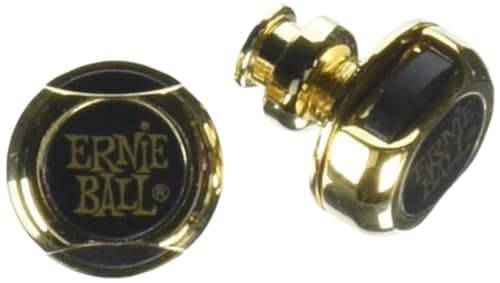
The single most common way a guitar gets its first crack is a strap end slipping off a button while the player is standing. Strap locks remove that failure mode for a fraction of the cost of the repair, and they fit any guitar with two strap buttons.
Right for: anyone who plays standing up, in a band, or on a stage. Wrong for: someone who only ever plays seated, and for most classical players, whose guitars often have no strap buttons at all. More in the strap lock page.
A strobe clip-on tuner — best upgrade on what they own
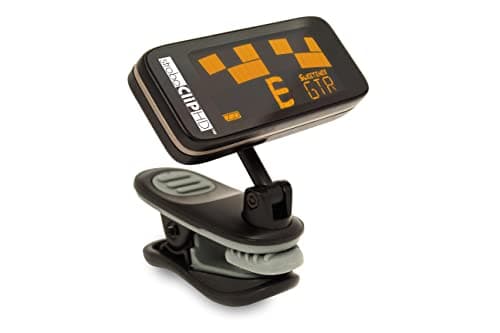
They already have a tuner. That is the point. Peterson publishes plus or minus 0.1 cent for the StroboClip HD, which is an order of magnitude finer than the clip-on almost everyone actually owns, and the difference shows up where it matters: setting intonation, and tuning for recording.
Right for: someone who records, or who has started adjusting their own guitars. Wrong for: a beginner, for whom it is a great deal of accuracy they cannot yet use — see the tuner roundup for what a first tuner should be.
Fretboard oil — best consumable
The safe gift if you know nothing at all about their setup. It is used up, so it cannot become clutter; it works on any guitar with an unfinished fingerboard; and MusicNomad publishes what is in it and what is not, which matters because the wrong product on the wrong fingerboard does real harm.
Right for: almost anyone. Wrong for: a guitar with a lacquered maple fingerboard, which should not be oiled at all — if you are not sure what they have, the formulation argument in the fretboard oil page covers which is which.
What to avoid buying for this person
Strings. They have a preference, it is specific, and getting it wrong is a gift they will politely put in a drawer. Gauge, alloy and coating are three separate axes and you would have to get all three right. If you know their exact set, it is a lovely small gift; if you do not, skip it entirely.
A capo. Same problem for a different reason: steel string and nylon string capos are not interchangeable, and a capo that does not match the fingerboard pulls the guitar out of tune. See the capo hub.
Anything shaped. Cases, gig bags and stands all have fit constraints — body outline, depth, size — and a case that does not fit protects nothing. If you want to buy protection, buy hardware rather than a container.
Novelty picks in a tin. They own several hundred picks. They have a favorite. It is not this one.
Two rules for gifting to a player who has everything
Buy something with a number on it. Anything that measures, rates or publishes a specification is a gift they can put to work immediately and that tells them something they did not know about their own instrument. That is a better experience than another object.
Buy the thing that prevents a problem they have not had yet. Nobody buys strap locks until after the strap comes off, and nobody buys a hygrometer until after a winter goes badly. That is precisely why they make good gifts: the purchase is rational and it still never gets made.
If your budget is smaller than this page assumes, the stocking stuffer page applies the same logic at a lower price, and gifts under $50 covers the player who genuinely is still getting started. If the player is a child, the constraint is different again — three accessories are sized to the instrument, and guitar gifts for a kid sorts them out.
What we did not doWe have not played any of this gear. Every guide in this category says it tested twenty tuners; we would rather say plainly that we tested none. What we did instead is on this page in full: published specifications with their sources, the makers' own manuals read rather than paraphrased, and a note wherever a company publishes nothing at all.