Skip to content
Capo & Cable
Roundup

The best guitar cleaning kit is the one that tells you what it is safe on

The only spec that matters here is finish compatibility, and only one maker in this category publishes it clearly. That is the whole ranking.

By Scooter M./Published September 1, 2026

Guitar care bottles and a microfibre cloth beside a guitar body

DisclosureSome links on this page are affiliate links. If you buy through one we may earn a commission at no extra cost to you. It never changes a ranking, and we accept no payment for placement. The full version.

The shortlist

Ranked, with the published numbers

Ranked on the specifications each maker actually publishes, on what they refuse to publish, and on what the thing costs today. Tap any row for the full write-up, including who should skip it.

#ProductBest forScorePrice
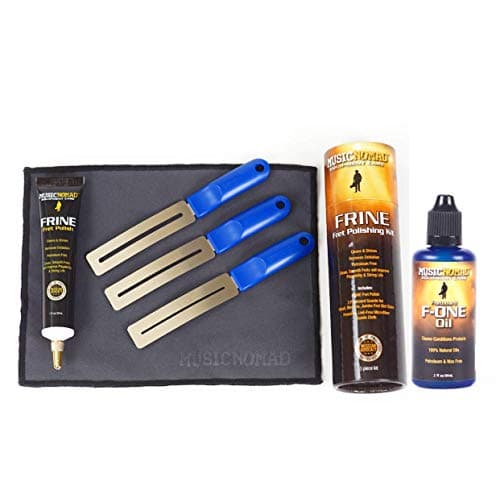
01A cloth and care bottles beside a guitar body — a stand-in for the MusicNomad Premium Guitar Care Kit, 3 pc, not a photograph of this modelMusicNomadMusicNomad Premium Guitar Care Kit, 3 pcBest published guidance9.0Check price on Amazon
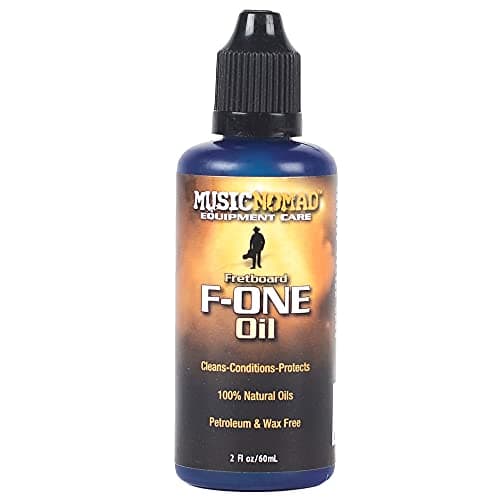
02A dark rosewood fretboard being wiped clean — a stand-in for the MusicNomad F-ONE Fretboard Oil, not a photograph of this modelMusicNomadMusicNomad F-ONE Fretboard OilBest fretboard oil9.0Check price on Amazon
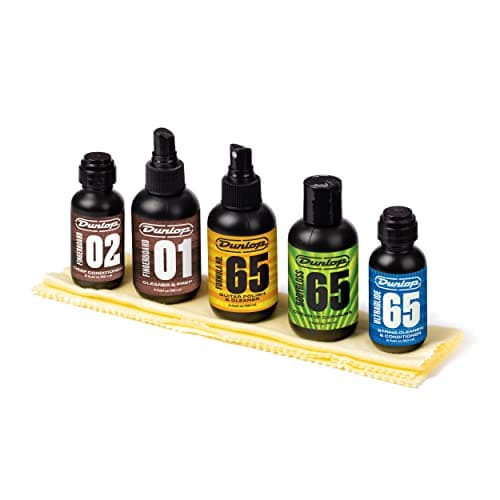
03A cloth and care bottles beside a guitar body — a stand-in for the Dunlop Formula 65 Guitar Maintenance Kit, not a photograph of this modelDunlopDunlop Formula 65 Guitar Maintenance KitCheapest complete kit7.9Check price on Amazon

Scores are ours and editorial. They are never published as review or rating markup, because we have not played these instruments — here is how we pick.

Guitar cleaning products are a category where the marketing is loud and the useful information is thin. Almost every bottle promises to clean, polish and protect. Very few say which finishes they are safe on, and that is the only question that can actually cost you money.

Why finish compatibility is the whole story

Guitars come in three broad finish types and they behave differently.

Gloss polyurethane or polyester — most modern guitars. Hard, thick, chemically tolerant. Almost anything is safe on it.

Nitrocellulose lacquer — traditional, thinner, softer, and used on many higher-end and vintage-style instruments. It reacts with solvents and with some plastics and rubbers over long contact. This is the finish that gets damaged.

Satin or matte — a deliberately non-reflective surface. Polishes are designed to fill and level microscopic scratches to produce shine, which on a satin finish means creating shiny patches you cannot undo. Polish is actively wrong here.

MusicNomad publishes that its Guitar ONE is safe on all gloss finishes including nitrocellulose, and explicitly not recommended for satin or matte. That single sentence is more finish guidance than most of this category offers, and it is why it ranks first here.

What each maker publishes about safety
ProductSafe onNot forPublished clearly?
MusicNomad Guitar ONEAll gloss finishes including nitrocelluloseSatin / matte finishesYes
MusicNomad F-ONE oilAll unfinished fretboards, bridges, tuning pegsFinished (glossy) boardsYes
Dunlop Formula 65 kitGeneral guitar finishesNot specified in detailLess clearly

The fretboard oil question

Fretboard products are the most argued-about corner of guitar care. Lemon oil in particular divides people: some products marketed as "lemon oil" contain no lemon at all, some contain solvents, and the concern is what repeated application does to a fingerboard and to the glue around fret ends over years.

We are not going to adjudicate that argument, because we have not run the experiment and neither has anyone else publicly at a scale that settles it. What we can do is prefer the product whose maker publishes what is not in it. MusicNomad states F-ONE contains no lemon oil, no petroleum, no wax and no water. On a contested question, disclosure is the specification.

More on this in the fretboard oil roundup.

What you actually need

A dry microfibre cloth. This does ninety per cent of guitar care. Wipe the strings and the body after every session. No product required.

A polish for the body, used occasionally, matched to your finish.

A fretboard oil, used two or three times a year on unfinished boards only, when the board looks gray and dry.

That is the complete list. Kits containing eight bottles are selling you products for jobs that do not exist.

3

Products that cover essentially all guitar care

A cloth, a polish matched to your finish, and a fretboard oil used a few times a year. Everything past that is optional.

What we did not do

We have not played any of this gear. Every guide in this category says it tested twenty tuners; we would rather say plainly that we tested none. What we did instead is on this page in full: published specifications with their sources, the makers' own manuals read rather than paraphrased, and a note wherever a company publishes nothing at all.

Before you buy anything, find out what your finish is

Check the manufacturer's specification page for your model. If it is not stated, the practical test: a gloss finish reflects a sharp image; a satin finish reflects a soft, diffuse one. Distinguishing nitro from poly by eye is harder, and if you cannot tell, treat it as nitro and use the more cautious product — that error costs nothing.

How to clean your guitar covers the actual routine, including the parts you can only reach during a string change.

The write-ups

Each one in full, including who should skip it

01Best published guidance
9.0/10
A cloth and care bottles beside a guitar body — a stand-in for the MusicNomad Premium Guitar Care Kit, 3 pc, not a photograph of this model

Stock photo of the product type, not this model. We publish no product photography we cannot source.

MusicNomad

MusicNomad Premium Guitar Care Kit, 3 pc

The whole of guitar cleaning, in one box

Three things that cover ninety per cent of guitar care, and the maker publishes which finishes each one is safe on — which is the question that actually matters.

Good
  • Publishes exactly which finishes each product is safe on
  • F-ONE is explicitly lemon-oil-free and petroleum-free
  • Enough product to last a year of ordinary use
Less good
  • Guitar ONE is not for satin or matte finishes — check yours first
  • Bottles are small for the money
  • Two products where a damp cloth handles most days
Skip this if

Your guitar has a satin or matte finish. MusicNomad states Guitar ONE is not recommended for those.

Published specification

ContentsGuitar ONE 2 oz, F-ONE oil 0.5 oz, suede cloth
Guitar ONE safe onAll gloss finishes including nitrocellulose
Guitar ONE NOT forSatin / matte finishes
F-ONE containsNo lemon oil, petroleum, wax or water
Cloth12" × 12" suede microfiber, washable
Live priceCheck price
Check price on Amazon

#ad We hold no verified live price for this one, so we show none. How this site is funded.

Our scoring

Ease for a beginner9.2
Build8.8
Published-spec clarity9.6
Value at this price8.6
02Best fretboard oil
9.0/10
A dark rosewood fretboard being wiped clean — a stand-in for the MusicNomad F-ONE Fretboard Oil, not a photograph of this model

Stock photo of the product type, not this model. We publish no product photography we cannot source.

MusicNomad

MusicNomad F-ONE Fretboard Oil

Unfinished rosewood, ebony or maple boards

The fretboard product whose maker publishes what is NOT in it: no lemon oil, no petroleum, no wax, no water. On a question this contested, that is the useful specification.

Good
  • The formulation exclusions are published, not implied
  • A tiny amount does a whole board
  • Cleans and conditions in one pass
Less good
  • 0.5 oz bottle looks small next to the price
  • Does nothing for a finished maple board
  • Easy to over-apply if you have not used oil before
Skip this if

Your fretboard is finished — a glossy maple neck does not want oil at all.

Published specification

ContainsNo lemon oil, petroleum, wax or water
Safe onAll unfinished fretboards
Also forUnfinished bridges and tuning pegs
Live priceCheck price
Check price on Amazon

#ad We hold no verified live price for this one, so we show none. How this site is funded.

Our scoring

Ease for a beginner8.8
Build9.0
Published-spec clarity9.4
Value at this price8.4
03Cheapest complete kit
7.9/10
A cloth and care bottles beside a guitar body — a stand-in for the Dunlop Formula 65 Guitar Maintenance Kit, not a photograph of this model

Stock photo of the product type, not this model. We publish no product photography we cannot source.

Dunlop

Dunlop Formula 65 Guitar Maintenance Kit

The cheapest complete care kit on the shelf

The kit in every music shop, built around Dunlop's long-running Formula 65 polish. It works, it is cheap, and it uses a lemon-oil fretboard conditioner some players avoid on principle.

Good
  • Cheapest way to get everything at once
  • Formula 65 has been in shops for decades
  • Stocked physically almost everywhere
Less good
  • Lemon-oil conditioner is contentious for fretboards
  • Finish-safety guidance is thinner than MusicNomad's
  • Kit contents vary between versions sold under similar names
Skip this if

You would rather not put a lemon-oil product on a fretboard — plenty of players will not.

Published specification

Core productFormula 65 guitar polish and cleaner
Fretboard productLemon oil conditioner
Published finish guidanceLess detailed than MusicNomad's
Live priceCheck price
Check price on Amazon

#ad We hold no verified live price for this one, so we show none. How this site is funded.

Our scoring

Ease for a beginner8.8
Build8.0
Published-spec clarity5.8
Value at this price8.8
Questions

Frequently asked

Can I use furniture polish on a guitar?
No. Household polishes commonly contain silicone, which contaminates the finish and causes serious problems if the guitar ever needs refinishing or repair. Use a product made for instruments.
How often should I polish my guitar?
Rarely — a few times a year is plenty. Wiping with a dry cloth after playing is the frequent task; polish is for when the finish is visibly dull or marked.
What if my guitar has a satin finish?
Do not use polish. MusicNomad states plainly that Guitar ONE is not recommended for satin or matte, and the reason applies to polishes generally: they produce shine by leveling the surface, which creates permanent glossy patches on a matte finish. A dry cloth is the correct tool.
Is lemon oil bad for fretboards?
It is genuinely contested, and we have not run the experiment. Products marketed as lemon oil vary enormously in what they contain. The defensible position is to prefer a product whose maker publishes its formulation exclusions — MusicNomad states F-ONE has no lemon oil, petroleum, wax or water.
Sources

Where these numbers came from

Every specification on this page came from one of these pages. Where a row reads "not published", it means we checked the page listed and the figure was not there.